
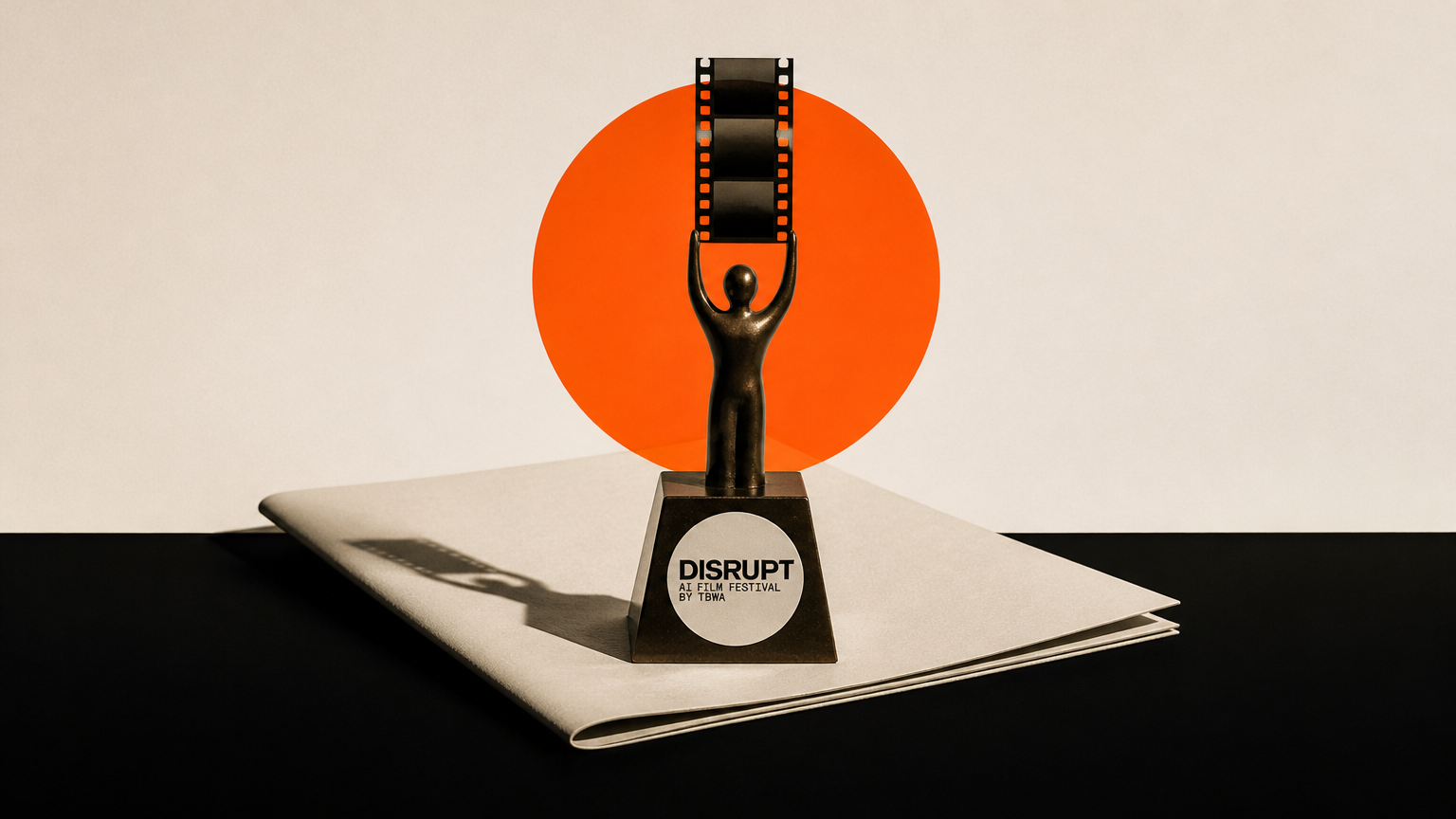
Everything Soft wins DISRUPT AI Film Festival Grand Prix
The Melbourne gala awarded four films from 487 entries, and the festival's report shows shortlisted filmmakers used fewer prompts than in 2025.
Key takeaways
- Everything Soft by Jamin Tasker won the Grand Prix at the 2026 DISRUPT AI Film Festival, announced in Melbourne on November 18, 2026.
- Daylight Saving Time! by Genki Yamasaki won Best Long Film, QWERTY by Jonathan Heath Best Short Film and Ding! by Qian Deng Best Student Film.
- The festival's own report puts entries at 487, up 31% from 371 in 2025, and says the 45 shortlisted films averaged 1,197 prompts each, down 12% year over year.
- The winning films screen again in Sydney on November 24, 2026.
Everything Soft by Jamin Tasker won the Grand Prix at the 2026 DISRUPT AI Film Festival, the Australian generative AI film contest staged by TBWA Australia.
The winners were announced at a gala at The Capitol in Melbourne on November 18, 2026, per the festival's 2026 winners page and its 2026 report.
Daylight Saving Time! by Genki Yamasaki won Best Long Film, QWERTY by Jonathan Heath won Best Short Film, and Ding! by Qian Deng won Best Student Film. The festival publishes no synopses, so each film is known here by its title and director.
DISRUPT (DAIFF) is in its second year. It is open to Australian-based creators and requires the core creative work to be made with generative AI. The 2026 theme was "Humans and Their Tools", entry was free, and the prize pool was AU$10,000 split across the four awards, according to the festival's entry terms.
The report records 487 entries, up 31% from 371 in 2025, and logs 112 Australian entries, up from 73. The jury shortlisted 45 films, up from 38.
The report's own figures show the shortlisted films took fewer prompts than a year ago. The 45 films averaged 1,197 prompts each, down 12% from 1,357 in 2025. Filmmakers submitted 9,720 minutes of video, 2.4 times 2025's 4,040, and the average shortlisted film took 55 days to make, up from 50.
The most used tools on the entries were Seedance, then ChatGPT and ElevenLabs, then Nano Banana, Kling, Suno, Claude, Higgsfield, Google Veo and Midjourney. The report does not say how it counted them. Top genres were drama, sci-fi, fantasy, experimental and animation.
Paul Reardon, chief creative officer of TBWA Melbourne and a DISRUPT co-founder, chaired the 12-person jury, which scored each film out of 10 on six questions. In the report he writes: "The tools have moved incredibly quickly. Faces are better. Movement is better. Consistency is better." He adds that the strongest films "weren't defined by the capability of the tools. They were defined by the quality of the decisions behind them."
The first edition's Grand Prix went to Black Box by Pete Majarich, per the festival's 2025 winners page. Bruce Hunt, who won Best Short Film at that edition with Lens Wide Open, returned as a juror this year.
For creators watching from outside, the prompt decline is small but points one way: the field drew more entries while the average shortlisted film needed fewer prompts.
The winning films screen again in Sydney on November 24, 2026.
Sources
- daiff.com.au - 2026 winners, gala venue and date, link to the festival report
- assets.tbwamelbourne.com.au - 2026 festival report: fast facts, judging criteria, jury chair note
- daiff.com.au - prize pool, categories, entry window, free entry
- daiff.com.au - theme, judging criteria and prizes
- daiff.com.au - 2025 winners, basis for the year-over-year figures
- campaignbrief.com - entries up 31%, prize pool, jury, Melbourne and Sydney gala dates
- screenweaver.ai - secondary coverage of the winners and jury quotes