
Microsoft Teams and Zoom will flag deepfakes on calls
Microsoft lists certified detection bots for Teams from mid-November, while Zoom's own deepfake risk detection arrives in December 2026.
Key takeaways
- Microsoft Teams' third-party synthetic audio and video detection is listed for a Targeted Release between mid-November and late November 2026, with general availability still to be scheduled.
- An admin notice, MC1509787, says synthetic media detection "is performed by the third-party provider," while Microsoft Teams provides the platform integration and the alerts.
- Zoom's deepfake risk detection will analyze video and audio signals to judge whether they "may have been altered outside of Zoom," launching in December 2026.
- The FBI warned on July 20, 2026 that AI-generated content "has advanced to the point that it is often difficult to identify," in a PSA about scammers generating AI video for real time video chat while impersonating FBI personnel.
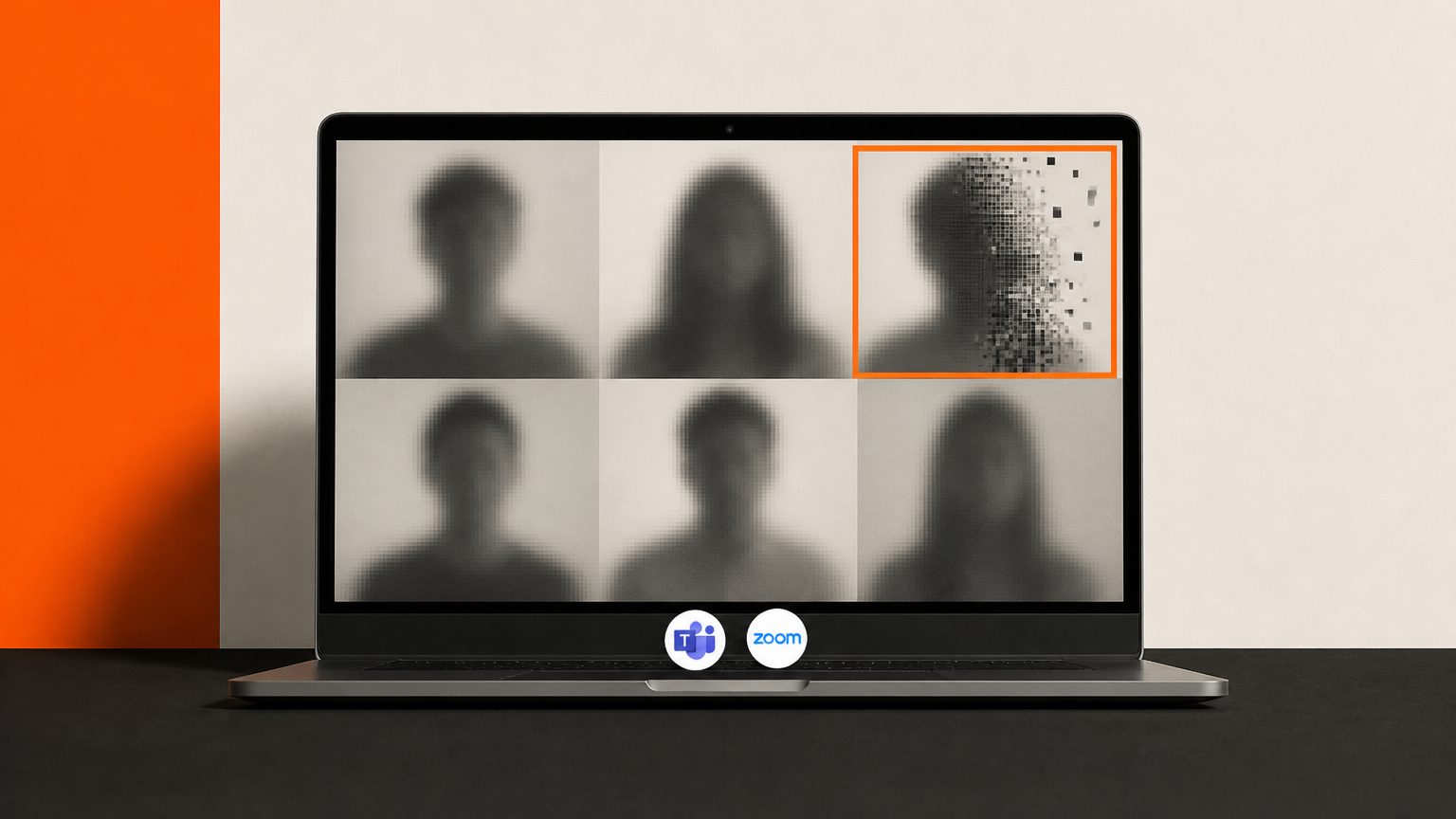
Microsoft Teams is adding third-party deepfake detection to meetings, with a targeted rollout that starts in mid-November 2026.
The feature, "Third-party synthetic audio and video detection in Microsoft Teams," first showed up on the Microsoft 365 roadmap on October 2, 2026 and is still listed as in development, according to Windows Latest. An admin notice, MC1509787, spells out who does the work: "Synthetic media detection is performed by the third-party provider," it says, while Microsoft Teams provides "the platform integration and experiences for surfacing and acting on detection signals from supported providers."
Microsoft revised the schedule on October 22, 2026. The original notice planned general availability from late November to mid-December 2026. The revised one commits only to a Targeted Release between mid-November and late November 2026, with wider availability to follow through the Message center. The rollout covers Teams for desktop, Mac and web.
The mechanics are already documented. A certified detection bot has to be admitted to the call, and a tenant admin grants it the Calls.ReportSyntheticMedia.All permission, per Microsoft's Graph beta API for reportSyntheticMedia. The bot then flags a participant with an aggregated confidence score from 0.0 to 1.0, a low, medium or high severity, and a flag for whether it judges the content malicious. Microsoft's own examples name a "voiceClone" audio detection and "faceSwap" and "lipSync" video detections. The finding reaches every participant through roster updates.
Zoom is moving the same way. On October 20, 2026, The Verge reported that Zoom is launching "deepfake risk detection," which analyzes video and audio signals to decide whether they "may have been altered outside of Zoom." Zoom is also adding a tool that uses AI to make presenters "appear more engaged," plus one that smooths voices and accents in real time. All three arrive in December 2026.
Both moves follow a federal warning. In a public service announcement dated July 20, 2026, the FBI's IC3 said AI-generated content "has advanced to the point that it is often difficult to identify." The PSA describes scammers making AI-generated videos for real time video chat while impersonating FBI personnel, and points to the same problem the two platforms are trying to answer.
Microsoft has not named any certified providers, their licensing terms, or what meeting data those vendors receive.
Admins turn it on by evaluating a certified provider's app through Manage apps in the Teams admin center, then granting the Calls.ReportSyntheticMedia.All permission and configuring meeting policies.
Sources
- microsoft.com - the Teams feature listing and its in-development status
- learn.microsoft.com - the permission, detection signals and confidence fields
- windowslatest.com - the roadmap date, MC1509787 wording, revised schedule and platforms
- theverge.com - Zoom's deepfake risk detection and December 2026 launch
- ic3.gov - the FBI's July 20, 2026 PSA and its AI-generated content warning