
MiniMax H3's three models cost $0.025 to $0.13 a second
Replicate's guide says to iterate on H3 Highspeed, batch with H3 Lite, and reserve the 2K-only H3 for final shots.
Key takeaways
- MiniMax H3 on Replicate comes in three models: H3 Highspeed at $0.06 a second, H3 Lite at $0.04 a second at 768P and $0.025 at 480P, and H3 at $0.08 a second at 768P and $0.13 at 2K.
- A 10-second 768P clip costs $0.60 on H3 Highspeed, $0.40 on H3 Lite, and $0.80 on H3, so 100 of them come to $60, $40, and $80.
- H3 is the only one of the three that outputs 2K, and it defaults to 2K while H3 Lite defaults to 768P, so set the resolution input before comparing costs.
- Replicate's advice is to iterate on H3 Highspeed, drop to H3 Lite for large batches you will mostly discard, and move to H3 for 2K or difficult shots.
MiniMax's H3 family now has three video models on Replicate, and the gap between them is measured in cents per second of output rather than in features. H3 Highspeed costs $0.06 a second, H3 Lite costs $0.04 a second at 768P and $0.025 at 480P, and the full H3 costs $0.08 a second at 768P and $0.13 a second at 2K, according to a Replicate blog post published November 3, 2026.
The three take the same inputs and make clips of the same length. What separates them is resolution and price, which turns the choice into a per-second decision: what job is this shot, and what is the cheapest model that does it well.
What are MiniMax H3's three models?
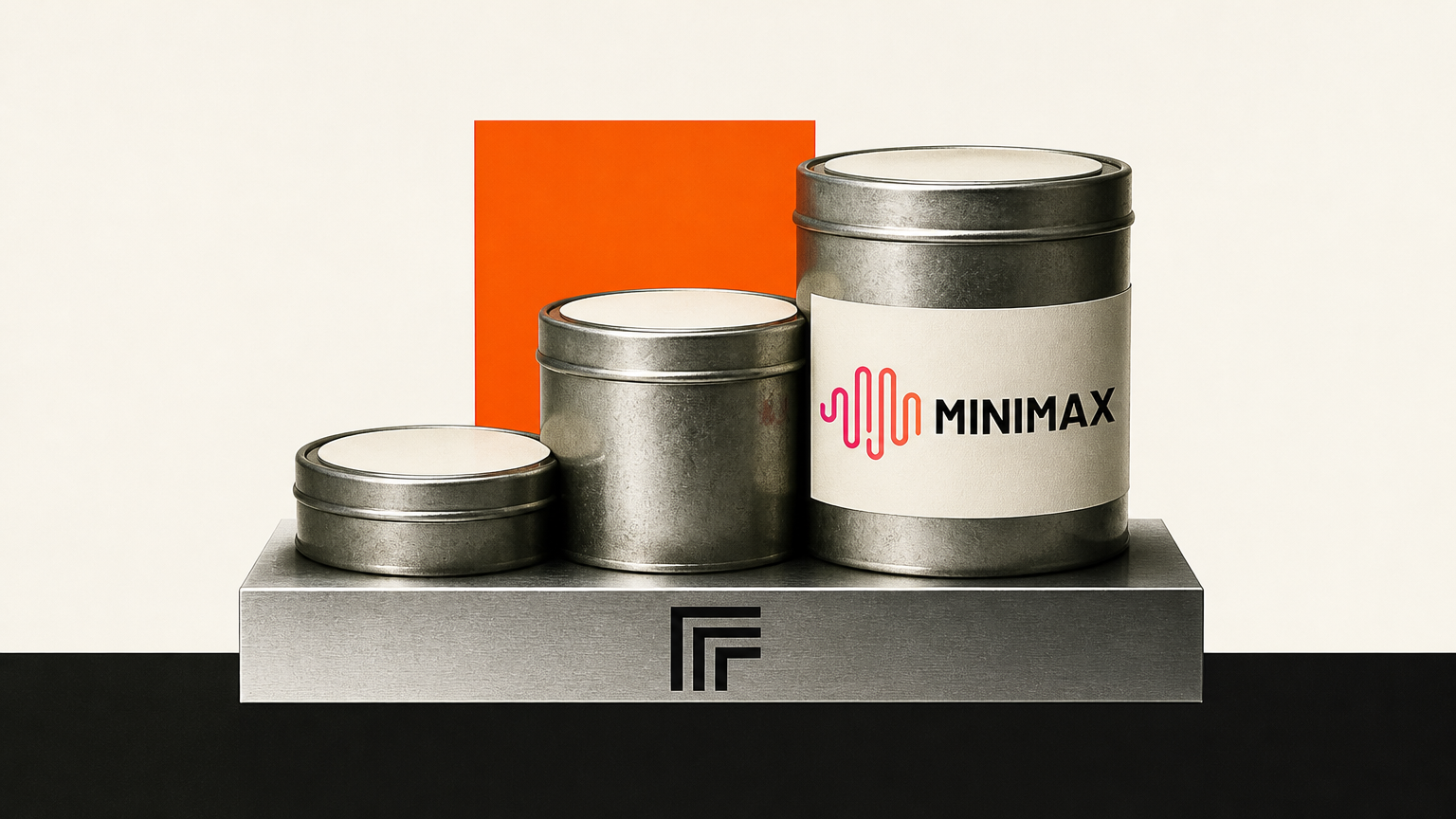
Replicate sells the H3 family at three tiers, and only the top one reaches 2K. MiniMax H3 is a multimodal video model from MiniMax that generates a clip from a text prompt, animates a first or last frame, and uses reference images, video, or audio to guide the result. Replicate lists all three under the same family and bills each by the second of video it generates.
- H3 Highspeed, at $0.06 a second and 768P only. Replicate pitches it as a balance of quality and speed for everyday work and reference-driven iteration.
- H3 Lite, at $0.04 a second at 768P and $0.025 at 480P. The cheapest of the three, aimed at exploring ideas and larger batches.
- H3, at $0.08 a second at 768P and $0.13 at 2K. The top of the family and the only one that outputs 2K, for final shots and 2K delivery.
What the per-second prices add up to
The per-second rate decides a batch, and the gap shows up fastest on volume. A 10-second clip at 768P costs $0.60 on H3 Highspeed, $0.40 on H3 Lite, and $0.80 on H3, per Replicate's post. Run the same math on a hundred of them and the 100 ten-second 768P clips come to $60 on Highspeed, $40 on Lite, and $80 on H3. At 2K, a single 10-second H3 clip costs $1.30.
The blog dates these figures to the model pages on October 31, 2026, and the three model pages carry the same numbers: Highspeed at $0.06 a second, Lite at $0.025 and $0.04, and H3 at $0.08 and $0.13.
What all three MiniMax H3 models share
The inputs are identical across the three, so only resolution and price change. All three make clips from 4 to 15 seconds. All three do text-to-video, image-to-video from a first frame and an optional last frame, and generation guided by reference material: up to 9 reference images, up to 3 reference videos, and up to 3 reference audio clips. MiniMax requires an image or video reference alongside any reference audio.
Aspect ratio works the same way on all three. Image-to-video uses the input image's shape, while text-to-video and reference generation take a ratio input. H3 Lite lists concrete ratios for text-to-video (21:9, 16:9, 4:3, 1:1, 3:4, 9:16), and the full H3 adds an adaptive option.
Which MiniMax H3 model should you use?
Replicate's advice is to iterate on H3 Highspeed, batch on H3 Lite, and finish on H3. The blog suggests starting with Highspeed because it keeps the full set of reference inputs at 768P and balances quality and speed. References are where Highspeed earns its place: for a short fashion spot with a location image, a character image, and a product image, you tell the model what each image is for, then describe the action and the camera.
H3 Lite is the cheapest, and Replicate says to use it for storyboards, alternate openings, and any batch where you plan to throw most of the results away. It saves money, not time. On the model-page examples, a 5-second Lite clip and a 5-second Highspeed clip both took about 21 seconds, though Replicate notes that one run each proves very little. Lite is also the model where the blog says to look hardest at whether it did what you asked, because a clip can look good and still swap the wrong object or drop a character.
H3 is the top of the family, the only one that outputs 2K, and the only one that defaults to 2K. That default matters for cost, since an unset resolution lands on the most expensive tier. Replicate recommends H3 for motion graphics, choreographed effects, and edits where several things have to be right at once, and warns that 2K will not fix lettering, so check the text on every take.
How to keep the price from surprising you
Set the resolution input explicitly, because H3 defaults to 2K and Lite defaults to 768P. Writing "2K" in a prompt does nothing; resolution is an input. Replicate's API example runs minimax/h3-highspeed with a prompt and a duration, and switching models means changing the model ID and setting resolution to 768P or 480P for Lite and 768P or 2K for H3.
To compare the models yourself, Replicate suggests running the same prompt, references, duration, and aspect ratio at 768P on all three, a few times each, then scoring what your project cares about: whether the subject stays recognizable, whether the camera does what you asked, and whether text comes out right. Time the runs separately from the length of the clips, because run time depends on the prompt and on load.
All three MiniMax H3 models run on Replicate: start with H3 Highspeed, drop to H3 Lite for big batches, and switch to H3 when you need 2K.
Sources
- replicate.com - the three-model price ladder, per-second prices, shared inputs, and Replicate's usage advice
- replicate.com - $0.06 per second, 768P only, and the input list
- replicate.com - $0.025 per second at 480P and $0.04 at 768P, and the input list
- replicate.com - $0.08 per second at 768P and $0.13 at 2K, and the input list