
5 Real-Time AI Video Systems Ranked, From Shipped API to Research Preview
The field says real-time, and the numbers behind the word do not mean the same thing; here is what you can actually use today, as of September 21, 2026.
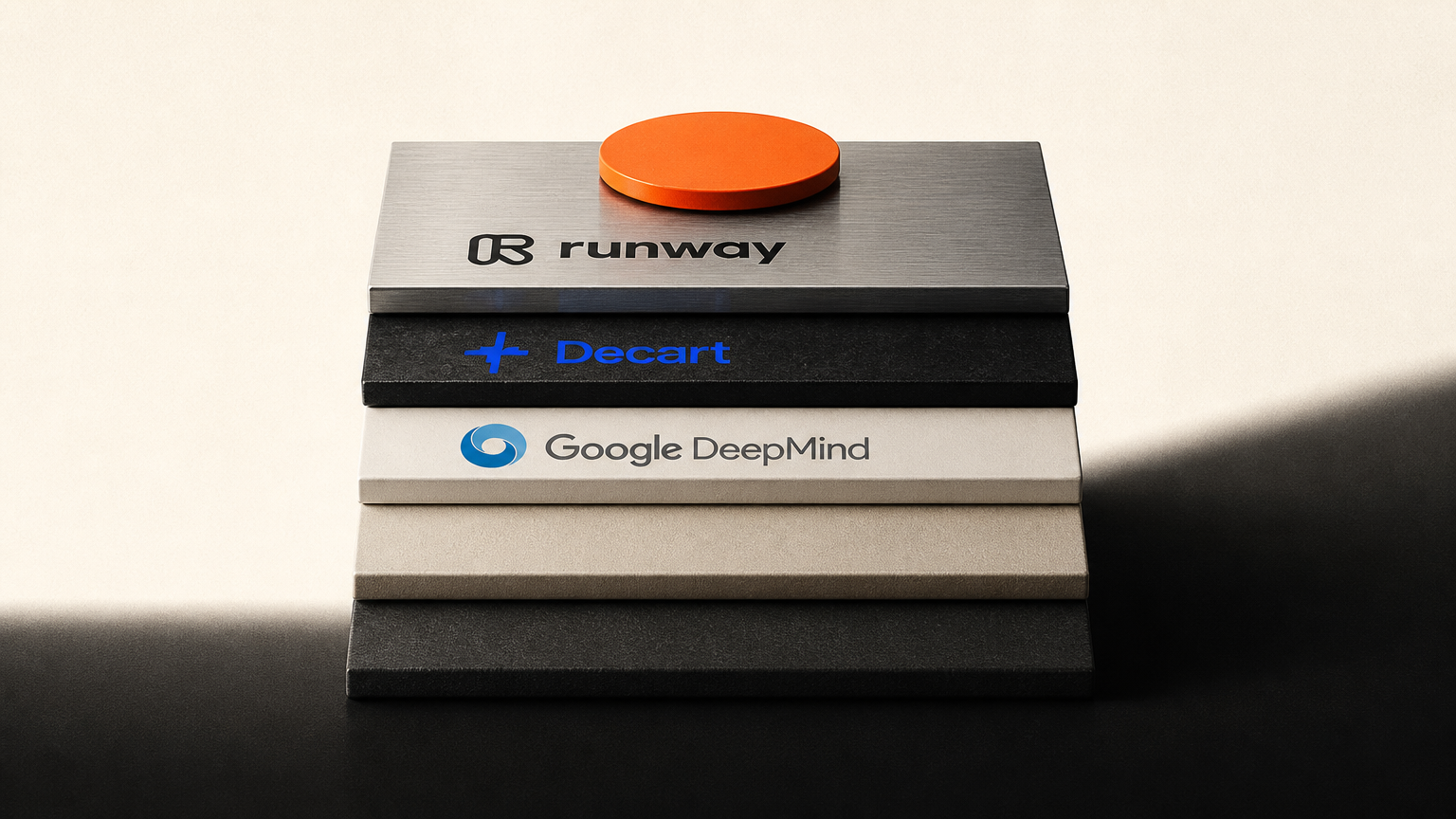
Key takeaways
- Runway Characters is the only real-time video generator in this list shipping through a callable API, at 24 frames per second with 37ms of effective model time per frame.
- Decart's Lucy edits live video with sub-40ms latency on its product page, and Decart's reported 40ms time-to-first-frame came on AWS Trainium, in coverage that also describes early access to Trainium3.
- Google's Genie 3 is a limited research preview granting early access to a small cohort of academics and creators, per DeepMind's announcement, and Runway's GWM Worlds 2 is reached by application rather than an API.
- Astronex-World 1.0 is the open option: Apache 2.0 weights that stream 832x480 video at 24 frames per second on one 48GB GPU.
Real-time video generation is the phrase every company on this beat is reaching for, and almost none of them mean the same thing by it. This list ranks five systems as of September 21, 2026 by what a creator can actually do with each one today, using documented availability first, then published latency, then licence terms. No hands-on tests were run for it, and the latency numbers below are the companies' own.
Two notable exclusions. Creatify Labs' Boreal was launched on September 15, 2026 at $0.01 a second and is often described as realtime, but that is throughput: it generates a five-second clip in about five seconds rather than streaming frames you can steer, per Creatify's launch post and its model page. Google's Gemini Omni Flash generates and edits video, but the pages Google publishes for it, the Gemini API documentation and DeepMind's model page, carry no latency figure for that generation mode, so it cannot be ranked on this axis.
#5 Astronex-World 1.0 (Astronex Robotics)
The open one. Astronex-World 1.0 is a 5.35-billion-parameter world model released on September 17, 2026 under Apache 2.0, with weights on Hugging Face and code on GitHub. Its causal variant generates 832x480 frames at 24 frames per second and streams in real time on a single Nvidia L20 48GB GPU, and a documented configuration brings peak VRAM down to 23.2GB so a 32GB consumer card can run it. The model card reports 73.5 on WBench Navi and 70.0 on WBench Full, above a 13.6B LongCat-Video at 69.9 and within 0.9 points of 22B LTX-2.3.
The catch is that it is a research release, not a product: you host it, you wire up the action inputs, and the VBench results in the paper cover a fraction of the standard prompts. A clear step above the previews on openness and below Runway Characters on usability.
- Maker: Astronex Robotics
- Status: released, self-hosted, Apache 2.0
- Output: 832x480 at 24fps, streaming on one 48GB GPU
- Benchmark: 73.5 WBench Navi, 70.0 WBench Full (authors' table)
- Get it: https://huggingface.co/Astronex-Lab/Astronex-World
#4 Genie 3 (Google DeepMind)
Google's interactive world model has been the reference point since 2025: 720p at 24 frames per second, with visual memory that DeepMind says persists for about a minute and consistency that holds for several minutes rather than seconds. It is not reachable by API or by subscription. DeepMind describes Genie 3 as "a limited research preview, providing early access to a small cohort of academics and creators", which keeps it in the research column even as its output leads the field. For a video creator, that makes it a demonstration of where interactive generation is heading rather than a tool for a pipeline this week. Below Astronex-World on availability, above it on polish.
- Maker: Google DeepMind
- Status: limited research preview, early access to a small cohort of academics and creators
- Output: 720p at 24fps, minutes of consistency
- Availability: not general; no API or consumer route announced
- Read it: https://deepmind.google/blog/genie-3-a-new-frontier-for-world-models/
#3 Runway GWM Worlds 2
Runway's general world model family, GWM-1, launched on December 11, 2025, built on Gen-4.5 and generating frame by frame with camera pose, robot commands or audio as controls. The third variant, GWM Worlds 2, arrived in early September 2026 and streams 720p at 24 frames per second with 48kHz audio, per Runway's release post; Runway gates the GWM family behind the same early-access request form it uses for GWM-1, not a public API. It earns its rank on what the family learned rather than on what Worlds 2 lets you do. It sits below the shipped product built from the same base, and one above Genie 3 on the strength of that shipped sibling.
- Maker: Runway
- Status: GWM-1 shipped December 2025; Worlds 2 is a research preview reached by application
- Output: 720p at 24fps with 48kHz audio
- Availability: GWM-1's early-access request form, no API
- Read it: https://runway.com/research/introducing-gwm-worlds-2
#2 Lucy (Decart)
The strongest shipped alternative to Runway's approach, and it comes at the problem from the other side. Lucy is a live video-to-video editor: it transforms people, products and environments in a stream as that stream is running, at sub-40ms latency on its product page, with a stated fallback figure of under 200 milliseconds while generating 22 frames per second at 512x768. Coverage of Decart's AWS deal reports a time-to-first-frame of 40 milliseconds for Lucy on Trainium, with Trainium2 named in the article's body for the ultra-low latency work and early access to Trainium3 as the next step, per AICC's report. That is an editing model rather than a text-to-video generator, which is why it sits below the top entry, but for anyone putting generative effects into a live feed it is the only shipped option here besides that one.
- Maker: Decart
- Status: shipped, paid API
- Published latency: sub-40ms on Decart's product page; 40ms time-to-first-frame reported with AWS Trainium
- Output: live video-to-video editing, up to 22fps at 512x768 in the stated fallback mode
- Try it: https://decart.ai/lucy
#1 Runway Characters
The only system in this list that generates video live, has a published frame budget and lets a developer call it today. Runway Characters turns a single reference image into a conversational video character at 24 frames per second in HD, with an effective 37 milliseconds of model time per frame and 1.75 seconds of server-side turnaround from the end of a user's speech to the character's first response frame. Runway gets there by overlapping the diffusion transformer with the VAE decoder, keeping the effective cost near the slower of the two rather than their sum, against a real-time budget of about 42ms a frame at 24fps.
It is a narrower product than the phrase real-time video suggests: a talking character built from one image, sold through Runway's API and in its web and mobile apps, not a promptable live world. That narrowness is exactly why it is ranked first. Everyone else on this list is selling the category; Runway shipped one job inside it, published the latency, and left the rest in the research post where it belongs.
- Maker: Runway
- Status: shipped, API and web app
- Output: 24fps HD conversational character from a single reference image
- Published latency: 37ms effective model time per frame, 1.75s turnaround
- Read it: https://runway.com/news/engineering/building-runway-characters
Sources
- runway.com - Runway Characters latency figures and frame budget
- decart.ai - Decart's own latency and frame rate claims for Lucy
- ai.cc - coverage of Decart's AWS Trainium deal, the 40ms time-to-first-frame figure and the Trainium2 and Trainium3 descriptions
- runway.com - GWM-1 announcement, variants and controls
- runway.com - GWM Worlds 2 output specs and the application route
- deepmind.google - Genie 3 resolution, frame rate, consistency duration and its limited research preview access
- arxiv.org - Astronex-World 1.0 specs and hardware
- huggingface.co - Astronex licence, parameter count and WBench scores
- creatify.ai - Boreal's launch, price and throughput claim, the reason it is excluded from the ranking
- labs.creatify.ai - Boreal's model page, price per second and stated strengths
- ai.google.dev - Google's Gemini Omni API documentation, checked for a published frame rate or latency figure for generation and carrying none
- deepmind.google - DeepMind's Gemini Omni model page, also checked for a latency figure