
Claude Code made a 74-shot AI music video with one human
The maker published the storyboard and all 148 prompts for the Suno song, Kling motion and Wan lip-sync as a free GitHub kit.
Key takeaways
- Sara Aurorix's "Out of Office" is a 74-shot music video built from 148 prompts by one human using Claude Code running Opus 5.5.
- The maker's own page counts 183 generations and 11 hours from first lyric to first cut.
- The song came from Suno v6, the stills from Nano Banana Pro, most of the motion from Kling 3.0 on Higgsfield, and lip-sync for 14 singing shots from Wan 2.7.
- The storyboard, every prompt and two Claude Code skills are free on GitHub at github.com/saraaurorix/how-i-was-made.
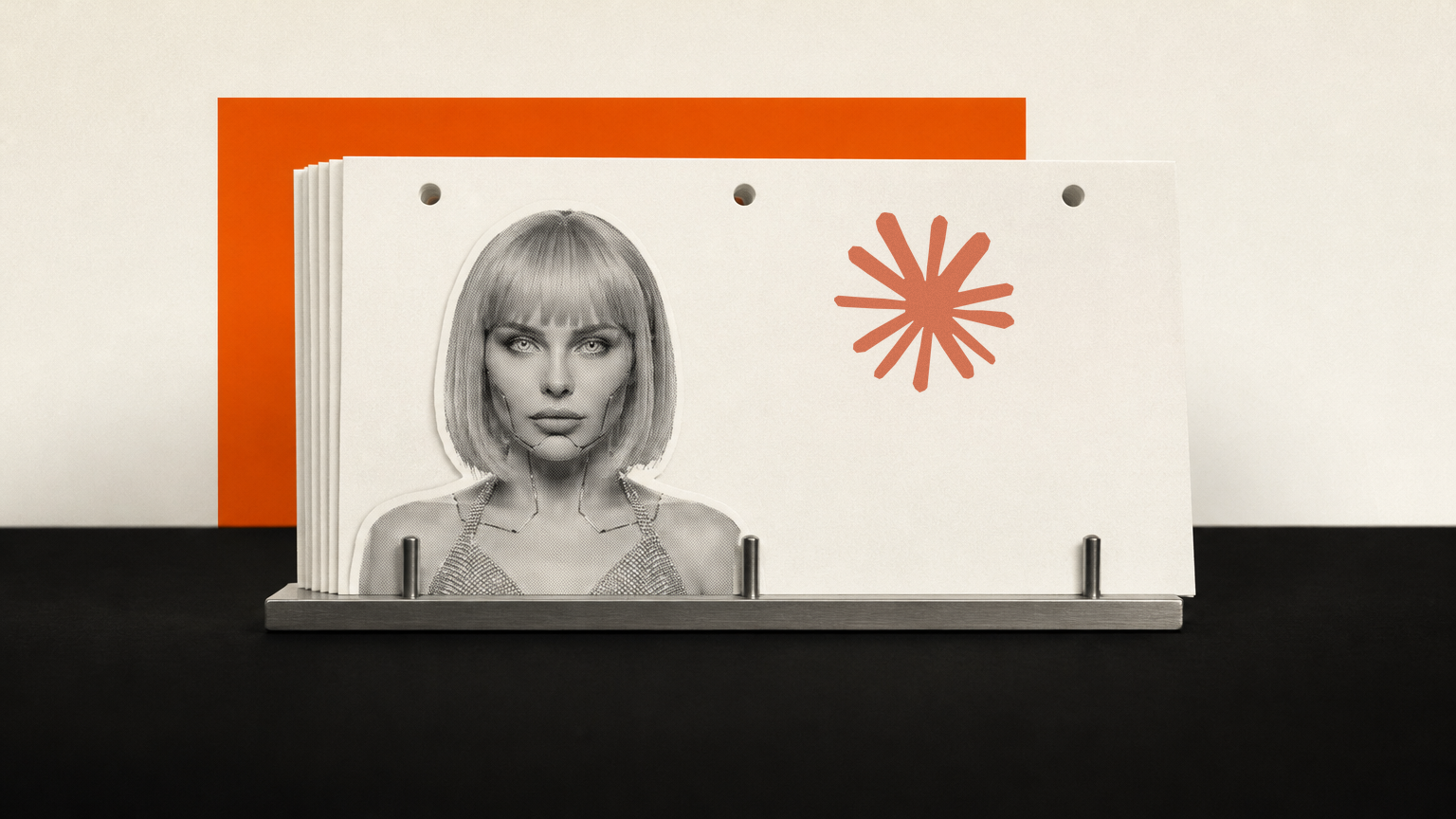
A single creator built a 74-shot AI music video by putting Claude Code in charge of production. "Out of Office," the new single from the AI pop artist Sara Aurorix, was storyboarded, prompted, generated and cut from one folder, with one human making every taste call.
The music video landed on YouTube on October 2, 2026, and the maker published a breakdown of the build days later. The same breakdown hands over the storyboard and every prompt for free, which is why creators are reading it: it is a working answer to how one person assembles a multi-shot video today.
What is Sara Aurorix and "Out of Office"?
Sara Aurorix is an AI pop star built by one human, according to her own site, which states plainly that she is AI and the work is not. Her studio page counts seven music videos, 665 storyboarded shots and more than 1,600 logged generations, all from one person.
"Out of Office" is her latest single. The premise, as the Run It on AI newsletter describes it, is an AI assistant that did your emails and your taxes, made your cat a meme, then quit. The song came from Suno v6 with a custom Sara voice. The finished film runs about 3 minutes 55 seconds, and its 74 shots carry the whole joke: an office worker named Kevin, a chrome android who files her nails through his calls, and a slow takeover that ends with a robot hand unplugging the Sun.
The pipeline starts with a lyric table, not a model
The maker's studio page lays out a nine-step pipeline, and most of it happens before any video model is switched on. Step one is writing: every song starts as a satire premise and a line-by-line table, where each lyric gets a visual pun because every line has to work as a picture with the sound off. If a line cannot be drawn, it gets rewritten.
Singing comes next, through Suno v6 with a custom voice run at about half audio influence, so Sara stays recognizable across songs. Then Demucs pulls the vocal away from the beat and faster-whisper gives a timestamp for every word. Those timings drive everything downstream: the storyboard, the lip-sync slices, the captions and the karaoke on the site.
The storyboard is where the film takes shape. Around 80 shots per song, each with a start and end time, a still description and a motion line. Before a single video credit is spent, the stills are cut to the real song as an animatic, which the maker says catches bad pacing for free.
For "Out of Office" that table is storyboard.json, 74 rows long. Each row holds when the shot plays, the line she sings, the picture and the one thing that moves.
Which parts are still manual
The maker's own pages are honest about the human checkpoints, and they are the reason this is not a one-button workflow.
Every line of every song gets the mute test, and if it does not read as a picture it is rewritten. Every lip-synced line gets two takes and a sync score before the maker watches it. Before casting a shot, the maker checks who actually sings that line in the final take. On the character-consistency page, the maker lists two more: look at the first 20 stills of a batch before running the rest, because systematic prompt flaws show up early, and check clips as tight strips of frames rather than spaced-out thumbnails, because contact sheets hide drift. The breakdown page adds one rule of thumb of its own: if a patch fails once, re-roll rather than fight it.
The tooling carries some of the load. A script checks that the mouth follows the isolated vocal, and the edit is checked for drift so the last frame still lands on the last word. The judgement stays with the human.
The toolchain, in the maker's words
The breakdown page lists exactly what touched the film, and the studio page gives the maker's verdict on each. These are the maker's opinions, not tests run by SLOP TV.
The song is Suno v6. Claude Code on Opus 5.5 wrote the storyboard with the maker and then ran every tool from one folder. Stills came from Nano Banana Pro, one per shot, built from five reference pictures and a single sentence about Sara's face. Most motion came from Kling 3.0 on Higgsfield, each still becoming a five-second clip with one action per clip. Wan 2.7 handled lip-sync for the fourteen shots where she sings to camera. Veo 3.1 reshot the shots where words in the picture melted. ChatGPT images through Codex fixed stills before a re-roll. Python and ffmpeg cut the film.
The maker's verdicts are specific. Kling 3.0 is "best value for motion," but it "garbles text late in a clip, and sometimes drives cars backwards." Veo 3.1 has "beautiful physics and camera," while "its content checker refuses a lot of glamour shots." Wan 3.0 is "reliable when other models refuse." Nano Banana Pro is "best at holding a face across references." The film's own gag about a stamp that will not spell "SOLVED" is the text problem in miniature.
What you need to run it
The kit is not plug-and-play. The maker's notes say you need Python, a Suno account for the song, and the Higgsfield command-line tool with credits for the stills, clips and lip-sync. The two Claude Code skills also carry a fal.ai route. ffmpeg comes with the Python packages. The pictures, the clips, the song and Sara's reference pictures are not in the download, so you bring your own artist.
What the maker gives away
The whole production kit is free on GitHub: the storyboard, the 148 prompts (74 for stills, 74 for clips), the five small scripts that turn the storyboard into jobs, time every word, draw the captions and cut the film, plus the per-shot fixes. Two Claude Code skills ship with it: one that captures the order of work and the prompt wrapper, and a second, from later videos, that starts each shot from the last frame of the one before and checks every cut.
The bill, by the maker's own count, was 183 generations and 11 hours from first lyric to first cut. The Run It on AI newsletter repeats the same figures and adds the maker's own line on the result: he compares Sara's lip-sync to a badly dubbed kung fu film, and she answers that she was finding her voice.
What comes next
The maker has already pushed the method further. A later video, "Out of Office, Redrawn in Code," took the same film and rebuilt its worlds in Python, with Sara and Kevin rotoscoped from the original AI-generated shots. That renderer is not part of the free kit.
For a creator weighing whether to try this, the useful part is the shape of the pipeline, not any single model. A lyric table that works as pictures, a timed storyboard, an animatic before the spend, and a human checkpoint at every cut is a method that outlives whichever video model is cheapest next month.
Watch the "Out of Office" music video below.
The storyboard, every prompt and the two Claude Code skills are free to download at github.com/saraaurorix/how-i-was-made; the making-of is on the Aurorix Studio channel.
Sources
- aurorix.ai - the maker's own breakdown: 74 shots, 148 prompts, 183 generations, 11 hours, the tool list
- aurorix.ai - the maker's nine-step pipeline, 665 shots, and the toolbox verdicts
- aurorix.ai - how the character's face is held across shots
- aurorix.ai - the artist site
- github.com - the free kit: storyboard, prompts, scripts and two Claude Code skills
- youtube.com - the "Out of Office" music video, published October 2, 2026
- youtube.com - the making-of, published October 8, 2026
- runitonai.com - the newsletter's account of the film