
ShengShu's Vidu S2 Runs Interactive 720p Avatars and Live Video Edits
The follow-up to Vidu S1 lifts real-time avatar output from 540p to 720p and restyles an incoming camera feed as it plays.
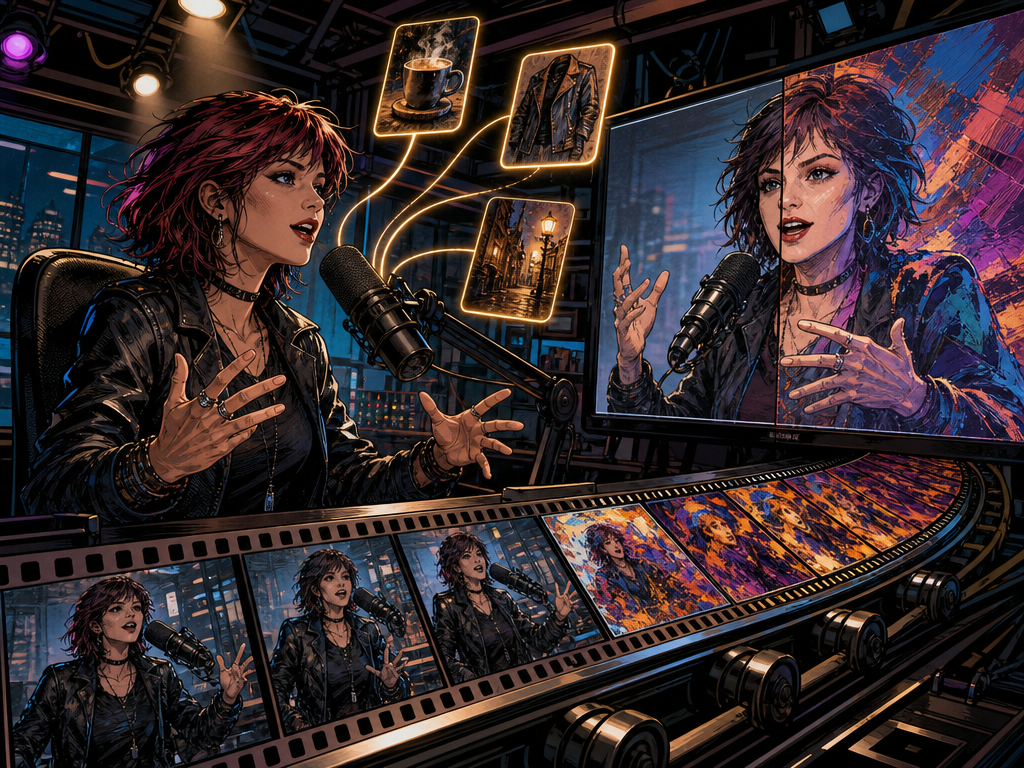
ShengShu Technology's Vidu S2 runs an interactive character at 720p in real time and restyles a live camera feed as it arrives.
The company announced the pair of models on September 15, and the technical report behind them went to arXiv on September 10. A playable demo is already up, so the real-time claims can be checked rather than taken on trust.
Vidu S2 splits into two models. Vidu S2-Avatar generates a digital character that talks and moves in response to voice, continuously, without waiting for a render. Vidu S2-Editing takes a continuous incoming video stream and edits it while it plays.
The avatar side carries the clearest numbers. ShengShu says Vidu S2-Avatar lifts real-time output resolution from Vidu S1's 540p to 720p. It also adds reference images that can be swapped mid-conversation: hand the character a picture of a cup and ask it to pick the cup up, or supply an outfit to change into. Follow-through is the stated target, so "pick up the cup, then smile" should leave the character still holding the cup.
Vidu S2-Editing covers four jobs on an incoming stream: restyling the picture from a reference image, changing the subject's outfit, replacing the subject outright, and swapping the background. Each one has to track what the person and the camera actually do, with a raised arm or a turn carrying through into the edited output.
Vidu is ShengShu's video generation line, and Vidu S1 is where the company began working on continuous voice control. The 540p to 720p move lifts a ceiling rather than starting a new product category, and both S2 models keep the streaming approach: the model answers frame by frame instead of generating a clip and stopping.
ShengShu also describes exploratory work on spatial video for VR headsets, generating separate left- and right-eye views so a viewed scene has depth. That part is early. The current approach uses fixed viewpoints, and the company says keeping image quality in a headset while cutting latency is still an open problem.
The end-to-end development was led by Jintao Zhang, a PhD student advised by Professor Jun Zhu and ShengShu's head of streaming video generation and inference.
For creators, interactive avatars and live stream editing are the two places where "generated" stops meaning "render it overnight and post it". If the real-time behaviour holds at 720p outside the demo, virtual hosts, try-on and live filters could be steered by a prompt mid-stream rather than re-shot. Latency is the part a product page cannot settle, and the announcement does not mention pricing or a release date for the API.
Vidu S2-Avatar and Vidu S2-Editing can be tried at vidu.com/vidu-stream, and API documentation is published at platform.vidu.com.
Sources
- vidu.com - product page: S2-Avatar and S2-Editing capabilities, FAQ, try-it links
- arxiv.org - technical report submitted September 10, 2026: specs, paper claims, playable demo link
- finance.yahoo.com - the company's September 16 release copy: announcement date, 540p to 720p, editing task list