
Matrix-Game 4.0 renders game worlds at 60 FPS on one RTX 5090
Skywork AI's open-weights release splits an executable game engine from a causal video model and ships three playable scenes under Apache-2.0.
Key takeaways
- Skywork AI released Matrix-Game 4.0 on October 15, 2026, with an arXiv paper dated October 20, 2026 (arXiv:2610.27999).
- The system renders 480p gameplay at 60 FPS on a single Nvidia RTX 5090 with key-press-to-display latency of 112 milliseconds, the paper reports.
- Three scenes ship with weights: Medieval Castle and Ancient Egypt third-person shooters and City Racing, each checkpoint at 5,001,016,512 BF16 parameters.
- Training code and training data are not in the release, and the maker's own deployment ran on an A100 80 GB.
Skywork AI released Matrix-Game 4.0 on October 15, 2026, an open-weights system that renders playable game worlds at 60 frames per second on a single consumer RTX 5090. The research arm of Beijing-listed Kunlun Tech posted the code, model weights and game assets the same day, with an arXiv paper dated October 20, 2026 (arXiv:2610.27999).
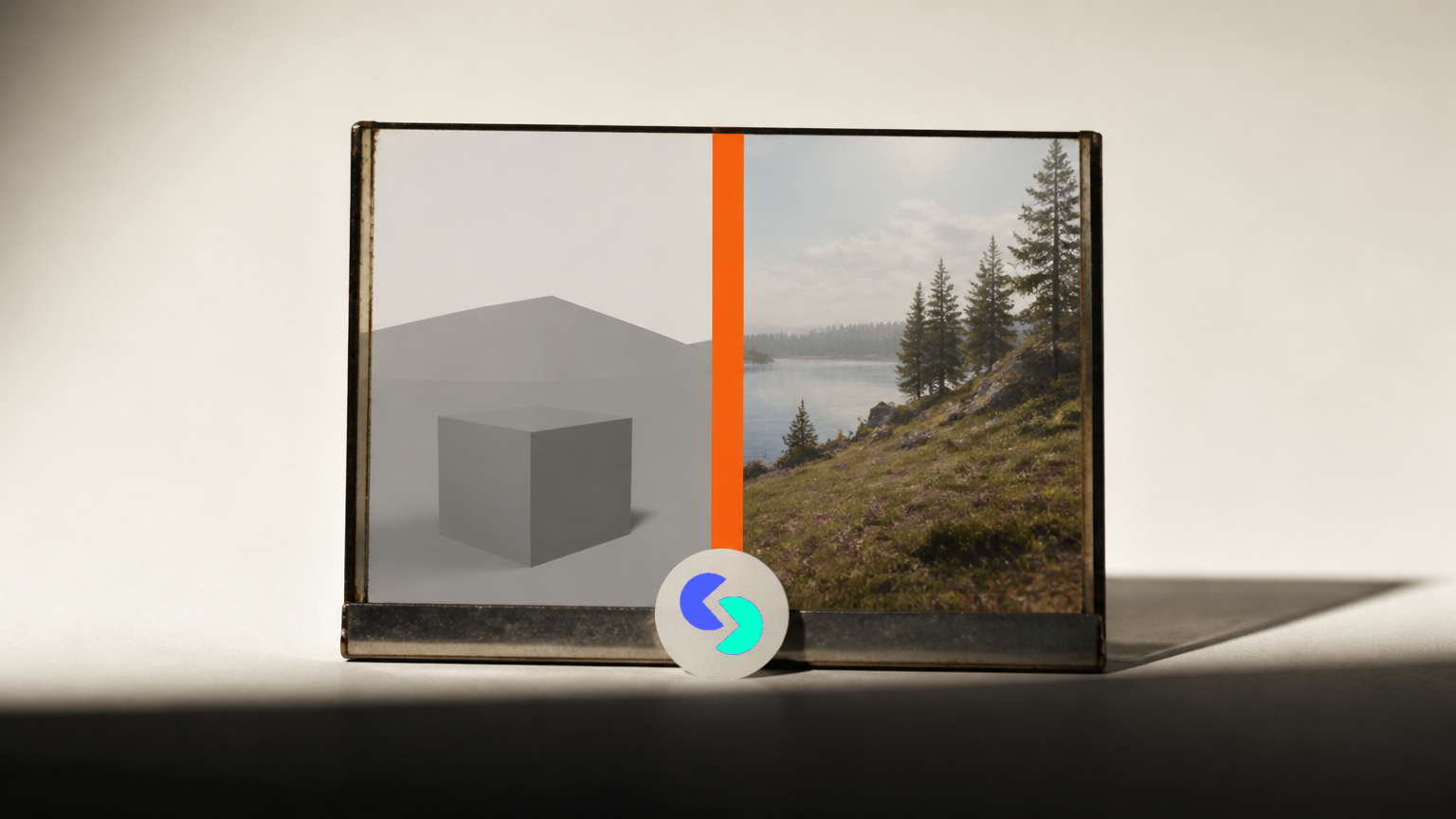
The design splits the job in two. A lightweight executable game engine owns world state, physics and interaction rules, so health, inventory and collision stay in ordinary code. A causal video-diffusion model then re-renders the engine's clean low-poly proxy into detailed frames in four-frame chunks, using one or two denoising steps. A multimodal coding agent can turn natural-language requests into game code and dynamic scene captions, which the paper says allows text-driven creation and modification of scenes and gameplay.
The renderer descends from Alibaba's Wan2.2-Fun-5B-Control lineage, which the Hugging Face model card lists as its base model. Three scenes ship with weights: Medieval Castle and Ancient Egypt as third-person shooters, and City Racing for driving, with time trials and pursuit. Each scene checkpoint holds 5,001,016,512 BF16 parameters, about 5 billion. Output is 480x864 RGB, and the game's HUD and sound stay separate, frame-aligned layers.
The paper reports key-press-to-display latency of 112 milliseconds on the RTX 5090. Single-step denoising reaches 83 FPS steady-state throughput at 18.2 GiB of peak GPU memory. With fixed prompts, the same path reaches 67 FPS on an RTX 5080 and 58 FPS on an RTX 5070 Ti, according to the repository. Coverage collected by aiidelist places the 112 ms figure against Code World Model at about 10.2 seconds on one H200, StreamRender-H3 at about 545 milliseconds on eight GB200 chips, and AgentGarten at about 878 milliseconds on one H100. Those rival figures come from that roundup, not from the systems' own papers.
Two gaps are worth stating. Training code and training data are not in the release, the model card says, and consumer-GPU fit is not verified in the repository README. The maker's own source deployment ran on an A100 80 GB. The card also says there is no guaranteed frame rate or exact scene reconstruction. The company calls Matrix-Game 4.0 the world's first video foundation-model game to run on a single consumer GPU, a claim relayed by shattered.io from the October 15 announcement; no independent reviewer had reproduced the benchmark figures when that report ran.
Clone Matrix-Game-4 from GitHub, pull the three scene checkpoints and their assets from Hugging Face, and run the included inference path or the browser demo.
Sources
- arxiv.org - paper abstract: architecture, 60 FPS, 112 ms, 83 FPS, 18.2 GiB, RTX 5080/5070 Ti figures
- arxiv.org - paper PDF, same figures
- huggingface.co - model card: parameter count, scenes, Apache-2.0, Wan lineage, training data excluded, no consumer-GPU guarantee
- github.com - repo: October 15 2026 release, RTX 5080/5070 Ti throughput, license
- aiidelist.com - peer latency comparison table (Code World Model, StreamRender-H3, AgentGarten)
- shattered.io - company "world's first" claim relayed, no third-party verification
- artrealmai.com - maker's source deployment on A100 80 GB, consumer-GPU fit unverified