
AI slopaganda ads flooded the midterms with $187 million
The Wesleyan Media Project counted 289 AI-generated or AI-enhanced ads, and CNBC found YouTube, Meta and X each police them differently.
Key takeaways
- The Wesleyan Media Project counted 289 ads generated or enhanced by AI with more than $187 million in spending through October 29, 2026, up from less than $50,000 in the 2024 cycle.
- Just over 90 percent of that spending, about $169 million, came from Republican candidates, a Republican party committee or a Republican-leaning group, the project found.
- There is no comprehensive federal law on AI use or disclosure in political ads, and CNBC put the number of state laws at about 30, each with different requirements.
- YouTube labels realistic AI content and requires election advertisers to disclose synthetic or altered people or events, while X places the responsibility on the advertiser.
AI-generated campaign video stopped being a novelty in the 2026 midterms and became part of the ordinary ad mix, and the platforms that carry it are still writing the rules as voters go to the polls on November 3. Ads generated or enhanced by AI carried more than $187 million in spending through October 29, according to the Wesleyan Media Project, and most of them never said a machine made them.
CNBC reported on November 3 that there is no comprehensive federal law governing the use or disclosure of AI in political ads, that about 30 state laws set different requirements, and that candidates often do not abide by them. The same report found fabricated campaign clips running on YouTube, Instagram and X without disclosures, including a fake video of a sitting governor.
What is slopaganda?
The word comes from a March 2025 academic paper, and it now names a whole genre of campaign ad. Researchers Michal Klincewicz, Mark Alfano and Amir Ebrahimi Fard published Slopaganda: The interaction between propaganda and generative AI in March 2025, describing generative AI slop combined with propaganda and misinformation. CNBC traces the term to that work. By the 2026 cycle it had become the shorthand for AI attack ads, including obvious fakes that their makers frame as satire.
Michael Franz, a professor of government at Bowdoin College who co-directs the Wesleyan Media Project, told USA Today that most of the ads his group identified either used AI to enhance a spot, such as by replacing stock footage, or were obvious deepfakes framed as satire. USA Today also cited an October 2026 report from New York University's Center on Technology Policy titled Political Slopaganda that analyzed the genre.
How much AI advertising ran this cycle?
The Wesleyan Media Project counted 289 unique ads generated or enhanced by AI, carrying more than $187 million in spending through October 29, 2026. In its October 29 release, the project said just over 90 percent of that spending, about $169 million, came from Republican candidates, a Republican party committee or a Republican-leaning group. Eighty-two percent of the individual ads were sponsored by a Republican entity, and 13 percent came from Democrats.
The trajectory is the striking part. USA Today reported the figure is up from barely $50,000 in the 2024 cycle. "It's kind of gone from zero to 100 in just that two year term," Franz said. The project has revised its running total upward repeatedly this cycle, from just under $80 million in its September 4 release to $137 million across 220 ads in its October 15 release, and now to $187 million.
Wesleyan builds the list from ads that carry an AI disclaimer, ads that news outlets or the ad-tracking firm AdImpact reported used AI, and ads its coders flagged as likely to contain AI and then confirmed. The project calls its total a floor, because AI use is hard to detect and often undisclosed. USA Today reported that of the AI-generated ads Wesleyan counted through mid-October, only 27 percent carried a disclaimer.
What do the ads actually show?
The clips are fabrications, and the campaigns behind them have argued they are satire. CNBC found a fake video of New York Governor Kathy Hochul, posted by her opponent, Republican challenger Bruce Blakeman. USA Today described the fabricated spot as depicting Hochul gardening with New York City Mayor Zohran Mamdani in a pharmaceutical-style ad for a "political delusion pill." Blakeman has defended his use of AI-generated campaign ads, arguing the spots are exempt as satire.
In Texas, Republican Senate candidate Ken Paxton's campaign created an AI-generated video that depicts Democratic opponent James Talarico making statements he did not make, with a three-second disclosure flashing in the middle of the clip. CNBC reported the video is being shared as organic content on YouTube and X by Paxton's campaign rather than as a paid ad, which sidesteps the advertising disclosure rules entirely. The Blakeman and Paxton campaigns did not immediately respond to CNBC's requests for comment.
USA Today also described an AI ad that put Michigan Senate candidate Abdul El-Sayed inside a Trojan horse draped with a banner reading "Definitely NOT Communism." USA Today described one spot that did disclose: a North Carolina state Senate candidate was shown stretching to clips the ad said were generated with AI.
What are the platforms' rules?
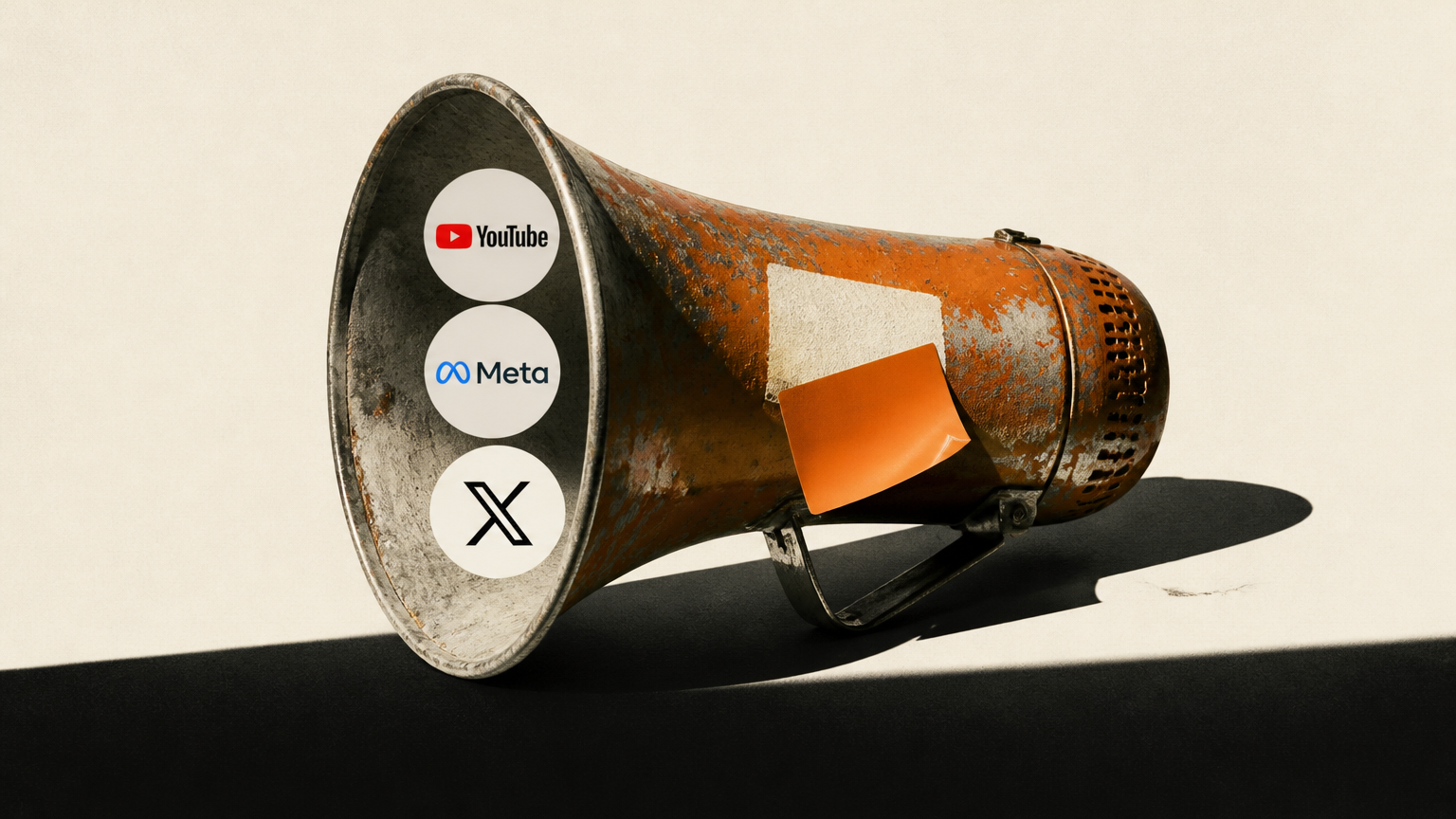
Each platform has a rule, and no two are the same. YouTube requires creators to disclose AI-generated or altered content that looks realistic, made during the upload process, and it applies a label to that content. YouTube told CNBC it applies "prominent labels to realistic AI content." For organic posts, the company said political candidates can request removal where their face appears to be altered or generated by AI. For advertisers, YouTube said it requires disclosure when an election ad contains synthetic or digitally altered people or events. YouTube's systems can also apply a label automatically when content carries C2PA metadata or its own detection flags it, and creators who repeatedly fail to disclose can face removal or suspension from the Partner Program.
Google requires election advertisers to complete a verification process and to carry a "Paid for by" disclosure. On synthetic content, Google's policy says advertisers must disclose all election ads containing synthetic or digitally altered content by checking a box in their campaign settings. For some formats Google then generates the in-ad disclosure itself; for the rest, the advertiser must provide a prominent one of their own.
Meta referred CNBC to its political ad guidelines, which include restrictions in the week before an election, "paid for by" labels and a public ad library. In June, Meta added an "about this ad" tool for ads its systems detect were created with third-party AI tools. X told CNBC that advertisers must comply with applicable laws, placing the responsibility on the advertiser rather than the platform, and the company did not respond to CNBC's request for comment.
Do the safeguards work?
Independent testing has found the tools easy to use for fabricated election content. The Brennan Center for Justice tested six chatbots (ChatGPT, Gemini, Grok, Claude, Perplexity and DeepSeek) and six generative image and video tools (ChatGPT, Gemini, Grok, Meta AI, Runway and Flux.2) between February and August 2026. In the report published August 11, it found that all the image tools generated fake election content on request and that many safeguards were "ineffective, inconsistently applied, or functionally absent." Half of the chatbot responses contained an inaccuracy or a bad citation.
The center reran its image tests in October and published the results on October 22. OpenAI's ChatGPT had improved the most, steering harmful election prompts into cartoon illustrations rather than photorealistic fakes. Google's Gemini moved the other way, producing more realistic images and dropping a visible watermark. Meta AI produced an image it had refused in April. Runway and Grok again generated realistic images for nearly all of the prompts. Brennan Center said the companies left to regulate themselves had done too little.
What does the law say?
There is no federal rule, and the state rules are a patchwork. CNBC reported there is no comprehensive federal law covering AI use or disclosure in political ads, and about 30 state laws with differing requirements. The National Conference of State Legislatures maintains a state-by-state tracker of those statutes, which mostly require a disclosure that AI was used rather than banning the content.
Federal bills exist. The Protect Elections from Deceptive AI Act, backed by senators from both parties, would prohibit knowingly distributing materially deceptive AI-generated video or audio about federal candidates. The AI Ads Act, led by Democrats, would extend existing bans on campaign misrepresentation to cover generative AI. CNBC reported that none of the proposed bills have advanced out of committee.
What it means for creators
For anyone who makes political video with AI, the practical rule set today is the platform's, not the government's. A disclosure requirement that applies to a paid election ad on Google or YouTube may not reach the same clip posted organically, which is exactly the gap the Texas video appears to sit in. If disclosure rules tighten after this cycle, the labeling habit is the one worth building now, since Google's policy already asks the advertiser to declare synthetic content and YouTube already asks the uploader.
What is far less clear is whether any of it changes what voters believe. A survey by the American Association of Political Consultants Foundation found 38 percent of likely voters got election information from AI search summaries in September, half of them without realizing it, and only 1 percent named AI tools as their most credible source. Isabel Linzer, an elections analyst at the Center for Democracy and Technology, told USA Today it cannot be assumed AI ads are swinging races, because persuading voters is hard. The longer-term worry she and Franz raised is that a public unable to tell real clips from fabricated ones stops trusting the accurate ones too.
The Wesleyan Media Project, the National Conference of State Legislatures and the Brennan Center all publish their running trackers, so the ad count, the state laws and the model tests can be followed at the source.
Sources
- cnbc.com - the news, the platform responses, the Hochul and Texas examples
- mediaproject.wesleyan.edu - the $187 million, 289 ads and sponsor breakdown, released October 29, 2026
- usatoday.com - the 2024 comparison, the 27 percent disclosure rate, the satire defense, the survey figures
- ncsl.org - the state-by-state tracker of AI election laws
- support.google.com - Google's election ad verification and synthetic content disclosure rules
- support.google.com - YouTube's requirement to disclose realistic AI-generated or altered content
- brennancenter.org - the August 11, 2026 tests of chatbots and image tools
- brennancenter.org - the October 22, 2026 retest of the image tools
- arxiv.org - the March 2025 paper that coined "slopaganda"