
Coca-Cola brings back its AI Christmas trucks for a third year
System1 testing put the 2026 ad at 5.7 Stars and 68% of viewers happy, in a season when most other brands went handmade.
Key takeaways
- Coca-Cola is running its AI-generated Holidays Are Coming trucks for a third Christmas, airing in prime time during Gogglebox in the UK.
- System1 tested the 2026 ad with 300 people and it scored 5.7 Stars, with 68% of viewers feeling happy, nearly double the average UK TV ad.
- The 2024 and 2025 Coca-Cola AI ads each scored the maximum 5.9 Stars in System1 testing, and contempt for the 2026 ad sat at 5%, the UK average.
- Levi's claymation ad scored 3.8 Stars and Prada's hand-drawn film 3.4, while Aardman's Thatchers ad reached 5.9, which System1's Andrew Tindall calls proof that craft is a strategy, not a magic button.
Coca-Cola is running its AI-generated Holidays Are Coming trucks for a third Christmas, and it is doing it in the one season when nearly every other big brand went handmade. The ad airs in prime time during Gogglebox in the UK, and the comment sections are already filling up. The measurement tells a different story than the backlash does.
The campaign is the third year running that Coca-Cola has built its holiday centerpiece with generative AI. It debuted as a remake of the brand's 1995 Holidays Are Coming spot in 2024, came back "refreshed and optimized" in 2025, and returns again this month. Every year it draws the same argument: that a brand famous for handmade warmth has handed its most emotional ad to a machine.
Why Coca-Cola keeps making an AI Christmas ad
Coca-Cola has said the numbers justify it. Islam ElDessouky, the company's global vice president for creative strategy and content, told Marketing Dive that the ad "scored off the charts" with consumers and that the criticism does not move the needle. "Sure, there is noise and there are people who talk and criticize, but this is one of our top-tested ads in history, period," he said. "The masses, the audiences, do not necessarily look behind the technology. They just look at the story that they're receiving, and then they respond to it."
ElDessouky's comments came with the 2025 campaign, which also paired the AI spot with a traditionally shot 30-second ad called A Holiday Memory. Coca-Cola framed the AI work as a way to stay "timeless and timely" while remaining experimental and innovative. The company declined to comment on visible glitches in the 2025 ad, where sharp-eyed viewers spotted trucks with an extra row of wheels, but a spokesperson told Campaign US that the previous film "performed exceptionally well and was a success with customers which is what matters most to us."
What the testing actually shows
The strongest evidence Coca-Cola has is not its own word. It is the testing run by System1, the creative effectiveness firm, whose chief growth officer Andrew Tindall has tracked the ad since it first ran. In 2024 the AI remake scored the maximum 5.9 Stars in System1's consumer testing. In 2025 it scored 5.9 again. Writing in The Drum on November 9, Tindall said he tested the 2026 ad with 300 people before its launch and it scored 5.7 Stars.
The supporting figures are the more striking part. Tindall reports that 68% of viewers felt happy watching the 2026 ad, nearly double the average for a UK TV ad, and that contempt, the measure System1 treats as closest to real dislike, sat at 5%, exactly the UK average. The reaction viewers gave most often, he wrote, was: "Christmas Coca-Cola adverts? 'Tis the season finally!"
Three years of AI ads, then, and three years of 5-Star scores. Tindall's conclusion is blunt. Coca-Cola is one of the most sophisticated marketing businesses in the world, he argues, and if the AI trucks were doing damage, the trucks would be parked. They are back for a third run instead.
Craft is this season's counter-current
Coca-Cola's third AI Christmas is landing in a year when much of the industry moved the other way. Tindall lists the handmade work: Elf chose stop-motion and Levi's claymation, Barbour and Thatchers both worked with Aardman, Walmart enlisted the Muppets, Prada's film was animated by hand, Starbucks reached for Sharpies, and John Lewis made a puppet dog named Pickles.
Levi's Let's Get Fuzzy is the clearest example. The 60-second spot stars a yeti named Gus, built in claymation by the London studio Blinkink, and the production figures are the point. A six-person team spent more than 2,000 hours building and painting the sets by hand, including 400 miniature trees, and the film took four hours of shooting for every second of animation, per Retail Dive and Creative Bloq.
The craft bet does not guarantee a hit. Tindall calls it "a strategy, not a magic button." Levi's claymation ad scored 3.8 Stars and Prada's hand-drawn film scored 3.4, both above the fashion category average but well behind Aardman's Thatchers ad, which reached 5.9. Brands that make craft their promise also have to deliver on it. Dior has spent the week facing public questions from animators about how its "all hand-drawn" Christmas film was actually made, Tindall notes.
Why the backlash looks bigger online than it is
Tindall's central argument is about the gap between what a comment section shows and what an audience feels. Hostility spreads further and faster online than mild approval, he writes, so the loudest few can come to feel like everyone. He points to his own week. After he published research showing that only 6% of the country truly disliked the John Lewis Christmas ad, a screenshot of his post spread on X and drew nearly 400 comments, most of them attacking him rather than the finding.
The same pattern holds for AI, he argues. When System1 showed AI ads to nearly 3,000 people, viewers could not tell AI had been involved unless they were asked, and the ads they believed were AI-made drew the strongest positive response. "How an ad was made is our obsession, not theirs," he writes, unless a brand has made the process its own promise, which is the Dior case.
What would change the picture
Tindall is explicit about what would move him. A contempt score for the Coca-Cola ad climbing above average, or its Star Rating sliding year on year. Neither has happened, he writes, and he expects the trucks back next year and scoring 5 Stars again.
That is a measurement argument, and it covers how an ad makes people feel rather than whether a brand should use AI at all. The criticism of the Coca-Cola ad is real and separate from the score. Campaign US reported that the 2025 ad's YouTube post drew nearly 1,900 comments, many of them attacking the use of AI, and industry figures pointing to the irony of a brand leaning on AI while using its "Real Magic" tagline.
For now the two stories sit side by side. The craft campaigns are a bet that visible human effort is worth paying for when anything can be generated in seconds. Coca-Cola is the counter-bet, that most of the audience never looks behind the technology. Tindall's data says the second bet is winning. What settles it is whether the contempt score moves, and that reading comes after the backlash peaks.
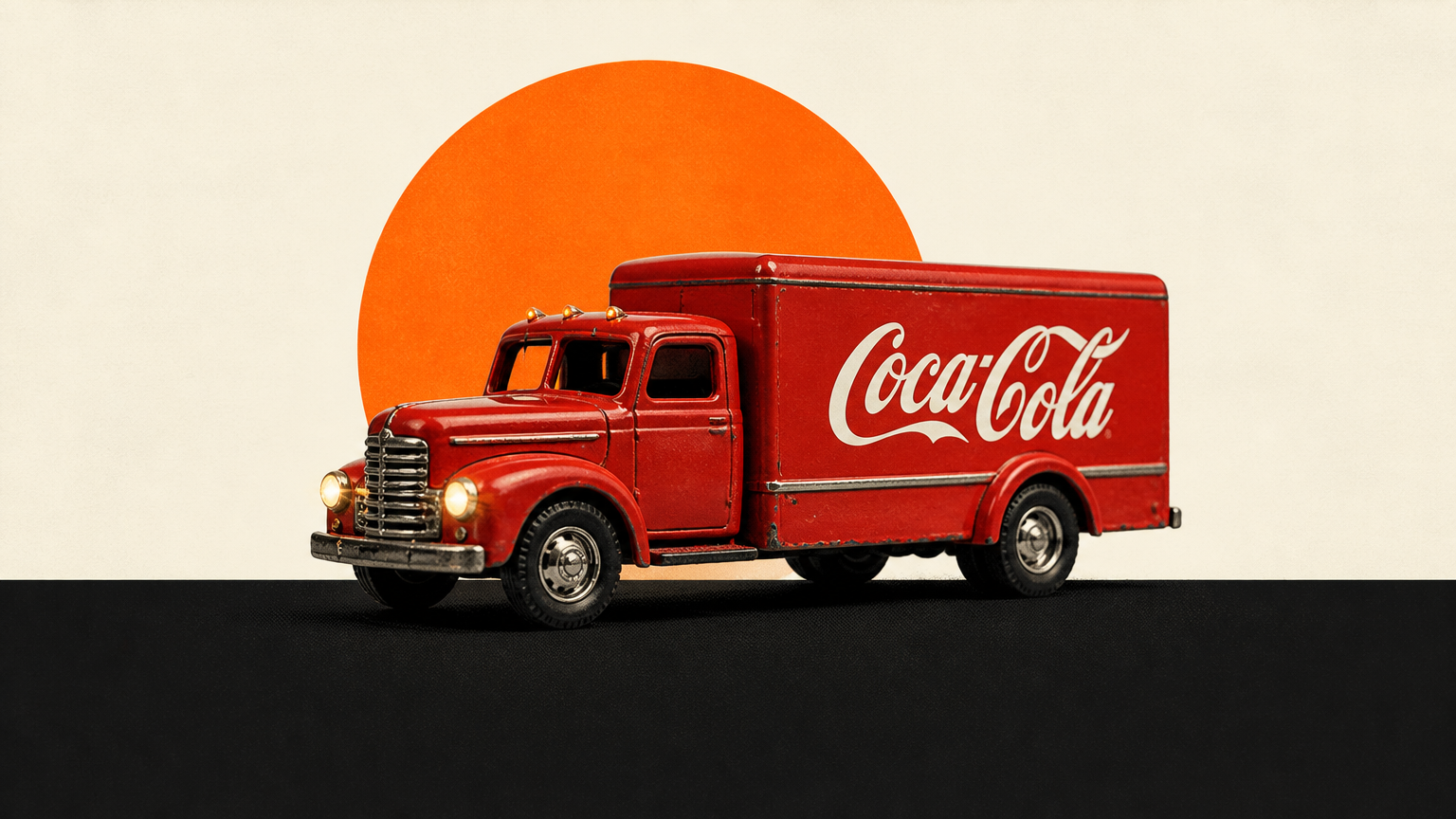
Coca-Cola's 2026 Holidays Are Coming ad is airing in the UK through the Christmas season.
Sources
- thedrum.com - Andrew Tindall's argument and the System1 Star figures for 2024, 2025 and 2026
- digitalgossip.co.uk - the same opinion republished; the handmade campaign list, Thatchers 5.9, Levi's 3.8, Prada 3.4, Dior
- marketingdive.com - Islam ElDessouky's quotes on why Coca-Cola keeps using AI
- retaildive.com - Levi's Let's Get Fuzzy claymation campaign
- creativebloq.com - Levi's production figures: 2,000 hours, 400 trees, four hours of filming per second
- campaignlive.com - the 2025 ad's backlash, its YouTube comment count and Coca-Cola's spokesperson statement
- testyourad.system1group.com - System1's own test report for the 2026 Coca-Cola ad