
H3 Dials turn two prompts into a MiniMax H3 slider
The free ComfyUI nodes build a signed steering file from contrasting prompts, pushing motion from near-frozen to about 2.7x with no LoRA training.
Key takeaways
- H3 Dials are about 14 KB steering files built from prompt pairs with no training, applied in ComfyUI-MAINodes or ComfyUI-Dials, which read the same files from ComfyUI/models/loras/dials/.
- The motion dial h3_motion runs from 0.05x base motion at -2 to about 2.7x at +2, built from 24 prompt pairs with a pair agreement of 0.78.
- The eight-dial villainy pack uses +1 to +2 as its sweet spot; the author reports the sinister dial at +2 crushes dialogue to a Whisper word error of 0.84 against 0.00 at base.
- On Pika H3 Flex the useful range is +0.5 to +1, and a de-roped clip takes about 5.5 to 6 minutes at 1280x704 on an RTX PRO 6000 Max-Q, about one 25-step base render.
H3 Dials is a ComfyUI node pack and a library of tiny steering files that change how much of a quality a MiniMax H3 clip gets, without training anything. Each dial is one direction in the model's processed-prompt space, and its strength is a slider: a negative value pushes every generation toward one prompt of a pair, a positive value toward the other. The pack went up on GitHub on October 30, 2026, and the model library has been updated since, most recently on November 8, 2026.
What a dial actually is
A dial is a direction, not a new set of weights. The Make Dial node encodes pairs of prompts that differ in one quality, takes the difference between the two sides, and averages that difference across every pair. Because the subjects and the phrasing change from pair to pair, those details cancel out and the one shared change survives. The result is a file of about 14 KB; the author puts a typical video LoRA at 80 to 160 MB.
The vector is added where H3 reads the prompt. H3's text encoder output passes through a projection layer and a two-block token refiner before the diffusion transformer sees it, and a dial is injected right after the refiner. The author says building one takes about a minute, one text-encoder pass per prompt, with no rendering and no reference images.
How to make one and apply it
Two packs ship the nodes, and both read the same dial files from ComfyUI/models/loras/dials/. ComfyUI-Dials is the stable original, with Load Dial and Apply Dial; its first commit is dated October 30, 2026. ComfyUI-MAINodes is where the author now develops dials, and it adds a Dial Rack that stacks any number of dials on one model, a map of their useful and overcooked ranges, an interaction matrix, and a strength curve drawn over the clip.
To make your own, write two prompts that differ in one quality and separate them with three pipe characters, one pair per line. An optional {subject} template expands a single pair over a list of four to eight subjects. The author's guidance is to keep the two prompts identical except for the one quality, and to describe the effect you actually want, because pairs teach literally. A pair that says "runs past the camera" teaches subjects to leave the frame.
The motion dial, from frozen to zoomies
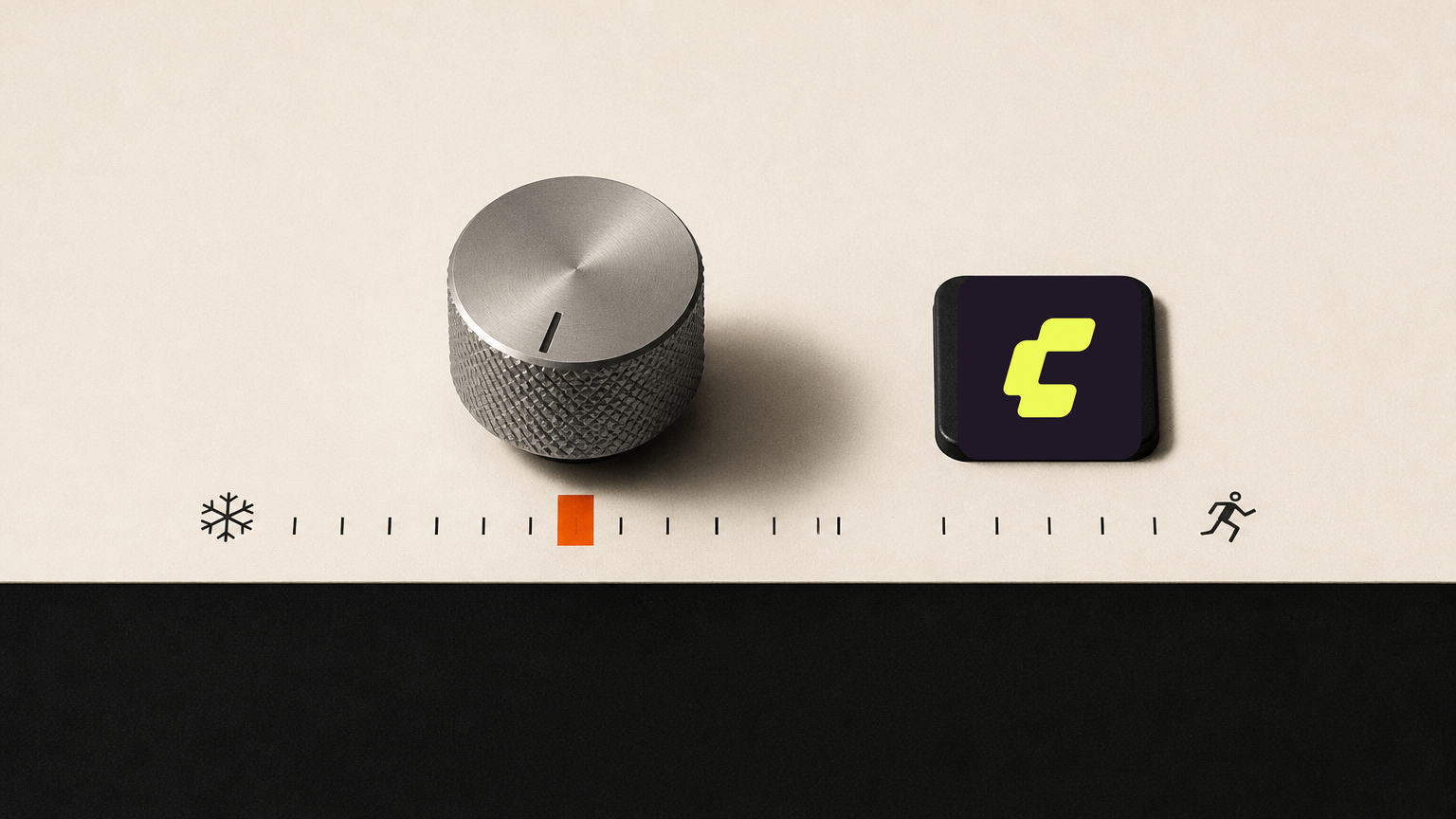
The flagship file is h3_motion. It was built from 24 prompt pairs, eight subjects times three phrasings of still against moving, with a pair agreement of 0.78. Its strength runs from -2 to +2. At -2 the author measures 0.05x the base model's motion, near-frozen and cinemagraph-like. At +2 it measures about 2.7x, and everything zooms.
A second file, h3_motion_lora, carries the same pairs as a standard LoRA key that the stock Load LoRA (model only) node accepts. It is gentler per unit, about 0.6x the hook version, so it needs about 1.6x the strength. The author also reports the hook node reproduces the reference implementation, with a mean pixel difference of 1.4 out of 255 on a test clip.
The villainy pack, and the audio warnings
Eight dials turn a scene evil: sinister, creepy, cold, unhinged, seductive, corrupted, dread and impish. Each was made with debias on, so the author says they are distinct directions, and the motion dial is unrelated to all of them. The sweet spot is +1 to +2, and +4 is extreme. Two carry warnings. The sinister dial tends to break the audio: on a two-line dialogue test the author reports speech crushed to a Whisper word error of 0.84 at +2, against 0.00 at base. The unhinged dial really is unhinged, leaning aggressive even at +2.
The author checked the pack on a handful of scenes, an office, a library and one two-line dialogue, and calls the dials creative tools rather than guarantees. A placebo dial is also included: a meaningless direction you can scale to another dial's push, to see what a push of that size does on its own.
A dial on a curve, and the look dials
On the MAINodes Dial Rack, a dial's strength can follow a time curve drawn over the clip. Click to add a point, drag to move it, double-click to delete, and snap to seconds or to the beat. The author says the dial switches inside one generation, not in a second pass. In the author's tests, color and style dials switch within a fraction of a second, while lighting dials ramp over about a second and a half.
For the look dials used with reference pictures, the author says to set blend steps to k = 6. At k = 2, psychedelic and space warp only flipped the layout of a set of magic rings and drew no color. A k = 6 row costs about 1.7x the render time per distinct curve. The same bake-off produced dramatic light, arcane sigils and storm. The author warns that the storm dial changes the soundtrack even with "audio: protect" on, by +2.5 to +3.4 LU.
On Pika H3 Flex, with de-rope
The dials run unchanged on Pika H3 Flex, a 6-step, no-CFG LoRA for MiniMax H3, sitting between the Pika LoRA and the sampler. On Pika the useful range is narrower: +0.5 to +1 for motion and for the evil dials. At +0.5 and +1.0 the author measures about 20 percent and 23 percent more camera-removed motion; by +1.5 and +2 the scene restages and characters morph, and +3 loses the prompt.
A de-rope pass, also in MAINodes, finds the stretches that move too fast for the frame rate, re-renders them slowed down and maps them back to real time, keeping the original audio. At 1280x704 the author measures a de-roped Pika clip at about 5.5 to 6 minutes on one RTX PRO 6000 Max-Q, roughly the same as one 25-step render of the base model.
What a dial is not
The author is explicit about the category. A dial is not a LoRA or a slider LoRA, because nothing is trained. It is not a RefMod, because it uses no reference images or video; it changes how much of a quality a prompt gets, not what is shown. It is not a text embedding from the Stable Diffusion era, because it is not a word you type. And it is not a negative prompt: H3 is guidance-distilled and runs without classifier-free guidance, so negative prompts do nothing. The author frames dials as giving that push-away control back, in both directions.
Independent write-ups, including ComfyUI Wiki's November 6 piece, draw the same line. A LoRA adds what appears, a character or a style; a dial changes how much of a quality you already get. Ten experimental lab dials extend the idea, with continuums such as oil painting to pixel art and a datamosh dial that keeps the subject crisp while the background breaks into a glitch mosaic.
The limits, and the license
A dial cannot teach H3 something new, so a new face, character or style still needs a LoRA. The published strengths are starting points measured mostly on Pika H3 Flex's 6-step schedule and, in many cases, a single seed.
The license splits in two. The node code is AGPL-3.0 for ComfyUI-Dials and GPL-3.0-or-later for ComfyUI-MAINodes. The dial weight files, including any dial you make with the nodes, are model derivatives of MiniMax H3 under the MiniMax H3 Community License Agreement, which carries territory exclusions: the European Union, the United Kingdom, the Republic of Korea and the United States are excluded. The Hugging Face library reported more than 1,800 downloads in the last month, read on November 8, 2026.
The dial files and prompt pairs are on Hugging Face. Clone either node pack into ComfyUI/custom_nodes/, copy the .safetensors files into ComfyUI/models/loras/dials/, and load an example workflow.
Sources
- huggingface.co - model card: dial figures, villainy warnings, license, downloads
- github.com - node pack, comparison table, license split, repo date
- github.com - Dial Rack, time curves, de-rope, GPL-3.0-or-later
- matlowai.github.io - project page: measured table, install steps
- comfyui-wiki.com - independent coverage and the November 6 update
- freakyjolly.com - independent install guide, November 7, 2026
- artrealmai.com - independent writeup, repo date
- kombitz.com - independent roundup, November 7, 2026