
Meshy's Mora builds a world in 3D before rendering it
The 3D generation company's research architecture hands game logic, spatial structure and final imagery to three different layers, and a playable demo is live.
Key takeaways
- Meshy detailed Mora, a research architecture that divides world generation between coding agents for game logic, its own 3D generation for spatial structure and assets, and a real-time video model for final imagery and audio.
- Mora 1 is an early playable research demonstration at mora.fun, with spatial puzzles, multiplayer platforming, building, racing and sports and switchable visual styles.
- Meshy also shipped Meshy 7.1 on 16 September 2026, which the company says is the first generative 3D model to reach 4096-cubed geometric resolution.
Meshy wants a world built before it is rendered. On 21 September the 3D generation company detailed Mora, a research architecture whose central bet is that asking one video model to simulate an entire world end to end is the wrong shape of problem.
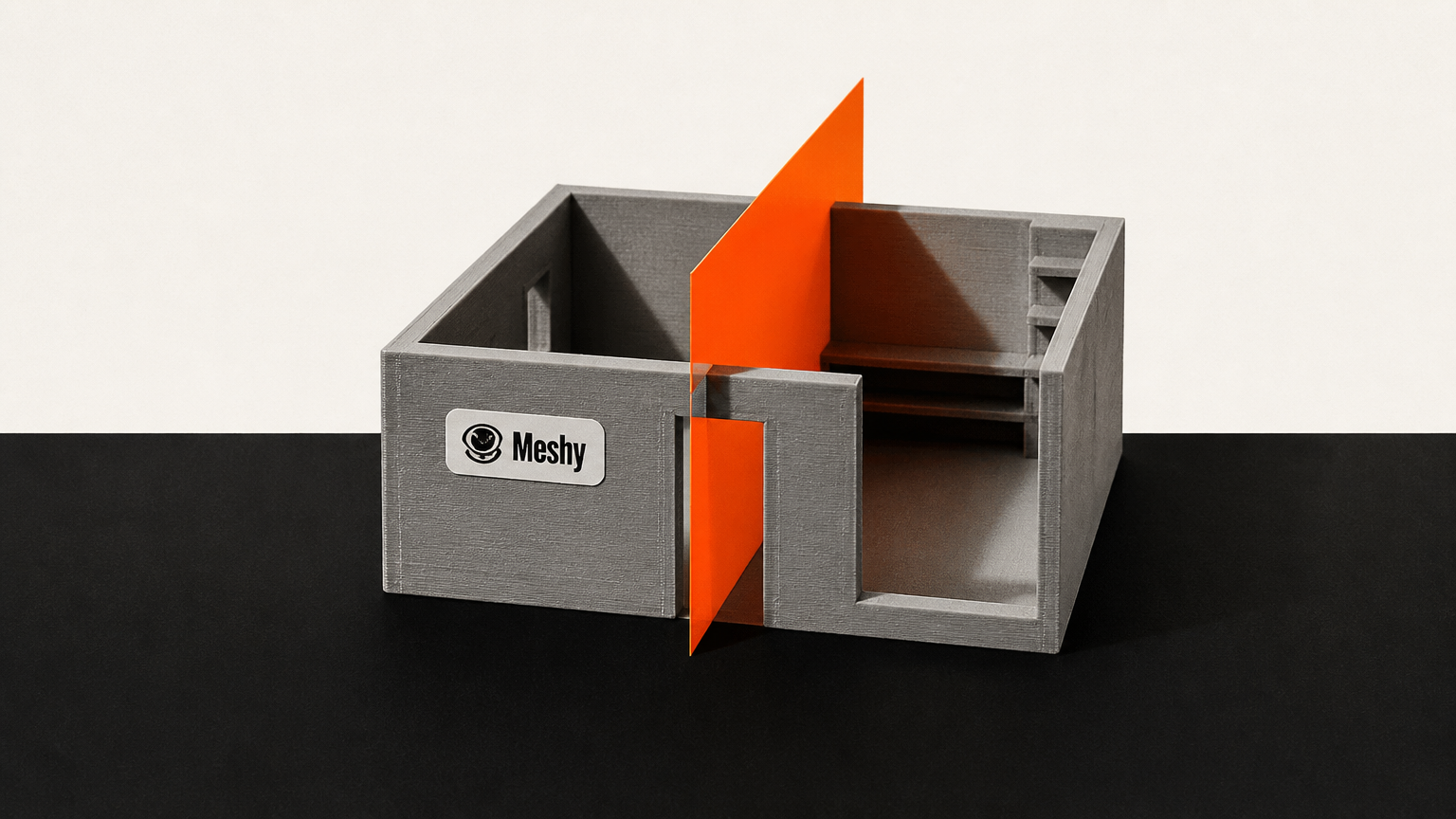
Mora stands for Multimodal Open-world Real-time Architecture. Meshy's announcement describes three layers: coding agents write the game logic and mechanics, Meshy's 3D generation builds the spatial structure and assets, and a real-time video model turns that structure into the picture and audio you actually see. The company's framing is that video models struggle with consistent spaces and complex interaction, so the rules and the geometry should come from a system that holds them exactly.
Mora 1, the early demonstration, is playable at mora.fun. Its experiences include spatial puzzles, multiplayer platforming, building, racing and sports, with switchable visual styles. Meshy calls this an early research demonstration built to validate the architecture rather than a product: a general-purpose world creation tool is a longer-term goal, and Mora 2 is already in development.
That is the more interesting half of the claim for anyone making AI video. Because each layer improves on its own, better coding agents and better 3D models raise the quality of a world without a new video model, and a better video model improves the look without touching the rules.
Alongside the research, Meshy shipped Meshy 7.1 on 16 September, the new version of its flagship image-to-3D model, now available to all registered users, with the two Ultra detail modes and downloads of Meshy 7.1 output requiring a paid subscription. The company says it is the first generative 3D model to reach 4096-cubed geometric resolution and that it ranked first among five tested image-to-3D models across three rendering resolutions in Meshy's own Detail Richness Benchmark, which measures surface detail. The methodology is in Meshy's technical report, and the company says it plans to release the benchmark as a standalone tool.
Both numbers are Meshy's own. There is no third-party evaluation of Mora or of Meshy 7.1 in the announcement, and the trade write-ups carry the same figures because they come from the same release.
Open mora.fun in a browser to try the demonstration; the demo is public and nothing needs installing.
Sources
- prnewswire.com - Meshy's announcement of Mora, Mora 1 and the Meshy 7.1 claims
- mora.fun - the playable demonstration itself
- meshy.ai - the technical report behind Meshy 7.1's benchmark claim
- nativo.ventures - independent write-up carrying the same announcement