
OpenAI Images 2.6 adds looping GIFs and reference images
The API splits it into Flare, which renders in as little as six seconds at low quality, and Sunburst for detail; OpenAI says generation is 50% faster.
Key takeaways
- OpenAI released Images 2.6 on November 4, 2026, across ChatGPT, Codex and the API, adding looping GIF generation and images made 50% faster.
- The API offers two versions: GPT-Image-2.6 Flare for fast iteration, which can render an image in as little as six seconds at low quality, and GPT-Image-2.6 Sunburst for detail.
- OpenAI says people create 4 billion images a week across ChatGPT, Codex and the API, more than half a billion a day.
- Animated GIFs can run 2 to 16 frames at 20 to 2,000 milliseconds each, and still reference images can hold a character across edits.
OpenAI shipped Images 2.6 on November 4, adding looping GIFs, reference images that hold a character across edits, and images made 50% faster.
The model is live in ChatGPT, Codex and the API, OpenAI said in the announcement post. People already create 4 billion images a week across those three surfaces, more than half a billion a day, per the same post.
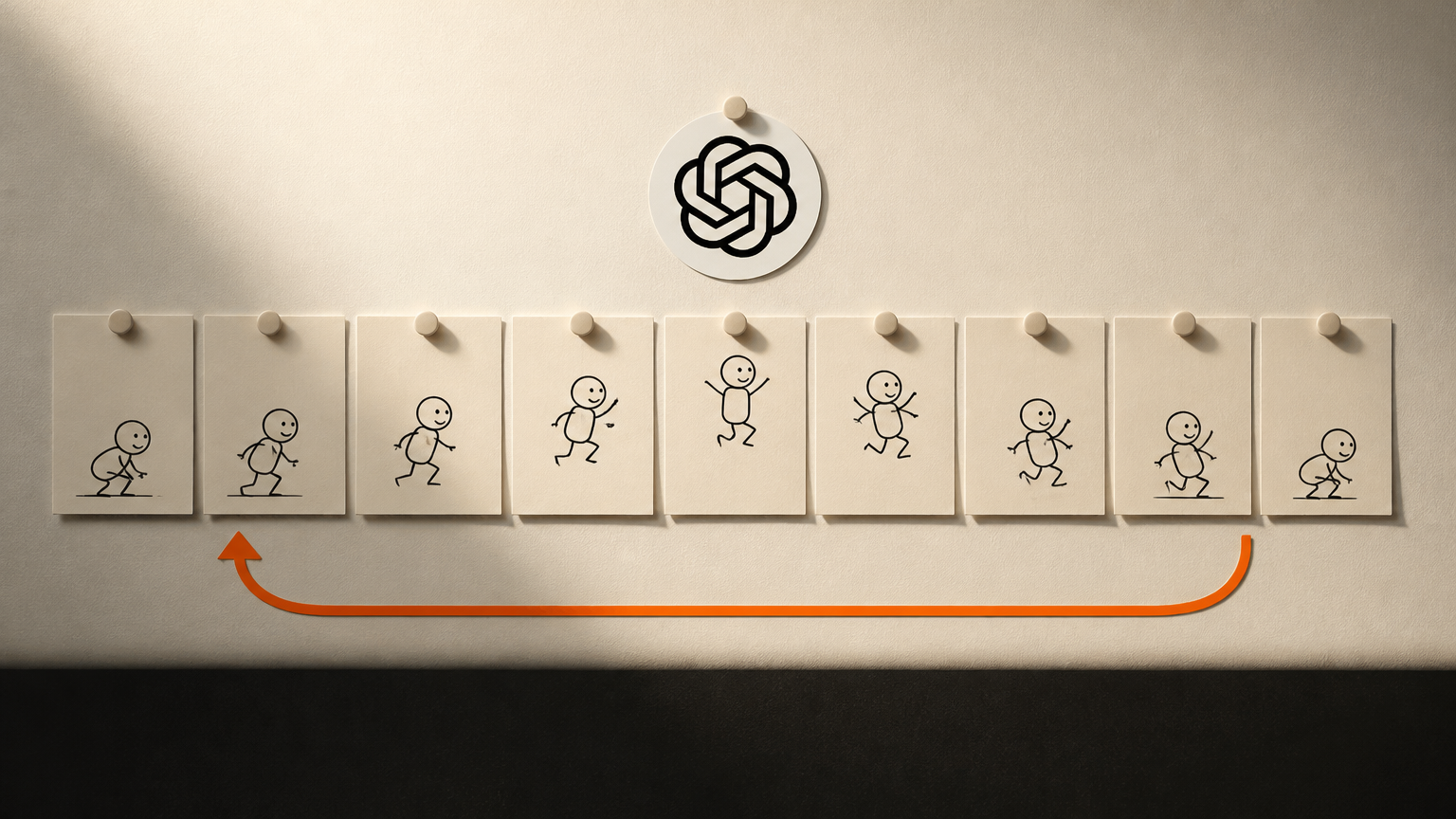
Images 2.6 generates animated GIFs, which OpenAI pitches for animating a brand mascot, cutting reactions and memes for social media, and building "animated storyboards to explore character movement before video production." Both example prompts in the post were made by OpenArt, and both animate the same chibi office worker reacting to a stock chart. OpenArt co-founder and CEO Coco Mao called GIFs "the native language of social media."
In the API, the model arrives as two versions. GPT-Image-2.6 Flare is tuned for fast iteration and can generate an image in as little as six seconds at low quality. GPT-Image-2.6 Sunburst targets detail and precision, and OpenAI says it holds consistency across edits at medium or high quality. Both speed figures are OpenAI's own and come with no named baseline.
The developer changelog and the image generation guide fill in the API side. Animated GIFs run through the generations or edits endpoints with a frame count of 2 to 16 (default 9) and a frame duration of 20 to 2,000 milliseconds (default 200), and still reference images can guide the animation. Both models add SVG output, markup-guided edits, and a complexity control that sets how much the model plans before it renders. Complexity defaults to high, and OpenAI's guide says changing it carries no separate fee.
The price holds steady against the previous release. GPT-Image-2.6 Flare and Sunburst carry the same API rates as GPT-Image-2.5, at $8 per million image input tokens and $30 per million image output tokens, per OpenAI's pricing page.
For creators, the practical change is that an image model now produces motion. A storyboard panel or a one-line sketch can become a looping GIF in ChatGPT or the API before a video model ever runs, though the guide notes the model can still drift on recurring characters and brand elements across many separate generations.
Images 2.6 rolls out now in ChatGPT and Codex on web, desktop and mobile at every tier, with GPT-Image-2.6 Flare and Sunburst live in the API.
Sources
- openai.com - release date, 4 billion images a week, 50% faster, Flare and Sunburst, six seconds, GIF uses, OpenArt prompts, availability
- developers.openai.com - November 4 release of the two API models, complexity, SVG output, GIF output, markup-guided editing
- developers.openai.com - GIF frame fields, reference-image edits, complexity default, SVG rules, stated limitations
- developers.openai.com - per-token rates for the 2.6 and 2.5 image models