
Sony and UMG sue Suno again, alleging model laundering
A complaint filed September 18 names 60,202 recordings and argues that training a new model on an infringing model's outputs does not clean it up.
Key takeaways
- Sony Music Entertainment and Universal Music Group filed a new copyright suit against Suno on September 18, 2026, in the U.S. District Court for the District of Massachusetts, naming 60,202 recordings.
- The complaint alleges Suno's v6 models were trained partly on outputs from its earlier, unlicensed models, which the labels call model laundering.
- Startup Fortune, citing Music Business Worldwide, put the theoretical maximum at just over $9 billion in statutory damages from the recording count.
- Warner Music, BMG and Believe signed licensing deals with Suno; Sony and UMG did not, and Suno has said v6 was trained from scratch.
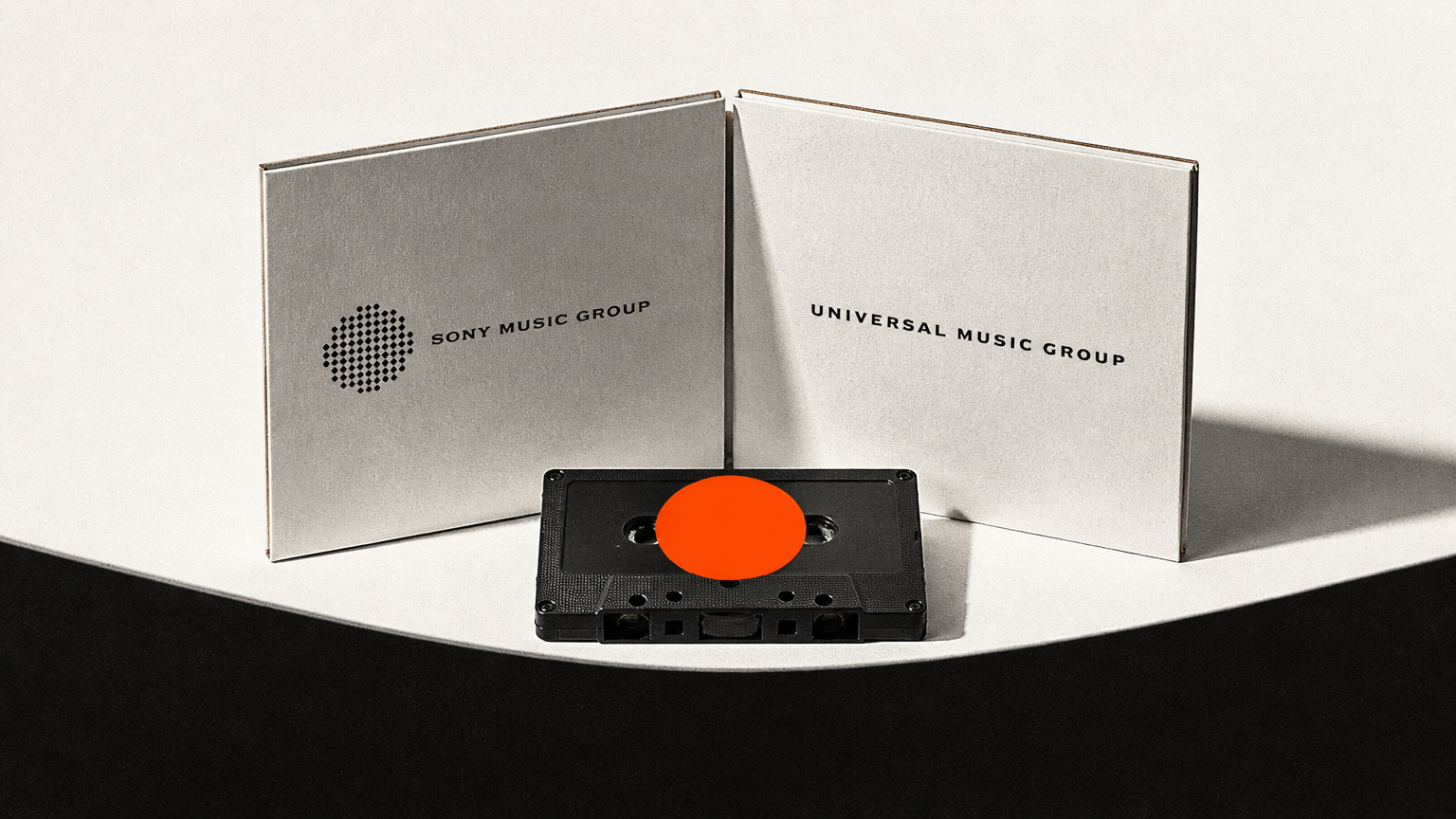
Sony Music Entertainment and Universal Music Group filed a new copyright suit against Suno on September 18, 2026 in the U.S. District Court for the District of Massachusetts, accusing the AI music company of laundering the infringement of its earlier models into its freshly licensed v6 family. The complaint names 60,202 recordings.
The labels' argument rests on lineage rather than output. They allege that v6 was trained partly on material generated by Suno's earlier models, which were themselves built on unlicensed recordings, and that Suno used distillation to teach the new model to reproduce its predecessors. The complaint's wording, quoted by The Verge: "Training a 'new' model on the outputs of an infringing model does not eliminate the infringement; it launders it." It adds that "v6 is not a fresh start; it is the fruit of the same poisoned tree."
Suno's position is that v6 is clean. Jack Brody, the company's chief product officer, told The Verge at launch that v6 was "trained from the ground up, with a new set of data," including user data, and later confirmed to Engadget that the data includes user creations. Suno has not yet answered the new complaint, and it has defended its training as fair use in the earlier case, which remains pending.
The exposure is large enough to matter to the company's investors. Startup Fortune, citing Music Business Worldwide, put the theoretical maximum at just over $9 billion, calculated from the $150,000 statutory ceiling per work for willful infringement multiplied across the 60,202 recordings. That is a ceiling, not a demand, and statutory damages in practice land far below it.
The case is the second between these parties. Sony and UMG sued Suno in June 2024 along with Warner Music Group; Warner settled in November 2025 and licence deals with BMG and Believe followed, the last one on September 8, a day before v6 launched. Sony and UMG took no deal, which is what makes the new filing a test of whether settling is cheaper than training first.
Why video models should read it
Nothing in this complaint is limited to audio. The mechanism the labels describe, taking a model built on disputed data, distilling it, and shipping the student, is the standard way labs cut inference costs, and a recent paper on distilled diffusion models describes the same gap from the technical side: a student model trained only on its teacher's outputs carries no per-instance trace of the teacher's training data, which the authors call a model laundering loophole that severs the auditable link between a deployed model and its upstream data.
Video generation runs on the same pattern. SLOP TV reported this morning on a California hearing where a judge was sceptical of ByteDance's argument that downloading public videos is not circumvention, and the Motion Picture Association's August framework with ByteDance covers what its models are allowed to output while saying nothing about the data they trained on. A ruling that lineage survives distillation would reach every lab that trains a new model on its own old one.
The next procedural step is Suno's answer to the complaint; the earlier Massachusetts case, where Judge F. Dennis Saylor IV allowed a separate YouTube stream-ripping claim in August, is still working toward the question of whether training on copyrighted recordings without a licence is lawful.
Sources
- theverge.com - the complaint's quoted language, the distillation allegation, the licensing holdouts and Suno's earlier statements on v6's data
- startupfortune.com - the September 18 filing, the court, the 60,202 recordings and the damages ceiling
- arxiv.org - research describing the model laundering loophole when a student model is distilled from a teacher's outputs
- techtimes.com - the August 2026 MPA-ByteDance framework covers output-layer guardrails and leaves training-data liability open