
What is Pippit? ByteDance's CapCut ad platform
Pippit is ByteDance's CapCut-backed marketing tool, the same Seedance models as Dreamina and BytePlus, wrapped in an ad pipeline with avatars, scheduling and analytics.
Key takeaways
- Pippit is ByteDance's Creative-as-a-Service platform, built by the CapCut team and launched in spring 2025 as a rebrand of CapCut Commerce Pro.
- Its model index lists Veo 3.1, Sora 2, Seedance 2.5, Seedream 5.0 Pro and Nano Banana Pro, resold from one credit balance with no published per-model rate card.
- BytePlus ModelArk sells the same Dreamina Seedance 2.5 as a raw API, and Dreamina exposes it as a free consumer tool, so the three products differ in the layer above the model rather than in the picture.
- Pippit's pricing page shows annual tiers from $101 for Starter and $246 for Plus, with 1,575 and 3,885 credits a month; an August third-party capture listed Starter at $119.99 a year with 2,100 credits.
Pippit is ByteDance's marketing-content platform, built by the CapCut team, and the fastest honest description of it is that it sells you a finished ad rather than a shot. Where a director starts with a script and a shot list, Pippit starts with a product link and works backwards to the cut. From a craft-first point of view that is the whole argument, and it is worth taking apart rather than dismissing, because the engine underneath is the same one the rest of the industry buys.
What Pippit actually is
Pippit calls itself a Creative-as-a-Service platform, which is marketing language for a stack of four things. There is an AI creation toolkit: one-click video, link-to-video, digital avatars with multi-language voices, image-to-video, bulk image creation and an AI script generator. There is scheduling and auto-posting, so content is made in advance and published on a timetable. There is an analytics dashboard. And there is a library of commercially licensed video templates, design elements, audio and AI-written scripts.
Those are the four things the rebrand announcement itself led with, and every one of them is a production department function rather than a filmmaking one. The library is the asset manager, the scheduler is the distribution desk, the analytics are the ratings report, and the script generator is the junior copywriter.
The name is worth one line because it explains the product's ambition. Pippit is borrowed from the pipit, a lark-like songbird, and the ending was chosen so the word works as a verb, as in "I will Pippit and post tomorrow". The Chinese name is 小云雀, and ByteDance's naming agency Catchword has published the brief behind it. A tool named after a songbird, with the tagline "Create with wings", is not aiming at the cinematheque.
Where it came from
Pippit did not start as Pippit. It began as CapCut Commerce Pro, the subscription video marketing platform CapCut rolled out in late 2024 for e-commerce sellers, and it was rebranded to Pippit in spring 2025. Worth stating plainly: ByteDance owns TikTok and CapCut, so Pippit sells the ad-making tool to the same company that already owns the feed and the shop those ads run on.
Since then it has grown in two directions. Agent Mode arrived in August 2025, turning the tool from a generator into something that takes a link, a file or a piece of media and returns a finished video with a chosen aspect ratio and duration. Then in early 2026 came the architectural overhaul that integrated Dreamina Seedance 2.0 and added a Short Drama Agent, which the Chinese trade press reported as turning scripts of up to 100,000 words into rendered video.
That is the part a filmmaker should look at twice. A tool that ingests a script that long is not making ads any more, it is making episodes, and the reporting around it frames the target as short-form drama rather than brand work.
The three doors to the same engine
This is where Pippit stops being a curiosity and becomes a decision, because ByteDance sells the same underlying models three different ways.
- Dreamina is the creator's door. It is ByteDance's own consumer AI studio, and its pages are built around Seedance 2.5 sample prompts, from a 30-second barbershop scene in one generation to a Peking opera performance in a continuous shot. It is free to start, prompt-gallery driven, and aimed at people who want to make something rather than ship a campaign.

Dreamina's own Seedance 2.5 sample prompt renders a 30-second barbershop scene in a single generation. Image: Dreamina.
- Pippit is the marketer's door. Its model index resells Veo 3.1, Sora 2, Seedance 2.5, Seedream 5.0 Pro and Nano Banana Pro from one credit balance under one bill, a list logged by a third-party review. On top of the models sit the agent layer, the avatar layer with stock avatars, custom twins and talking-photo animation, and the scheduling and analytics. It also ships Story Studio, a canvas where you set character roles and scene order so a multi-scene story stays consistent from the opening shot to the last.
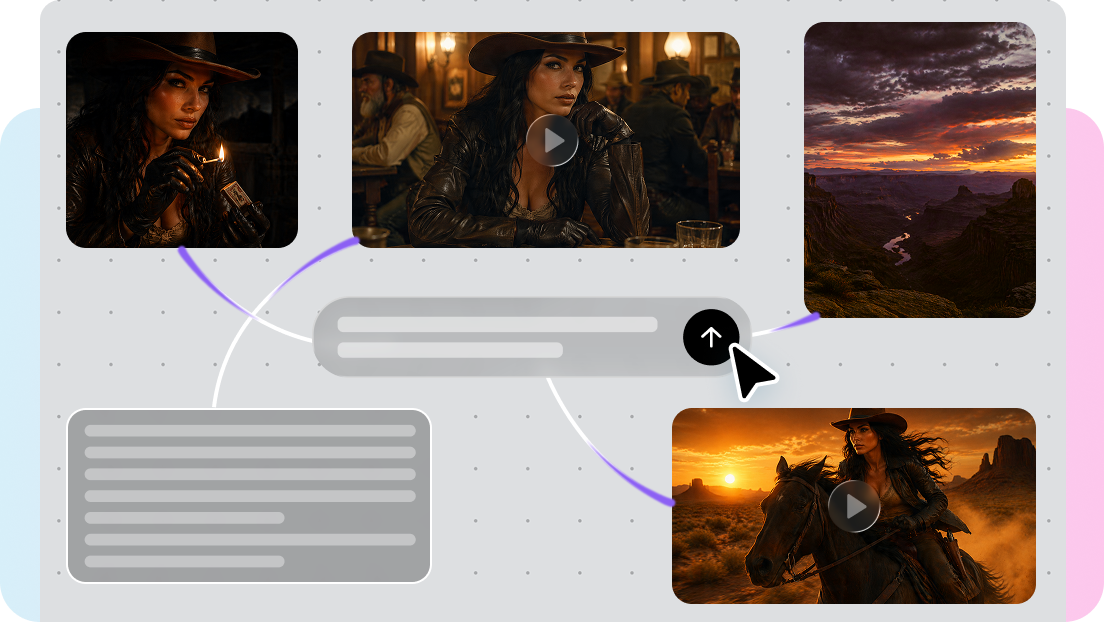
Story Studio's canvas plans a multi-scene story as connected scene cards so characters and tone carry across them. Image: Pippit.
- BytePlus ModelArk is the builder's door. It is ByteDance's enterprise platform, and it sells Dreamina Seedance 2.5 as an API with the specification attached: a single 30-second segment, up to 50 reference assets as 30 images, 10 videos and 10 audio files, native output in more than 10 languages, editing and extension. Around it sit Seedream 5.0 Pro for images, Seed Speech for voices, Omnihuman and DreamActor for digital humans and motion, plus inference, fine-tuning, evaluation and agents, with starter token grants. There is no creative layer at all.
Read those three together and the important thing is what does not change. The picture quality in a Pippit ad and a Dreamina sample and a ModelArk call is the same model. What differs is everything above it: who does the research, who owns the assets, who schedules the post, and who pays per credit rather than per token.
How a filmmaker would actually use it
Classical training starts with the shot list, so the test is whether a tool can hold a shot. Pippit's answer is timestamp prompts, which let you describe what happens at the start, middle and end of a 30-second generation, and up to two rounds of footage extension, so a product reveal can continue into an interaction and then to a wider final frame. Multimodal references hold subject, product, styling and composition steady, green screen editing swaps the background afterwards, and every generated video exports up to 4K.

Reference frames are attached to the generation to hold subject, product and styling steady. Image: Pippit.

Pippit's own illustration of a 30-second Seedance 2.5 generation, with the duration badge, the prompt field and the audio waveform in the same frame. Image: Pippit.
That is a real amount of control for a tool with no timeline. So the honest placement is second unit and finishing, not direction. Four places it earns its seat in a working toolset:
- Look tests. Run a 30-second Seedance 2.5 pass to see whether a grade, a location or a piece of casting reads on camera before anybody spends a day on it.
- Cutdowns. One spot becomes the 9:16, 1:1 and 16:9 versions, with the reference-video workflow rebuilding a trending structure rather than asking you to reverse-engineer it from a prompt.
- Localisation. The video translation and multi-language avatars live inside the tool that generated the video, which removes a vendor for anyone running one creative across markets.
- Volume fill. The B-roll, product inserts and channel variants that a junior editor would otherwise spend the week on.
What it is not is equally clear. It is not a timeline editor, so CapCut or an NLE still owns the cut. It will not tell you what to sell or what the story is. And the one capability that should give a director pause is the remix flow: referencing a trending video's script and structure to produce a new one in the same shape is precisely the operation that flattens a medium into a format.
The numbers, and the traps
Pippit's pricing page puts a free tier with daily credits at one end, then Starter at $101 a year and Plus at $246 a year, with credit allowances of 1,575 and 3,885 a month, and Pro tiers running from $540 to $3,599 a year with up to 59,000 credits a month. A third-party review that captured the same page in August published different rungs, Starter at $119.99 a year with 2,100 credits and Plus at $359.99 with 6,700, so treat any plan number as a moving target and check the page in your own region. That same reviewer found the ladder barely matters: starter credits and top-tier credits cost within about 11 percent of each other, so the billing cycle and what you generate decide the bill, not the tier.
Three limits matter more than the price. There is no published per-model rate card, so a Veo 3.1 clip and a Nano Banana Pro image come out of the same allowance at unknown and unequal rates, and you cannot forecast a content plan before subscribing. The free tier carries a watermark, because watermark removal starts at Starter, which makes it an evaluation tier rather than a delivery tier. And nothing about seats, client workspaces or approval flows is published at any level, which is fine for a solo operator and disqualifying for an agency.
One more boundary is worth stating plainly because the branding blurs it: TikTok Ads appears in Pippit's ecosystem list as a brand, not as an integration. There is no ad-account connection, no campaign or budget structure and no conversion reporting. Scheduling and posting are organic.
What to take from it
Pippit is competent at a job the industry keeps pretending is filmmaking and is not: producing a high volume of feed-grade advertising, on a schedule, in the formats each platform wants. Judged as a delivery system it is coherent and cheap at the entry tiers. Judged as a creative instrument it is a second unit that never asks for a close-up.
The decision between the three doors is simpler than the marketing makes it sound. If you want to make things and see what the model can do, start with Dreamina. If you need ads at volume with distribution attached, Pippit is the pipeline. If you need shot-level control and you are building your own pipeline, ModelArk is where the model actually lives, and everything else is somebody's opinion about how you should use it.
Start on Pippit's free tier with one product and one 30-second clip, watch the credits rather than the marketing page, and keep the cut in CapCut where the timeline belongs.
Sources
- pippit.ai - Pippit's own definition, the name, the four value propositions
- pippit.ai - current plans, credits, annual figures
- pippit.ai - how Seedance 2.5 is presented inside Pippit, Story Studio, timestamp prompts, 4K export
- en.wikipedia.org - launch in May 2025, Seedance 2.0 overhaul, Short Drama Agent, Chinese name
- pippit.ai - the rebrand and the launch feature list
- tugan.ai - rebrand naming via Catchword, Product Hunt record, Google Play ratings, hands-on timings
- soku.ai - model index, agent and avatar layers, August price table, the five buyer limits, regional pricing
- dreamina.capcut.com - Dreamina's own product surface and its Seedance 2.5 sample prompts
- byteplus.com - ModelArk model list, Seedance 2.5 specification, free token grants
- ai.byteplus.com - the model families and update dates on BytePlus