
Wikimedia asks court to test AI fair use stage by stage
The Wikimedia Foundation's 5,831-word brief backs neither side and asks Judge Sidney Stein to weigh each stage of AI use on its own.
Key takeaways
- The Wikimedia Foundation asked Judge Sidney H. Stein on October 29, 2026 for leave to file a 5,831-word amicus brief in In re: OpenAI, Inc. Copyright Infringement Litigation, No. 25-md-3143, in the Southern District of New York.
- The brief argues that pre-training OpenAI's models was likely fair use but that ChatGPT's retrieval-augmented generation likely is not unless it follows licensing terms such as Wikipedia's Creative Commons CC BY-SA 4.0.
- Judge Stein has not ruled on whether to accept the brief and has not decided fair use; summary judgment replies in the case are due November 6, 2026.
- Wikimedia filed in support of neither party and warns that rulings at either extreme would harm open knowledge.
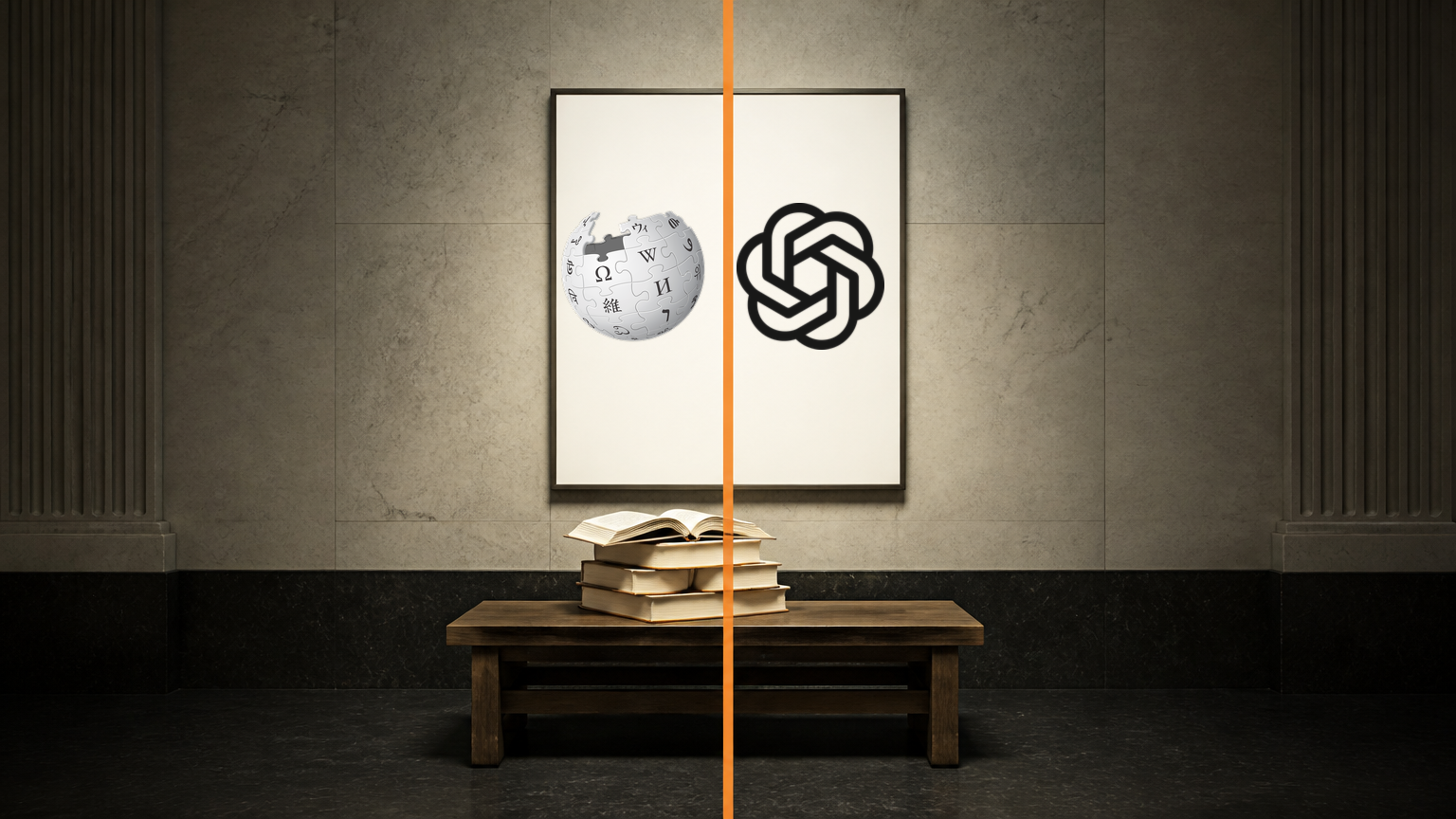
The Wikimedia Foundation asked a federal judge on October 29, 2026 for permission to file a friend-of-the-court brief in The New York Times' copyright case against OpenAI and Microsoft, arguing that training their models was likely fair use while ChatGPT's habit of fetching web pages and reproducing them in answers likely is not.
The foundation, the nonprofit that runs Wikipedia, filed a letter motion for leave to file a 5,831-word amicus brief styled "in support of neither party." It lands in In re: OpenAI, Inc. Copyright Infringement Litigation, No. 25-md-3143, before US District Judge Sidney H. Stein in the Southern District of New York, which the foundation describes as 12 combined lawsuits against OpenAI.
An amicus brief is advocacy, not evidence, and it binds nobody. Nothing has been decided. Judge Stein has not ruled on fair use, and he has not yet said whether he will accept Wikimedia's filing.
The brief's central argument is that fair use should be tested stage by stage rather than once for a whole product. It adopts the four-stage description of a chatbot that the Times has used in the case: scraping, pre-training, fine-tuning or post-training, and generating outputs. Each stage, Wikimedia argues, needs its own four-factor analysis under the Supreme Court's 2023 decision in Andy Warhol Foundation v. Goldsmith.
On the first stage, Wikimedia goes further than either side. "Scraping is simply a means of acquiring copies of works, but acquisition in and of itself is not a use of those works," the brief argues, which would leave aggressive crawling to contract, DMCA or computer-misuse law rather than copyright.
On pre-training, the brief sides with OpenAI and Microsoft. Training a general-purpose model is likely fair use, it says, because the copies supply linguistic patterns rather than the works' own informational purpose and because developers need billions of words to train a model. Wikimedia's announcement puts it plainly: training should be fair when the result is something new and different from the sources, with no licensing terms attached.
Retrieval-augmented generation, or RAG, is where the brief turns on OpenAI. In RAG, a chatbot searches the web or a database, selects the most relevant passages, and pastes them into the model to help answer a user's question. Wikimedia argues those copies serve the same purpose as the originals, take their most important parts, and compete with the sites they came from. The brief says RAG repackages "the crux of original sources," and its conclusion asks the court to hold that the copying and reproduction of expressive sources in ChatGPT's answers is not fair use.
A footnote cuts the argument back. Chatbots that do cite and link their sources, it says, and so honor Wikipedia's Creative Commons CC BY-SA 4.0 terms, are less likely to infringe the license at all, and retrieval outputs "may or may not be fair" depending on the facts. Wikimedia's objection, read closely, is to retrieval without attribution rather than retrieval as such.
The Times sued in 2023, alleging that OpenAI and Microsoft's use of its content for any purpose, including training, violates copyright law, according to the foundation's account. OpenAI and Microsoft argue that training and deploying models on public data is fair use; OpenAI has called regurgitating its training data "a rare bug." On September 4, 2026, both sides filed cross-motions for summary judgment, and OpenAI asked Judge Stein to rule that pre-training and ChatGPT's Browse retrieval were fair use, PPC Land reported.
Other courts have taken positions close to the split Wikimedia wants. In Bartz v. Anthropic, Judge William Alsup found on June 23, 2025 that training on books was fair use but rejected the defense for a library of pirated copies. In September 2026 the United States filed a statement of interest urging Judge Stein to reject the argument that training large language models on copyrighted text violates the law.
If Judge Stein adopted the framework, the exposure would concentrate at the moment a user asks a question and a system decides whether to credit its source or replace it. For creators whose work is scraped into a training set, the brief offers little: training would sit largely beyond copyright's reach, and the licensing fight moves to retrieval. A narrow reading of fair use, it says, could leave model development to the largest corporations and cut off open-source tools its volunteers use to fight vandalism and check copyright violations. A blanket reading could let chatbots absorb Wikipedia's content without credit, steering readers, editors and donors away.
"A ruling that does not apply fair use principles carefully could threaten the sustainability of free knowledge, and stifle the development of open source technologies," Wikimedia general counsel Stephen LaPorte said in a statement. Chief executive Bernadette Meehan said the group is "taking a position in this case to defend the free and open human knowledge that Wikipedia depends on."
Wikimedia's motion joined a run of amicus activity: on October 28 and 29, 2026, Engine Advocacy, the Authors Alliance, Public Knowledge, law professor Matthew Sag, Brian L. Frye, Digital Content Next, and publishing groups including the Association of American Publishers moved to file briefs of their own, Unite.AI reported from the docket. The foundation announced the filing on October 30 and said it filed "today," but the docket stamps on the motion and the exhibit read October 29, PPC Land noted.
Judge Stein must grant leave before the brief joins the record, and the summary judgment replies, per the AI Lawsuit Tracker's docket summary, are due November 6, 2026. No hearing date has been set.
Sources
- diff.wikimedia.org - the foundation's own account of its brief and arguments
- commons.wikimedia.org - the filed motion and proposed amicus brief
- wikimediafoundation.org - the foundation's announcement and the Meehan and LaPorte statements
- theverge.com - how the filing splits training from retrieval; both sides' positions
- ppc.land - docket numbers, word count, the four-stage argument and the Sept. 4 motions
- unite.ai - the other amicus filings on Oct. 28 and 29
- thenextweb.com - the brief's RAG conclusion quoted, and the wider publisher litigation
- ailawsuittracker.com - docket status: summary judgment replies due Nov. 6, 2026; no ruling on fair use