
WorldPlay2 turns one image into a playable browser world
The weights landed on October 6 under a non-commercial licence, and a hosted version went live on Reactor the next day.
Key takeaways
- WorldPlay2's weights and inference code landed on GitHub on 6 October 2026, under a CC BY-NC 4.0 licence that bars commercial use.
- The release carries three checkpoints, WorldPlay2-Fast at 4 steps plus WorldPlay2-BI and WorldPlay2-AR at 40 steps each, all sitting on Alibaba's Wan2.2 I2V-A14B base model.
- A hosted browser version opened on Reactor on 7 October 2026, streaming at a steady 17 frames per second on four Nvidia B200 GPUs.
- The Reactor build loads about 82 GB of weights and needs four datacenter GPUs, so WorldPlay2 will not play on a consumer graphics card.
The WorldPlay2 team published model weights and inference code on GitHub on 6 October 2026, then opened a hosted browser version on Reactor the next day. In two days, an interactive video world model went from a repository to something a reader can steer with a keyboard in a browser tab.
The paper behind it, WorldPlay2: Extending Real-Time Interactive World Models in Control and Horizon, went up on arXiv on 28 September, credited to Haiyu Zhang, Wenqiang Sun, Tengfei Wang, Junta Wu, Jun Zhang, Yunhong Wang, Yu Qiao and Chunchao Guo. The project page presents WorldPlay2 alongside Tencent Hunyuan's WorldPlay and several other interactive world models it compares against.
What is WorldPlay2?
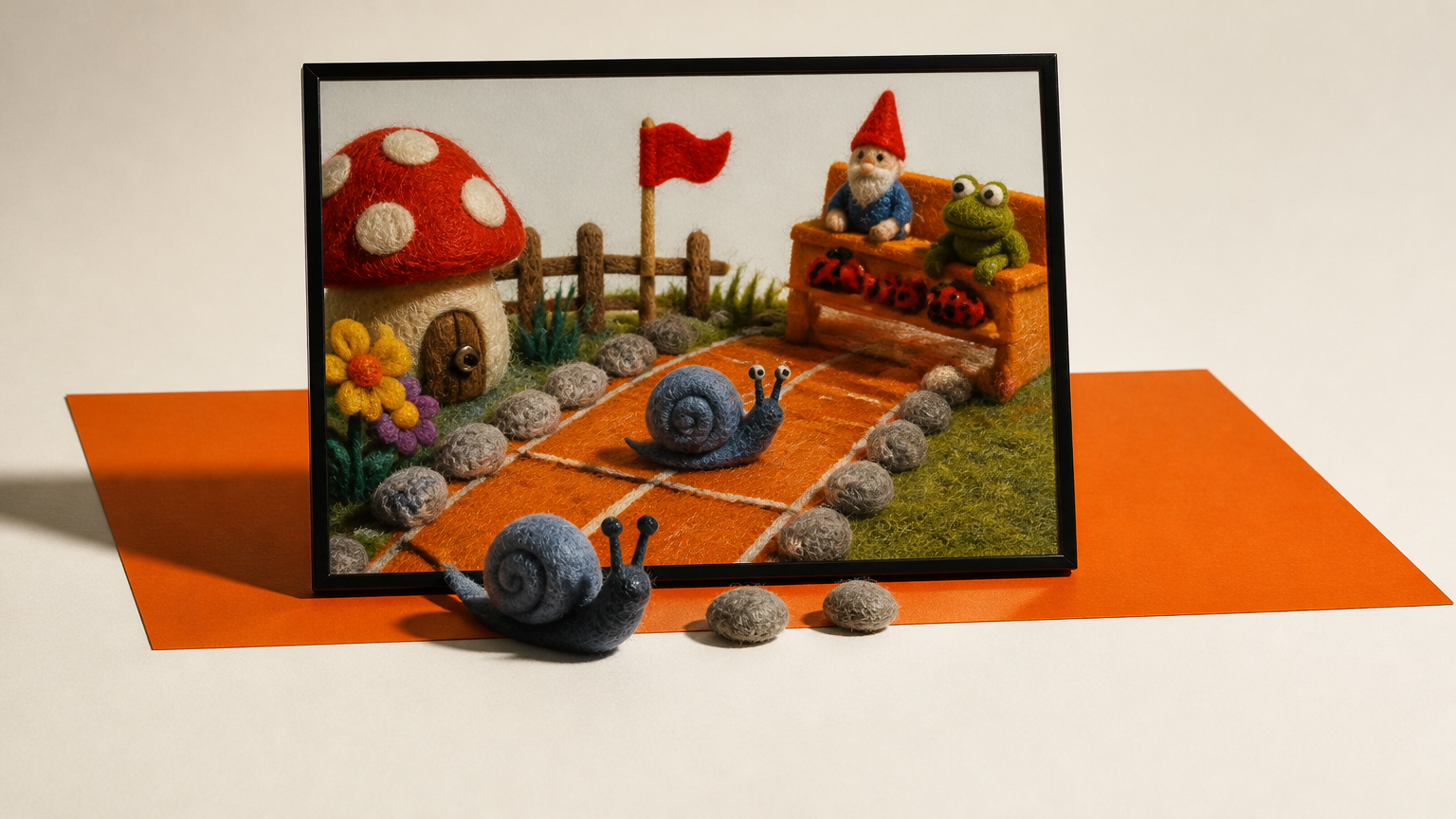
WorldPlay2 is an interactive world model: give it one image and a short structured prompt, and it streams a world you move through. The repo's Reactor integration documents the controls. Hold WASD to move, use the arrow keys to look around, and press Space for the space action, in first or third person. The prompt splits into three fields, scene, character and event, which is how a run's weather or a character's action changes without the rest of the world resetting. The Reactor demo lists example worlds including a felt snail race, a Paris rooftop cat and a gingerbread candyland.
The paper describes three parts. A factorized control interface keeps frame-aligned camera and movement commands separate from the scene-character-event caption. A memory compressor shrinks past frames into compact tokens so long runs stay cheap. A distillation recipe the team calls Stable Forcing warms up the fast model and replays full rollouts. The memory trick is what lets a world remember where things were when you turn back around.
The catch is hardware and licence. The repo's Reactor build needs a Linux machine with four Nvidia B200 GPUs, Docker and about 82 GB of disk for the weights, and it streams at a steady 17 frames per second on those four cards. The offline launchers default to eight GPUs; the README says a single-GPU run is possible by setting the worker and FSDP flags. The release declares the CC BY-NC 4.0 licence, which is non-commercial. You can study and prototype with WorldPlay2, not ship it in a paid product.
There are three downloadable checkpoints, per the repo's table. WorldPlay2-Fast is the 4-step autoregressive model the streaming build uses, while WorldPlay2-BI, the bidirectional teacher, and WorldPlay2-AR run at 40 steps each. A fourth, WorldPlay2-TAE, a causal VAE decoder the team lists as coming soon, is not out yet. Every checkpoint sits on Alibaba's Wan2.2 I2V-A14B base model, about 12 GB of base files a user downloads separately.
Traction is early. The GitHub repository counted 59 stars and 2 watchers as of October 8, and the Reactor page shows a "Finding your place in line" screen, so expect a queue. The third-party write-up at ArtRealmAI reports the paper's own figure of 16 frames per second on eight Nvidia H20 GPUs, next to the 17 fps the Reactor build reaches on four B200s.
For a creator, WorldPlay2 is a preview rather than a tool to put in a pipeline. The non-commercial licence rules out client work and the hardware rules out a desktop. What it offers is a testbed for the idea that one image and a short prompt can become an explorable scene, with the control format and the prompt template documented in the open.
Play it in a browser at reactor.inc/worldplay2, or clone WorldPlay2/WorldPlay2 on GitHub and follow the Reactor README to run it on your own GPUs.
Sources
- github.com - weights and code release, checkpoint table, Wan2.2 base model and the 6 Oct and 7 Oct dates
- worldplay2.github.io - project page: title, abstract and the comparison baselines
- arxiv.org - paper, author list and the 28 September 2026 submission date
- reactor.inc - hosted browser demo, queue screen and the example worlds it lists
- github.com - the CC BY-NC 4.0 licence line
- github.com - WASD and arrow-key controls, Space action, 17 fps on 4 B200s, 82 GB of weights and the 256-chunk limit
- artrealmai.com - third-party write-up, source for the 16 fps on 8 Nvidia H20 GPUs figure