
YouTube co-founder's EyeTell lets viewers change AI stories
In a PBS NewsHour segment, Chad Hurley said EyeTell is still building safeguards and did not detail how creators would get paid.
Key takeaways
- PBS NewsHour's arts and culture series CANVAS aired a segment on October 8, 2026, about EyeTell, an AI video storytelling startup from YouTube co-founder Chad Hurley.
- In the segment, screenwriter Gillian made a period-drama episode of her "Ashcombe House" series alone in a week, without actors, locations, sets or horses.
- Hurley said EyeTell is building its own safeguards to identify and restrict harmful requests before results appear, on top of the underlying models' own filters.
- Hurley cited YouTube's Content ID as a model for letting rights holders monetize uses, but did not describe a payment plan for EyeTell; the segment notes Gillian is not sure who will watch or pay for her episodes.
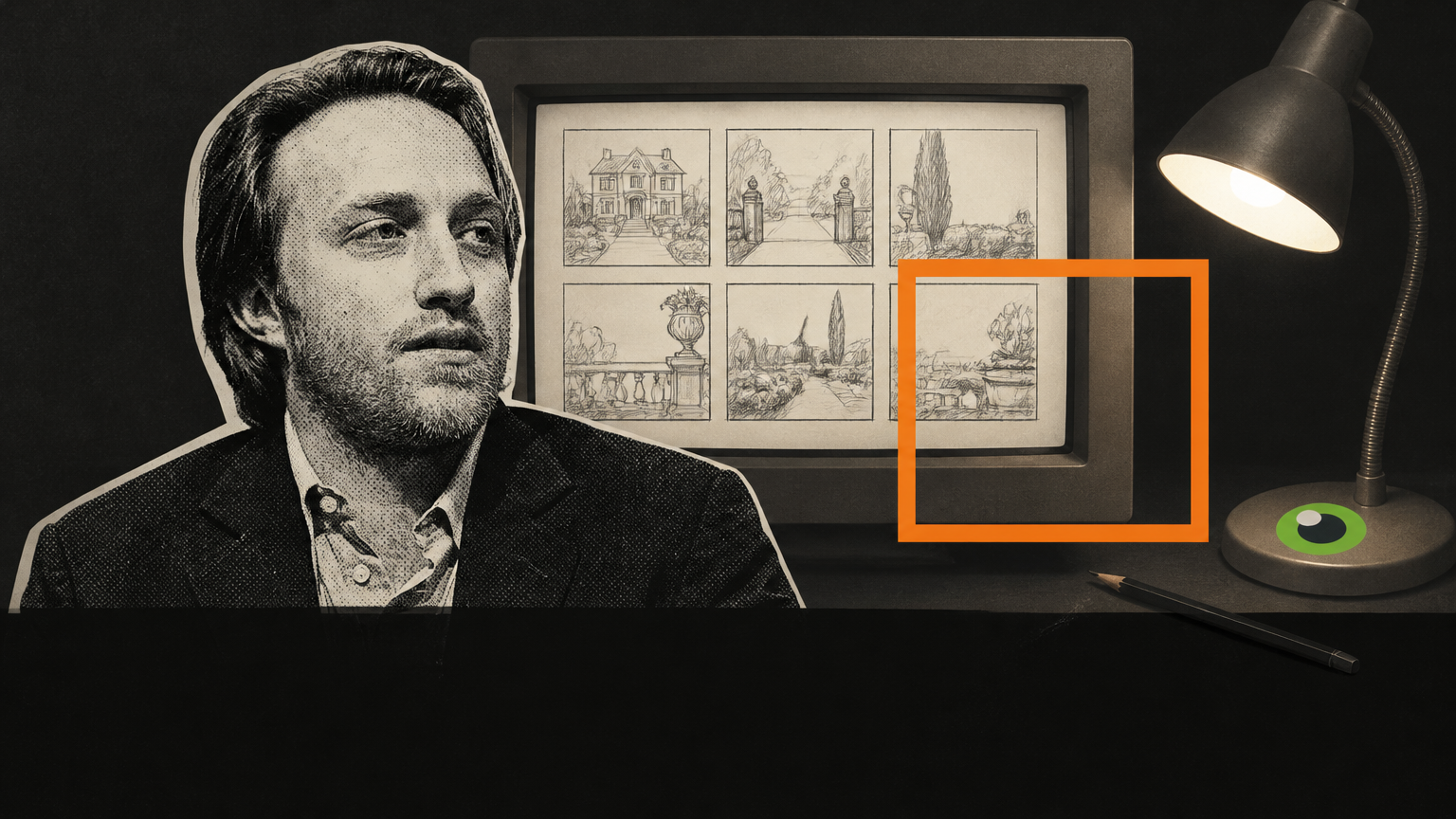
PBS NewsHour's arts and culture series CANVAS aired a segment on October 8, 2026, in which special correspondent Mike Cerre interviewed Chad Hurley, a YouTube co-founder and now the founder and CEO of EyeTell, an AI video storytelling startup. The segment is titled "AI startup touts new possibilities for video creators, but concerns remain."
SLOP TV did not conduct this interview. The account below comes from the segment's published transcript, with a secondary write-up by Superpower Daily used to check the date and details.
EyeTell builds software that combines a variety of AI video production tools so nonprofessionals can make videos that once required a major production company, according to the segment. Hurley said the idea dates to the years after he left YouTube: "There's a lot of creators, but there's even more people that want to create, but don't know how." Its team mixes technologists, veteran animators and storytellers, and its chief storyteller, Andrew Gordon, worked with studios including Warner Bros. and Pixar as a lead animator on Academy Award-winning productions.
EyeTell TV, the company's viewing platform, launched on YouTube in September 2026. Viewers can suggest changes to a story as it unfolds, which PBS described as generated nearly in real time. Cerre offered examples: a mail carrier delivers a pizza, a panda eats the food, a duck flies into the store. Hurley said he wants to give people a way to take part in the narrative rather than only watch it.
The segment's centerpiece was a production made by one person. Gillian, a screenwriter with film production experience, made a period-drama episode of her "Ashcombe House" series alone in a week with only basic computer skills, working from a shared WeWork office. There were no real actors, no real locations or sets, and no horses, the segment noted, because no major production company would commit the millions the shoot would cost. The episode was inspired by her affection for the 2005 "Pride and Prejudice" film.
EyeTell also animated Cerre from a single photo he provided and his own voice. Gordon said the system could generate the interview question on its own too. Asked whether it could replace Cerre as the storyteller, Gordon said it could, but that the result carried an artificial feel that had to be pushed.
On safety, Cerre asked whether the guardrails could stop someone from posting something violent, salacious or distasteful. Hurley said the first line of defense is the models themselves, and that EyeTell is building its own system to identify and restrict a request before it reaches the screen.
Rights and payment remain open. Hurley pointed to YouTube's Content ID as a model, describing a system that identifies incoming content and, rather than only removing or restricting it, empowers rights holders and creators "to do something with that, to embrace their biggest fans, to monetize it." He did not describe a payment plan for EyeTell.
Gillian is not sure who will ever see or pay her for her "Ashcombe House" episodes, the segment notes. She called the tool a "really cool way to let people develop original ideas, because our industry has kind of fallen into these patterns of a certain set of people who are the only voices who are heard."
For creators, the segment is a bet that the hard part of AI video is no longer generating footage but structuring a story and finding an audience. It shows one finished episode made alone in a week, and it leaves two questions unanswered: how a harmful request gets filtered before it appears, and how anyone gets paid. Per the segment, the safeguards are still being built; the payment question is left open.
Watch the full segment and read the transcript on PBS NewsHour.
https://www.pbs.org/video/ai-video-startup-touts-possibilities-but-concerns-remain-1791501654/
Sources
- pbs.org - full transcript of the CANVAS segment with Chad Hurley, Andrew Gordon and Gillian
- pbs.org - the segment clip page
- superpowerdaily.com - secondary write-up used to check the segment date and details