
Victor Riparbelli on Talking Avatars, AI Role-Play & What's Next for Synthesia (Ground Level AI)
In Sharon Goldman's podcast interview, the Synthesia CEO says avatar role-play sessions average about 18 minutes, and one customer with 2,000 to 3,000 managers uses them to rehearse hard conversations.
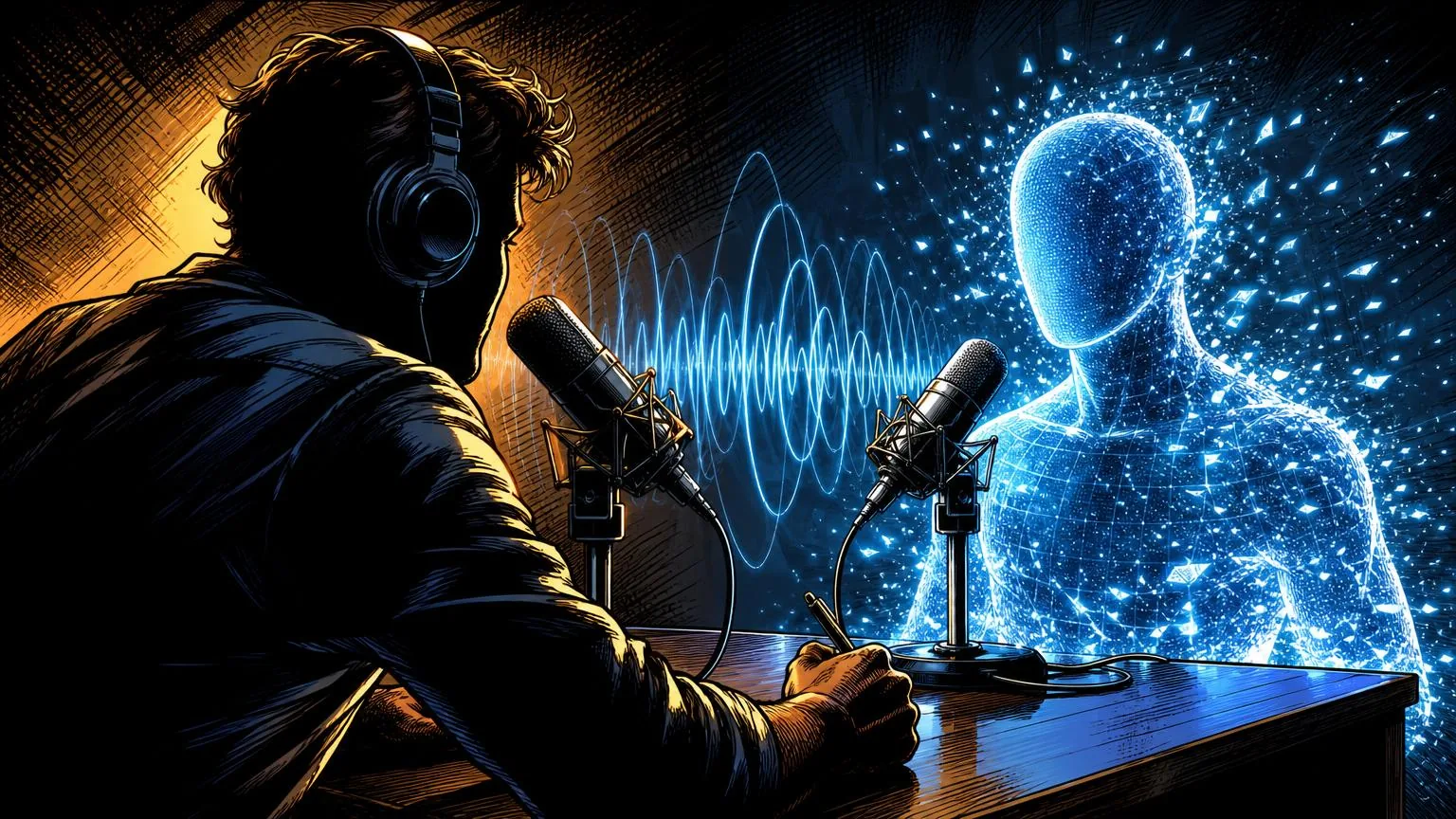
Synthesia CEO Victor Riparbelli says real-time video now works, and his company's avatars have moved from reading scripts to holding conversations.
Riparbelli made the case on the Ground Level AI podcast, in an interview conducted by journalist Sharon Goldman and published on August 27, 2026. SLOP TV did not conduct the interview. The points and quotes below come from Goldman's written account of the episode, published alongside the recording.
Synthesia was founded in 2017 by AI researchers and entrepreneurs from Stanford, Cambridge, UCL and TUM, according to the company's about page. Its platform turns text into videos presented by AI avatars; Synthesia's site lists more than 240 avatars and more than 160 languages. On January 26, 2026, the London company announced a $200 million Series E at a $4 billion valuation, led by GV, and said the money would go toward conversational agents for workplace learning.
Goldman notes she first interviewed Riparbelli in November 2022, weeks before ChatGPT launched, when Synthesia's avatars delivered one-way video only.
Riparbelli's "LLM With a Face"
The biggest shift since then, Riparbelli told Goldman, is that "real-time video now works." Synthesia's avatars can now talk with employees live, play a customer or colleague, and grade the person afterwards. He summed up the experience as "basically an LLM with a face."
His main example is management training. One Synthesia customer, which Riparbelli described as among the world's fastest-growing companies, has 2,000 to 3,000 managers. They use Synthesia's role-play product to rehearse the conversations bosses dread: delivering harsh feedback, delivering praise, and handling conflict between employees.
That practice used to need someone from HR or a coach, Riparbelli said. An avatar can take the other side instead, reacting as though angry, sad or happy, which lets a company offer rehearsal to everyone.
The sessions are not short. Riparbelli put the average role-play session at about 18 minutes.
Afterwards, the system scores the employee. In Goldman's account, the score covers things like product knowledge, whether the person followed the company's sales methodology, and how well they set up next steps. Managers get a wider view of how their teams perform. Synthesia's Roleplay Sessions page describes the same mechanism: each conversation is scored against a skills rubric the customer defines, with results tracked across attempts.
Riparbelli also described a customer whose new product was underperforming. The company could not tell whether the product was weak or its salespeople did not know how to sell it. Its salespeople are now running simulated calls with avatars posing as customers. The scores show executives how many reps clear the bar, which could help separate a product problem from a training problem.
Not Every Agent Needs a Face, Riparbelli Says
Riparbelli predicted that within a couple of years, nearly every interaction with a computer will involve an agent of some kind. He does not think they should all be on video. Some, he said, would be "really annoying if they had a face."
His dividing line is complexity. Someone checking on a refund wants a line of text. Someone learning a complex sale, he argued, gets more from an avatar that can talk, draw on a screen, show a table or pull up a clip, much as a teacher would. He expects much of what is now a video or a PDF to become an interactive experience.
Riparbelli rejected the idea of companies staffed mostly by agents, telling Goldman that great companies are built on great people and will be in 10 years. He went further: "Whatever becomes scarce in society, the value of that goes up." If people deal with AI most of the day, he argued, real human contact becomes worth more, and value could drift toward restaurants, concerts and salespeople who truly understand a client.
What Synthesia's Shift Could Mean for AI Video Creators
Most AI video coverage tracks clips: resolution, length, price per second. Riparbelli is describing a different product, where video is rendered live in response to a viewer. If that category grows, creators who build avatars, training content or branded characters may find clients asking for conversations rather than finished files. Synthesia is already selling the parts: its Interactive Avatar API, launched on July 15, 2026 for Enterprise customers, lets developers pair a real-time avatar with their own language model. Whether that demand reaches beyond corporate training is not something this interview settles.
The full conversation is on the Ground Level AI episode page, which also lists the podcast on Spotify and RSS. Synthesia offers a free sample role-play on its Roleplay Sessions page.
Sources
- groundlevel-ai.com - Sharon Goldman's Ground Level AI episode page, August 27, 2026: every Riparbelli point and quote, the November 2022 first interview, the $4 billion valuation
- synthesia.io - founded 2017, founders' university backgrounds
- synthesia.io - January 26, 2026 Series E: $200 million at $4 billion, led by GV, London HQ, Riparbelli as co-founder and CEO, plan for conversational agents
- synthesia.io - Roleplay Sessions: scoring against a skills rubric, manager analytics, four languages, free trial session
- synthesia.io - Interactive Avatar API, July 15, 2026, Enterprise customers, bring-your-own LLM
- synthesia.io - 240+ avatars, 160+ languages