
How to dub a finished video into 140 languages
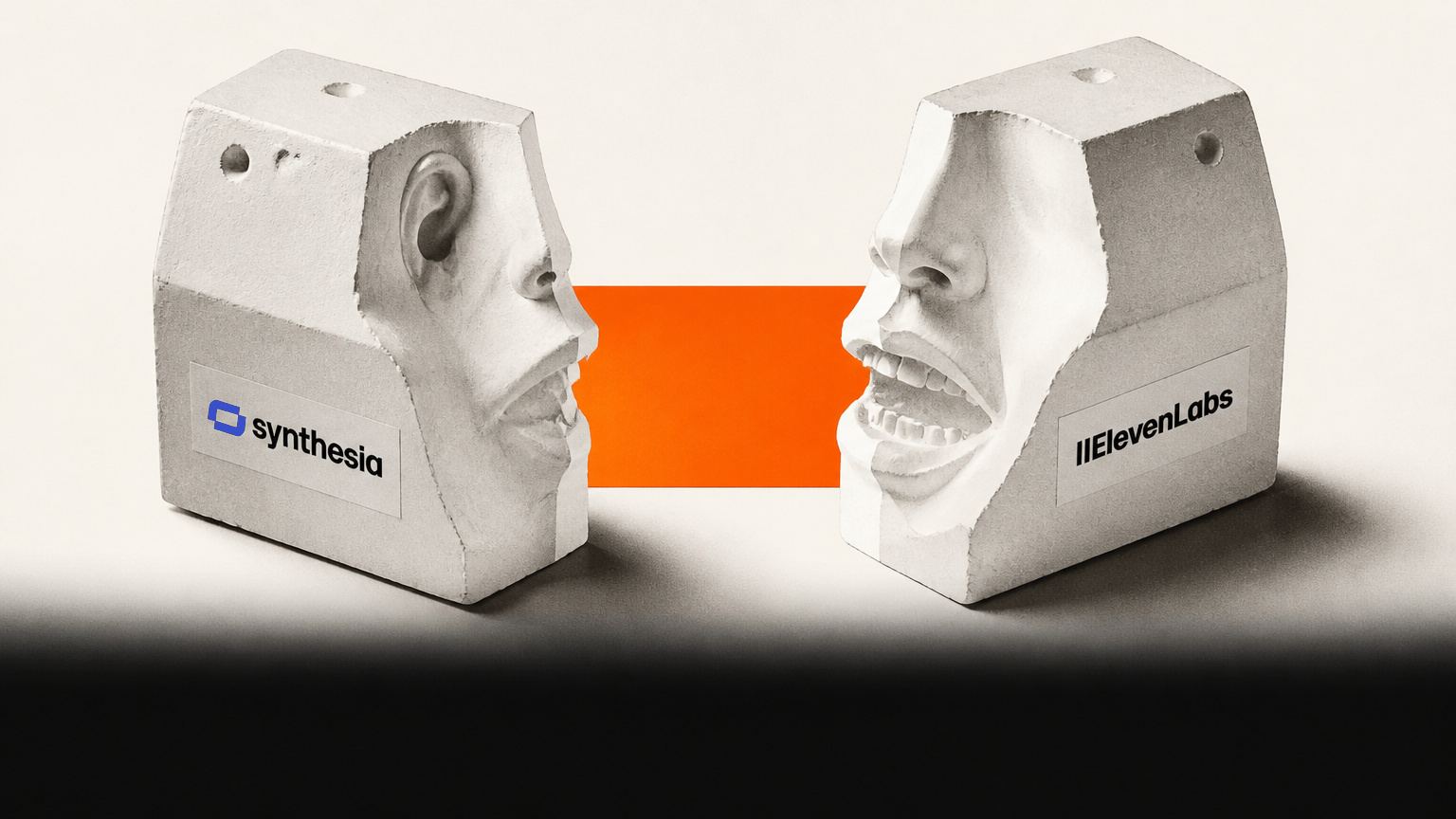
Synthesia and ElevenLabs both carry the original speaker's voice and performance into a new language, and only one of them rebuilds the mouth to match.
Key takeaways
- Synthesia's video translator accepts an MP4, MOV or WEBM upload or a YouTube link, detects the source language and returns dubbed versions in 140+ languages at once, cloning each speaker's voice and re-syncing their lips.
- ElevenLabs' Dubbing v2, published on May 28, 2026, conditions on the original performance to carry tone, pacing and emotional intent across 90+ languages, and Technology.org reports that its documentation describes audio dubbing without lip sync.
- Synthesia charges dubbing in credits per minute, 240 with lip sync and 120 without, on plans from $18 a month billed annually, and the first minute of a translated video is free.
- Synthesia adds C2PA metadata automatically to videos generated or modified on its platform and shows Content Credentials in its video player; its on-video AI label is a separate, optional step the user adds from the Media panel.
Dubbing a finished video is a two-part decision: whether the mouth has to move with the new language, and whether the tool keeps the performance it is translating.
Synthesia's video translator rebuilds the picture as well as the speech. ElevenLabs' Dubbing v2 is sold through ElevenCreative and ElevenProductions on the strength of its performance-preserving audio.
What Synthesia's translator does
The upload is the part that matters if you already have footage. Synthesia's video translator takes an MP4, MOV or WEBM file, or a pasted YouTube link, detects the source language, and returns dubbed versions in 140+ languages and regional variants from one job rather than one job per language. It clones each speaker separately, so an interview or a two-hander keeps distinct voices, and it re-syncs lip movement to the translated audio.
The controls matter as much as the output. You can edit the transcript in any language before generating, which is how a product name stops being mispronounced in nine versions; you can fix the video to its original duration to protect chapters, or let it stretch to fit the translated speech; and subtitles are generated alongside every dubbed track. The first minute of a translated video is free, and the free output carries a watermark until you upgrade.
What ElevenLabs' Dubbing v2 does
ElevenLabs' Dubbing v2, published on May 28, 2026, attacks the problem from the audio side. Instead of generating speech from a transcript, the model conditions on the original performance to carry tone, pacing, emphasis and emotional intent into the target language, across 90+ languages. It also uses sync-aware translation, which plans translated lines around where the original starts and stops, so a sentence lands inside the original's timing rather than being compressed to fit it.
What it does not claim is a new mouth. As the technology news site Technology.org noted on September 23, ElevenLabs' own documentation describes dubbing as audio work, without lip sync. The same comparison puts Rask AI at 135+ languages with lip sync, and D-ID's translation product on a proprietary model called Rosetta-1.
Where each one fits
For a talking-head video where the speaker is on camera for the whole clip, the lip-sync route is the one that survives a viewer's first two seconds. For a screen recording, a narrated product demo, or any footage where nobody's mouth is the subject, performance-preserving audio is cheaper and leaves the picture untouched. Synthesia argues for dubbing over subtitles on its own page, saying subtitles can hurt retention over time and pointing to a 247-student study.
What it costs
Synthesia charges dubbing in credits by the minute rather than by the video: 240 credits per minute with lip sync and 120 without, on plans starting at $18 a month billed annually, according to Gen Media Lab's July 18 write-up of the Dubbing 2.0 release, which Synthesia shipped on July 15, 2026. ElevenLabs prices Dubbing v2 through its own plans and runs a discounted Creator Dubbing Partner Program for eligible creators, per its launch post. Both vendors' figures move, so check the pricing page before you budget a run of versions.
The label is part of the deliverable
A dubbed video is an AI-generated one, and new EU and California transparency rules expect it to say so. Synthesia's updates entry records C2PA metadata being added automatically to videos generated or modified in Synthesia, with Content Credentials shown in its video player, from August 10, 2026, which the company says helps meet the EU AI Act's Article 50 and California's SB 942. A visible on-video AI label is a separate step, and Synthesia's note says you add a pre-built label from the Media panel when you need one.
What is still unresolved
The vendors' quality claims are their own. Synthesia describes its translator as the best on the market and cites lip sync across fast cuts and multi-speaker scenes; ElevenLabs says conditioning on the original performance is what makes its dubbing sound spoken rather than read. Gen Media Lab also reports that Dubly.AI scored 96.4 out of 100 on raw lip-sync quality, ahead of Synthesia's newer model, a figure that measures mouth alignment rather than translation or performance.
For a creator, the practical sequence is unchanged: decide whether the mouth needs to move, pick the tool that does that job, then correct the transcript before anything renders.
Synthesia's translator and ElevenLabs' Dubbing v2 are both available now; Synthesia's first translated minute is free and ElevenLabs sells dubbing through its standard plans.
Sources
- synthesia.io - upload formats, source-language detection, 140+ languages per job, multi-speaker cloning, lip sync, duration control, the free first minute
- synthesia.io - the Content Credentials and AI label entry, dated 8/10/2026 on the updates listing
- synthesia.io - C2PA metadata and Content Credentials added automatically, the visible on-video label the user adds from the Media panel, EU AI Act Article 50 and California SB 942
- elevenlabs.io - Dubbing v2 published May 28, 2026: performance conditioning, sync-aware translation, 90+ languages, the Creator Dubbing Partner Program
- technology.org - the field comparison: ElevenLabs dubbing across 90+ languages, Rask AI at 135+ with lip sync, D-ID's Rosetta-1
- genmedialab.com - Synthesia Dubbing 2.0 released July 15, 2026, the 240 and 120 credit rates and the $18 monthly plan
- hostadvice.com - what the translator accepts and how the voice clone is described, published September 24, 2026