
Instagram's AI Labels Are Flagging Real Creators as Deepfakes, and Meta Won't Say How Often
Meta withdrew its Muse Image likeness feature after three days, then built a labeling rule that spares honest AI personas and mislabels humans instead.
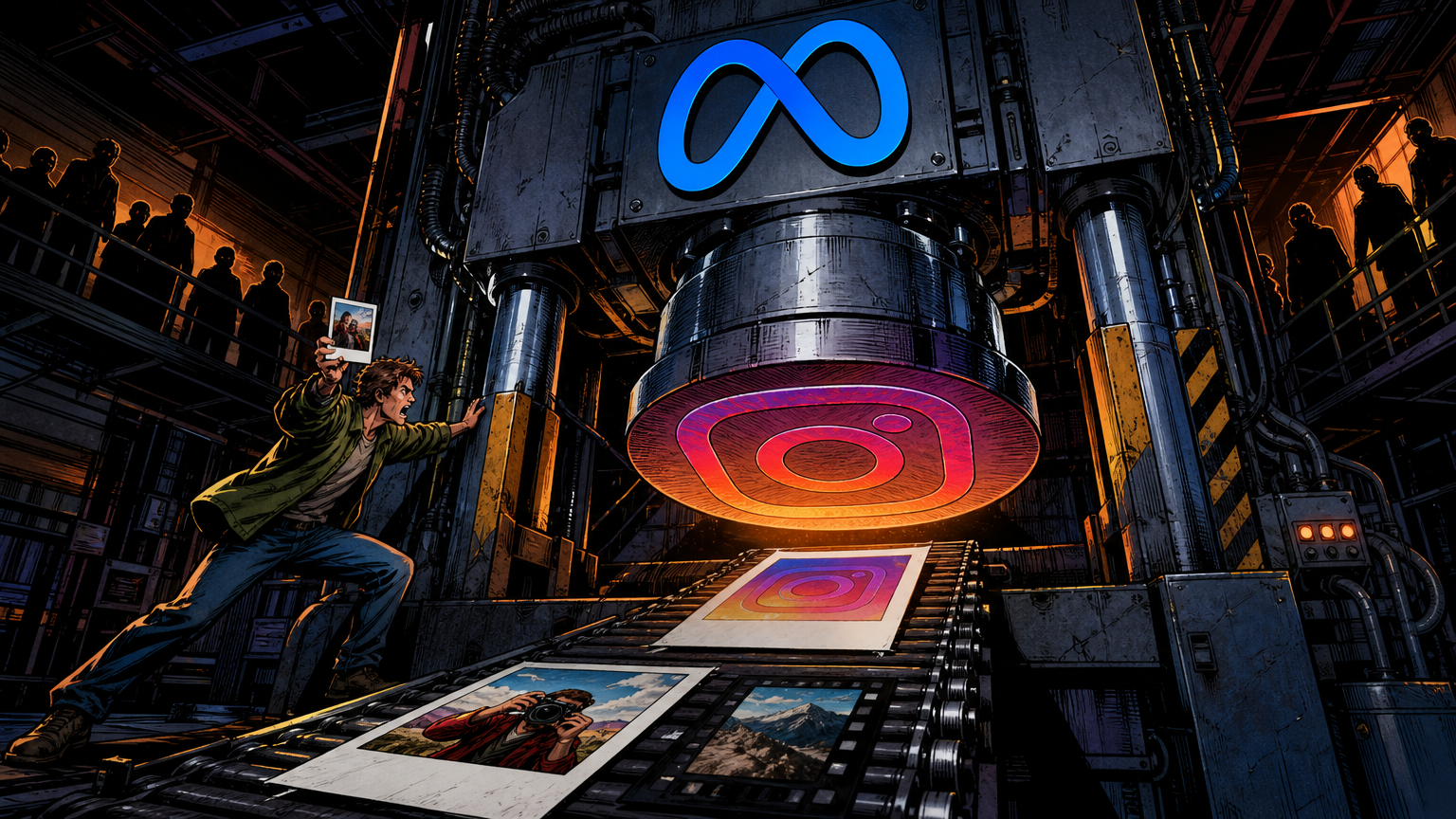
Key takeaways
- Meta launched Muse Image on July 7, 2026 and removed the feature that let users @-mention public Instagram accounts on July 10, after SAG-AFTRA urged members to opt out to protect their likeness.
- Instagram renamed its "AI creator" label to "AI-generated profile" on August 31, 2026 and will cut recommendations for profiles featuring an AI-generated person that skip the label.
- Instagram says creators who add the label proactively keep their existing reach, and that people who only use AI to edit photos or write captions do not need it.
- The Verge reported Instagram applying an "AI Content" label to a Canva background-removal edit while leaving the reporter's own fully AI-generated uploads unlabeled on a new account.
Meta needed three days in July to withdraw a feature that let strangers generate pictures from your Instagram photos. It has needed nearly two months to build a labeling system that cannot tell a photographer's Polaroid scans from a deepfake.
The instinct behind Instagram's AI labels is sound. When the person in the picture might not be a person, saying so is the least a platform owes a viewer. That part needs no argument.
What needs an argument is who pays when the label is wrong. On Instagram, the answer so far is the creator, every time.
The Case for Meta's Approach
Meta's first attempt at this was worse than the policy that replaced it, and Meta is the one that said so. Muse Image launched on July 7 as the first image generation model from Meta Superintelligence Labs, and it arrived on Instagram with more than 30 AI effects for Stories. Within days, anyone could @-mention a public account and generate images from its photographs. Public accounts were opted in by default.
Three days later the feature was gone. Meta's own update to that announcement, dated July 10, concedes the point without dressing it up: the feature "missed the mark."
The defense Meta offered at the time holds up better than the backlash suggested. Private accounts and accounts belonging to users under 18 were excluded automatically. Meta said public accounts could "opt-out with just a couple clicks," and that Muse Image was built with "strong controls and safety guardrails from day one" (Deadline).
Then came the labeling rule on August 31, and this is the part the pile-on tends to skip. Instagram's announcement is the least punitive version of this policy any major platform has shipped. Creators who add the AI-generated profile label "will not see a change to their profile's reach." Only accounts that feature an AI-generated person and skip the label lose their place in recommendations. Someone who merely uses AI to retouch a photo, polish a caption or make a graphic does not need the label at all.
The contrast with music is the tell. Spotify's AI Persona badge, announced August 11, keeps labeled artists out of editorial and algorithmic recommendations by default. Admitting you are synthetic costs you the algorithm on Spotify. On Instagram it costs you nothing.
That is a genuine incentive design, and it points the right way. It rewards disclosure instead of punishing it, which is more than most platforms have managed.
Why the Rule Cannot Survive Its Own Enforcement
The rule is fair. The enforcement is not, and the enforcement is the entire rule.
The Verge's Jess Weatherbed spent weeks testing what actually triggers an "AI Content" label on Instagram and found the pattern running backwards. Users reported the tag landing on images edited with Canva's Background Remover, including one who removed "a speckle" from a photo. Canva told a content strategist that some of its assistive tools "were being tagged as generative." Meanwhile Weatherbed uploaded images made with Adobe Firefly, Photoshop, Apple Intelligence and Google's Nano Banana from a brand-new account with almost no profile information, and Instagram labeled none of them. The account looked more like a bot farm than most bot farms do. Nearly two weeks later it was still untagged.
Her conclusion is the one that matters: "I wouldn't even trust the labels themselves."
The cost of that asymmetry is not distributed evenly. Business Insider found photographer Gregory Littley with Instagram notices on posts that include scans of physical Polaroids, and Ashton McGrady flagged for a Disability Pride collage she had spent hours assembling. A false positive is a public accusation about a person's craft. A false negative is invisible. Creators have a word for the accusation, and the word is the Scarlet Letter. Brands have already started writing no-generative-AI clauses into campaign briefs, which means the label follows a creator into their next negotiation.
The July episode had exactly the same shape. The opt-out sat behind Profile, menu, Sharing and reuse, and Instagram's own help page said users "will not be notified about content created using AI features at Meta" (Variety). Opting out never removed a picture that had already been generated. The burden sat on the person being drawn, and the notice never arrived.
Now set the tooling beside the policing. On August 25 Instagram launched First Draft, which Mashable reports analyzes your clips, finds the highlights and hands back an edit in under 10 seconds, turning four minutes and 54 seconds of rollerblading footage into a 17-second Reel. Edits, the standalone editor, keeps the more advanced timeline in the same ecosystem. So Instagram automates the making and audits the maker, using the same data.
A creator is now asked to be original, to be fast, and to prove on appeal that they were never a machine. The tools that make everyone's output converge are handed out free. The label that decides who was faking is not, and its error rate is not published.
Meta has made honesty cheap and enforcement free. The creator wearing the wrong label pays for both.
Sources
- about.fb.com - Muse Image launch July 7 2026, 30+ Stories effects, July 10 update removing the @-mention feature
- creators.instagram.com - August 31 2026 AI-generated profile label, reach limits, appeal path
- theverge.com - misapplied AI Content labels, Canva, unlabeled AI uploads
- businessinsider.com - flagged creators, Polaroid scans, brand contract clauses
- variety.com - SAG-AFTRA opt-out call, opt-out path, no notification
- deadline.com - SAG-AFTRA statement, CAA position, Meta statement
- newsroom.spotify.com - Spotify AI Persona badge and default recommendation exclusion
- mashable.com - First Draft launched August 25 2026, 4:54 into a 17-second Reel, Edits as the standalone editor