
NO FAKES Act would give creators a federal right to their likeness
The bipartisan bill would put a 10-year cap on likeness licences and a de facto takedown duty on platforms, and its passage window this year is narrowing.
Key takeaways
- The NO FAKES Act, S.4591, would create a federal intellectual property right in every person's voice and visual likeness, letting them authorize or refuse AI-generated digital replicas of themselves.
- The Senate Judiciary Committee advanced the bill unanimously by voice vote on June 18, 2026, and it was reported out on June 24; the House companion has not been taken up by the House Judiciary Committee.
- A licence to use a living person's digital replica would run no longer than 10 years, would have to be signed and in writing, and would have to describe the intended uses; for a minor it would run no longer than five years and end at 18.
- The Act would preempt future state laws on digital replicas but leave state statutes in place as of January 2, 2025, including Tennessee's ELVIS Act.
The NO FAKES Act would create the first federal intellectual property right in a person's own voice and visual likeness, and its bipartisan sponsors are pushing for a Senate floor vote before the year runs out.
The bill, S.4591, is formally the Nurture Originals, Foster Art, and Keep Entertainment Safe Act of 2026. It defines a digital replica as a newly created, computer-generated and highly realistic representation that is readily identifiable as a person's voice or visual likeness, made either without that person appearing in it at all, or from a performance or appearance whose fundamental character has been materially altered.
Individuals and companies could be held liable for producing or distributing an unauthorized replica, and an online service could be liable for hosting one after it knows the person did not authorize it, according to Holland & Knight's analysis of the reported bill. The takedown process borrows the shape of the Digital Millennium Copyright Act, with a counter-notice route for whoever posted the material, and the bill would allow a photographer's or creator's lawyer to subpoena a platform for the identity of an alleged violator.
The right it creates is a property right, and the text puts limits on how far it can be sold. A licence to use a living person's replica is valid only for 10 years or less, must be in writing and signed, and must carry "a reasonably specific description of the intended uses" of the replica. For anyone under 18, a licence runs no longer than five years, ends when the person turns 18, and needs court approval under state law. Licences governed by a collective bargaining agreement that addresses digital replicas are exempt from those limits, the carve-out that lets the actors' union keep negotiating its own terms.
The right survives death, for 10 years, extendable in five-year blocks up to a ceiling of 70 years after the person dies, and each renewal requires the right holder to show the likeness was in authorized public use in the years before it lapsed.
The Act would take effect 180 days after enactment and would reach only conduct after that date. It preempts state causes of action over voice and visual likeness in expressive works, while preserving state statutes and common law in existence on January 2, 2025, among them Tennessee's ELVIS Act, and preserving state laws on sexually explicit and election-related replicas.
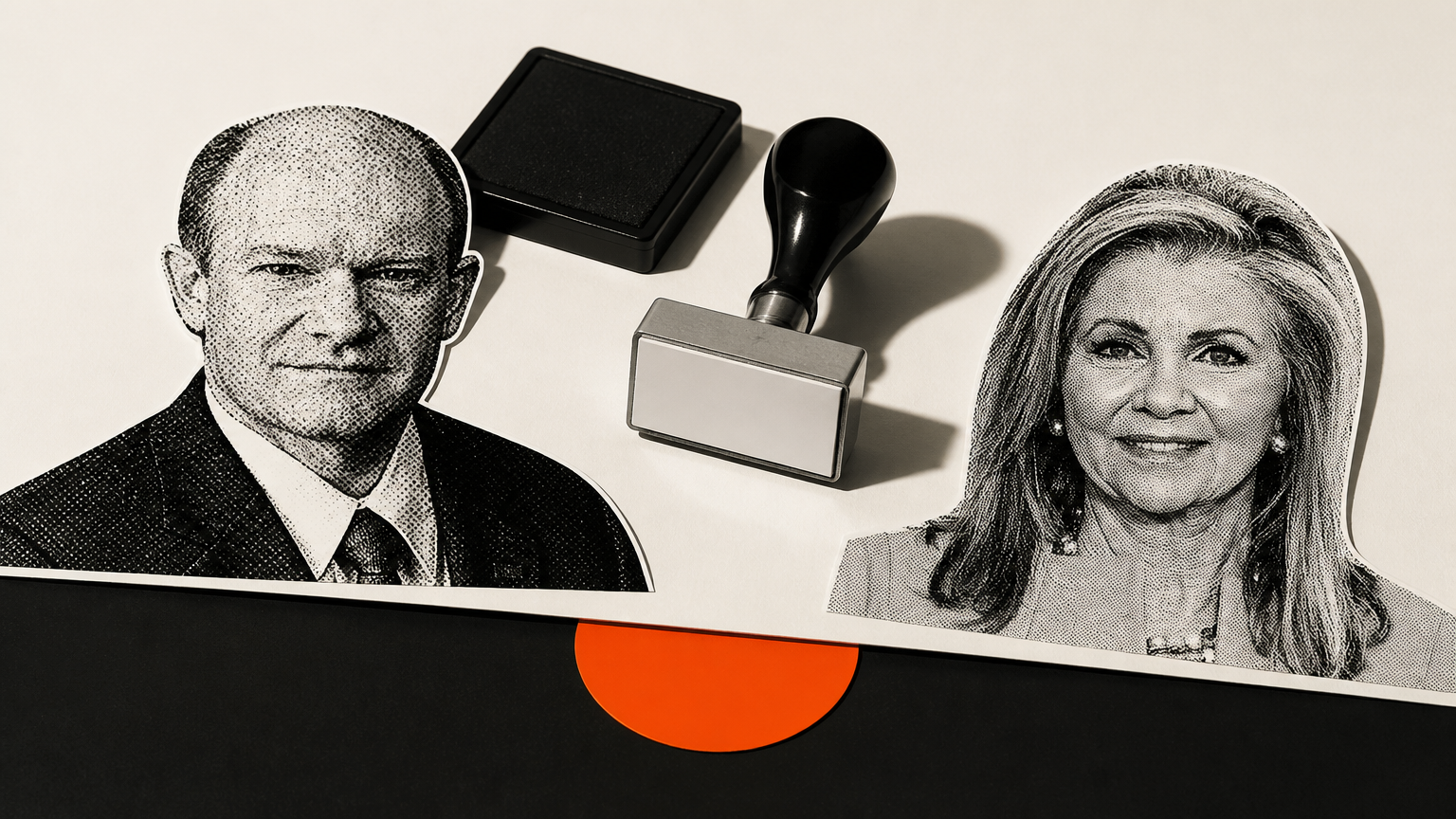
The Senate Judiciary Committee advanced the bill unanimously by voice vote on June 18, 2026, and it was reported out of committee on June 24. Senator Marsha Blackburn, the Tennessee Republican who co-leads it with Senator Chris Coons of Delaware, said the bill "would establish clear guardrails that protect the creative community in Tennessee and nationwide". Coons framed the right as universal: "Everyone deserves the right to own and protect their voice and likeness from AI deepfakes, no matter if you're Taylor Swift or an 8th grader in Wilmington."
The endorsement list the sponsors publish runs from the RIAA, SAG-AFTRA, the Motion Picture Association and the Recording Academy to YouTube, TikTok, OpenAI, Disney, Universal Music Group, IBM, WME and CAA. SAG-AFTRA's own policy timeline records that more than 16,000 people signed its June open letter urging Congress to pass the Act, and that members ratified a new TV and theatrical agreement the same month with added synthetic-performer terms. A companion bill from Representatives Maria Salazar and Madeleine Dean has been introduced in the House, and the House Judiciary Committee has not taken it up.
The opposition is not about whether replicas cause harm. The Electronic Frontier Foundation argues that the bill creates a property right "that can easily be signed away, as major studios and record labels are almost certain to require in their contracts with artists", and that a platform duty to filter for replicas would censor parody, news and criticism.
For creators, the practical change would be procedural. A working video maker who finds a model or a brand running their face would get a statutory takedown route and a subpoena, rather than a state-by-state publicity claim. The licence caps matter most to anyone asked to sign away their likeness for a campaign that runs longer than a decade.
The bill now waits for floor time in the Senate; the House version sits in the House Judiciary Committee, and its backers are working against a narrowing legislative calendar this year.
Sources
- congress.gov - the bill's summary: the digital-replica right, the exemptions and the preemption
- congress.gov - the bill text: the definition of a digital replica, the licence term limits, the post-mortem term and the 180-day effective date
- hklaw.com - the June 18 voice vote, the notice-and-takedown and counter-notice mechanics, the preemption carve-out for the ELVIS Act
- blackburn.senate.gov - the sponsors' statements, the co-sponsor list and the endorsement list
- sagaftra.org - the union's own policy timeline: the 16,000-signature open letter and the June 2026 contract ratification
- eff.org - the opposition: a property right that can be licensed away, and replica filtering