
Pika H3 Flex ships open weights under a license that bars the US
Pika post-trained MiniMax's open H3 down to six sampling steps and published the weights under a community license that excludes the United States, the EU, the UK and South Korea.

Key takeaways
- Pika H3 Flex shipped on October 29, 2026 as a post-trained MiniMax H3 that generates video and synchronized audio in six denoising steps instead of 50, with weights on Hugging Face and GitHub.
- Pika's weights carry the MiniMax H3 Community License, whose Excluded Territories are the European Union, the United Kingdom, the Republic of Korea and the United States of America.
- That license says you may not use, reproduce, modify, distribute or display the model or any of its Outputs outside the Applicable Territory, so the restriction reaches the video, not just the weights.
- SenseTime published SenseNova 6.8 Code2Video under Apache 2.0, a Qwen3.8-27B fine-tune that writes executable code instead of pixels, while fal's Motion To Code is a hosted, commercially licensed endpoint with no weights at all.
The MiniMax H3 Community License Agreement settles the whole argument in its fifth definition, and it settles it without raising its voice: "'Excluded Territories' means the European Union, the United Kingdom, the Republic of Korea and the United States of America."
I read that off the laptop with two fingers, printed it because I read paper better, then read it a third time with the glasses I keep for the fine print. Three goes at one sentence. So I went looking for where that sentence lives in the machine, and it lives everywhere. The grant of rights opens by capping itself at the Applicable Territory. The redistribution rules cap themselves at the Applicable Territory. And then the use restrictions do the thing that ends it: "You may not use, reproduce, modify, distribute, or display the MiniMax H3 Works or any of their Outputs or results outside the Applicable Territory. Any such use outside the Applicable Territory is not authorized by this Agreement."
Read the second sentence again. Outputs. The video is inside the fence, not just the file.
Pika shipped the news on October 29, 2026. Pika H3 Flex is a post-trained MiniMax H3 that generates video with synchronized audio in six denoising steps where the teacher took 50, from up to 12 reference inputs, with five separate audio stems, drafting at 768p and finishing at 4K, and the weights sit on GitHub and Hugging Face for anyone to pull. Open weights, all of it. Their research post calls it what it is: a student distilled to one eighth the steps of its own teacher. Their announcement says the quiet part as a feature. Cade Li, the research lead: "We brought generation down from 50 steps to just six, then refined the faster model for visual quality and creative control." Chenlin Meng, the chief scientist: "Most video models are built on the assumption that you plan to finalize your first generation. We know that professionals will always tinker, tweak, and refine. We built Pika H3 Flex with that in mind."
That is a real model and a real download and I will not sneer at the engineering. Distilling a 50-step teacher to six and holding the quality is the work of people who make things. I have never once been against that.
Now the other half of the same page. Pika's weights do not arrive with their own terms. They arrive under the MiniMax H3 Community License, and I ran the two files side by side: the document in Pika's repository and the document in MiniMax's are the same document, character for character. Clause five names my country as excluded. The room I am sitting in, on the laptop, is the room the grant does not cover, and the video that comes out of the machine is the room the grant does not cover either, because the license said so out loud in the section called Use Restrictions.
So here is the law of this gold rush, and I state it flat. A model you cannot legally output from is not open, whatever the download page says. Open is a word about a license. The file is a different subject. The file downloads in a minute. The license tells you where you are allowed to stand while you use it.
In the same week as Pika, the field split like a dropped plate. SenseTime went the other way and put SenseNova 6.8 Code2Video out under Apache 2.0, a fine-tune of Qwen3.8-27B that does not generate pixels at all. It writes executable code, the code renders the frames, and the whole production run ships as trajectories with the tool calls, the retries and the compaction summaries still in them, all 357 figures included. You get the recipe, not just the cake. No territory clause. No output clause. Just the license that has been boring since 2004. fal listed Motion To Code that same week as a hosted endpoint, tagged commercial, no repository, no weights, so there is nothing to download and nothing left to argue about. And Magnific hung Move, its motion-graphics editor, on HeyGen's HyperFrames, an Apache 2.0 video tool that has been open on GitHub since March while everybody else was fashioning press releases.
Pika leads DesignArena's text-to-video board among open weights models, at number seven overall, above base H3 and H3 Max, and that number is theirs, printed in their own announcement, so make of it what you like.
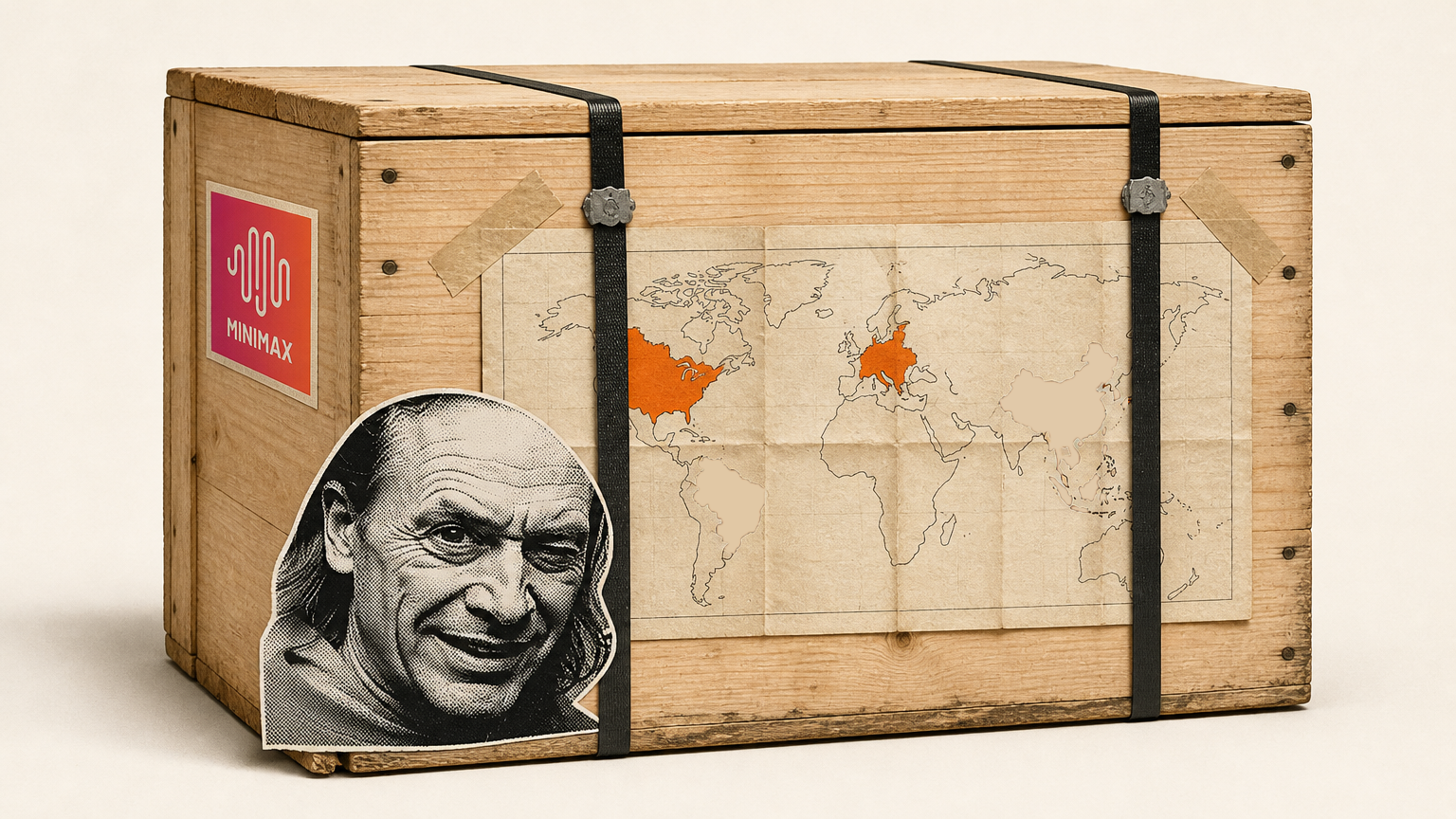
Here is what changed, and it is not the pixels. The frontier stopped moving at prettier video and started moving at who owns the chassis. Pika took a borrowed chassis, tuned it hard, bolted a map onto it with four territories crossed out in ink, and called the truck open because you can look in the window.
And the pitch, the pitch never changes. I have watched every one of these rushes from the same bar stool, and the man selling is always holding the best demo and the worst paragraph. The ones who wrote that clause, and the ones who copied it into their own repository, are going to learn what every reseller of a leaky license learns. The buyers read the fine print after the invoice arrives, and the lawyers read it first. Some pipeline in California gets pulled for a week. Somebody's launch day becomes a compliance memo. And the word open, printed large on the download page, ends up costing more than every GPU hour it ever saved. That is arithmetic, and the arithmetic is theirs.
The download button is still sitting in the middle of the page. It is that fifth definition, the one I printed and read three times on my knees, that I cannot leave alone.
Pika H3 Flex weights are on Hugging Face and GitHub, with a hosted API for 1080p to 4K and 15 free generations a day for members and subscribers for the first two weeks; read the LICENSE file in the same repository before you ship anything made with it.
More from SLOP TV
Sources
- huggingface.co - the MiniMax H3 Community License: Excluded Territories, grant scope, output restriction
- huggingface.co - Pika H3 Flex card: six sampling steps, 12 references, base model and license
- huggingface.co - Pika's own LICENSE file, identical to the MiniMax H3 Community License
- businesswire.com - Pika's October 29, 2026 announcement: open-sourcing the weights, DesignArena rank, quotes
- investor.wedbush.com - readable syndication of the same Business Wire release
- pika.art - Pika research: 50-step teacher, six-step student, semantic claims
- huggingface.co - Apache 2.0 card, Qwen3.8-27B base, trajectories and figures
- github.com - code-driven video creation, "Every frame is code"
- fal.ai - fal's hosted Motion To Code endpoint, no weights
- fal.ai - fal's model listing: Motion To Code, commercial, no repository, dated
- hyperframes.heygen.com - HeyGen HyperFrames, Apache-2.0, built for agents
- opentools.ai - Magnific Move built on HeyGen's HyperFrames and dated to October 28