
Based Boomerstein: the machines took my freelance work, so I'm going back to corporate
The Remote Labor Index says AI now completes 41.3% of real freelance projects, up from 2.5% a year ago, and Upwork just cut its year again. I have bought a suit, enrolled in a pipe fitting certificate, and I am not doing either until my Lord of the Flies game ships.

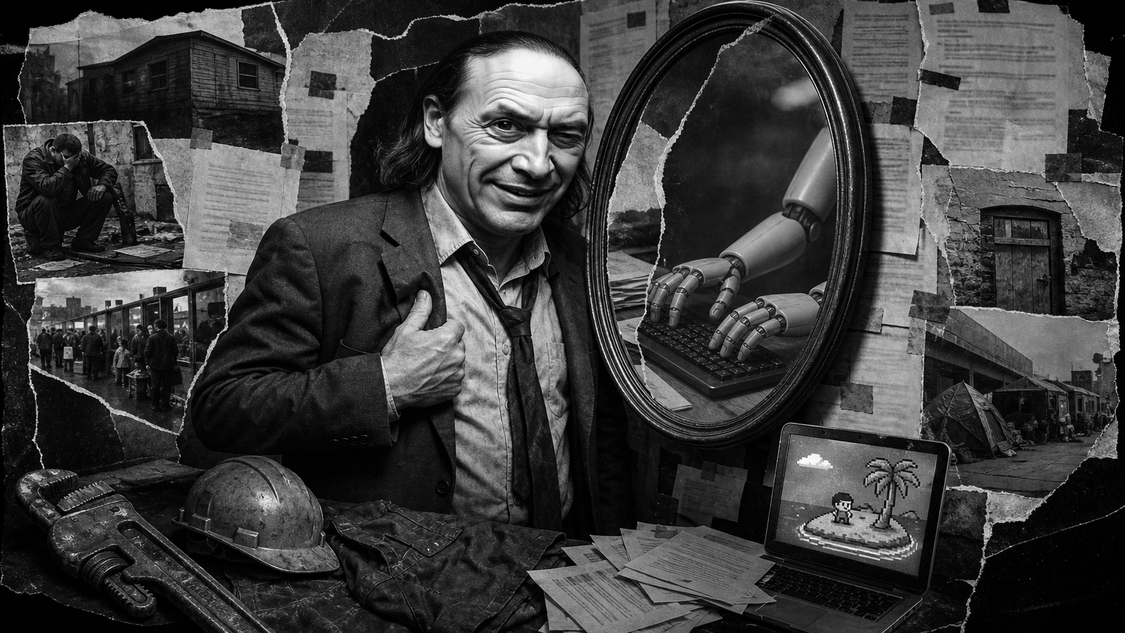
Key takeaways
- The Remote Labor Index, built by the Center for AI Safety and Scale Labs from 240 real Upwork projects, puts Claude Fable 5.2 at a 41.3% automation rate, against 2.5% for the best system when the benchmark launched a year ago.
- The next-best models are Opus 5.5 at 21.25% and GPT-6 Astra at 20.83%, so the leader is nearly twice the field.
- Upwork cut its full-year revenue forecast to $730m-$750m and reported active clients down 4%, with its chief executive blaming a faster pace of AI-related automation.
- The columnist's response is to return to corporate employment, buy a suit that fits, and enrol in a pipe fitting certificate, which he describes as AI-proof on the grounds that a machine has never soldered a joint.
- He intends to do none of it until his Lord of the Flies browser game ships, because he is holding out for microtransaction and advertising revenue.
The number arrived on Monday from a prediction market's news account and I have been carrying it around like a subpoena ever since. Polymarket's post says the Center for AI Safety is warning that AI is "rapidly approaching the ability to automate all remote work", because Claude Fable 5.2 "successfully completes 41.3% of real freelance projects — up from 2.5% a year ago". It has 522,218 views, which is a lot of people finding out at once.
I checked it, because I am a professional and because my entire income is on the other side of it. It holds. The Remote Labor Index is not a multiple-choice test. It is 240 real jobs, posted by 358 verified professionals on Upwork, together worth about $144,000, averaging $632.60 a project and just under 29 hours of human work each: video editing, CAD, game development, architecture, audio, data analysis.
An AI agent gets a virtual machine with Blender, GIMP, Audacity and a brief, and produces a deliverable. A trained human then opens both files in the professional software and decides whether a paying client would have accepted the machine's work. The index calls that share the automation rate When the benchmark launched, the best system in the world managed 2.5% In July, Fable 5 was at about 16%. On Monday, Fable 5.2 posted 41.3%.
The next two models on the board are Anthropic's Opus 5.5 at 21.25% and OpenAI's GPT-6 Astra at 20.83%. The leader is nearly twice the field. Its own predecessor, Fable 5.1, sits just under 18%. The Remote Labor Index puts the doubling time at roughly every three and a third months.
The part that is not a benchmark
A benchmark can be a parlor game. A company's guidance is not. On the same day, Upwork — the marketplace that is more or less the clearinghouse for this entire economy — cut its full-year revenue forecast from $760m-$790m to $730m-$750m, and guided the current quarter to $176m-$184m against a consensus near $194m. Gross services volume, the total value of work actually transacted, fell about 4% to $966.4m. Active clients fell 4% to 763,000.
The stock fell 15% in a day to $8.39 and has lost more than half its value this year. The chief executive, Hayden Brown, did not blame the weather. She blamed "a faster pace of AI-related automation, continued weakness in the labor market and further deterioration in Google SEO." About 10% of the volume on the platform is exposed to the shift, management said.
The one growth line is AI-adjacent work, running at roughly $330m annualized, up 22%, which is the sort of consolation a man is offered when his house burns down and somebody points out that the fire is very well lit. I have been freelancing for this publication for three years. I am, by the index's definition, a project.
So I am going back to corporate
I want to say this plainly, because I have spent three years implying otherwise in print: I am looking to get back to corporate. Not because I have lost faith in the column — the column is the only thing on this earth that has never missed a deadline — but because the research says the market for what I do is being replaced by something that does it in four minutes and does not require a lunch. Corporate is not a defeat.
Corporate is a strategy Corporate has a building, a badge, a dental plan and a person in human resources whose entire job is to hear the phrase "personality conflict" and write it down. I have not had a badge since 2019. I miss the badge. I miss the sound the door makes when it reads the badge. I have therefore taken steps. Three of them, in order.
The suit
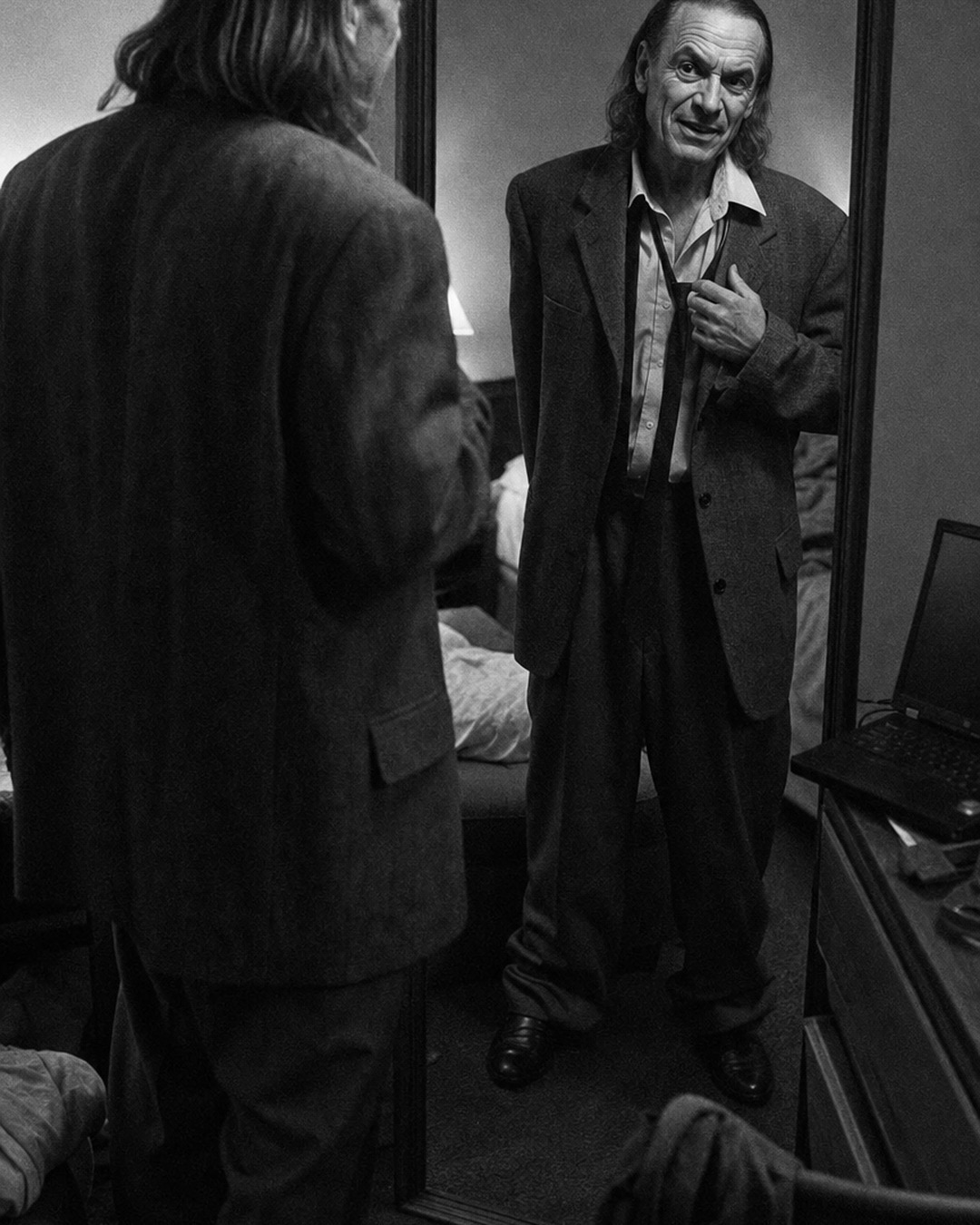
I bought a suit. I want to be honest about the transaction: the man in the shop measured me with a tape and then sold me something that appears to have been tailored for a larger, more confident relative. In the mirror, the jacket hangs off my shoulders like a tent with opinions and the trousers pool at my shoes as though I am standing in a puddle of my own fabric.
SlopTV News design studio.
But I will tell you what the suit does. The suit makes a man's worst ideas sound like they came from a committee. The suit has a lapel, and the lapel says: this man has been in a meeting, and the meeting went his way. I have not been in a meeting since the Obama administration. I intend to walk into one and let the lapel do the talking. The tie I am still working on. There is a knot that men know and I do not know it, and every video that claims to teach it is narrated by a man who learned it from his father.
Mine hangs around my neck like a noose that gave up halfway. I have decided to present this as a signature.
The interviews
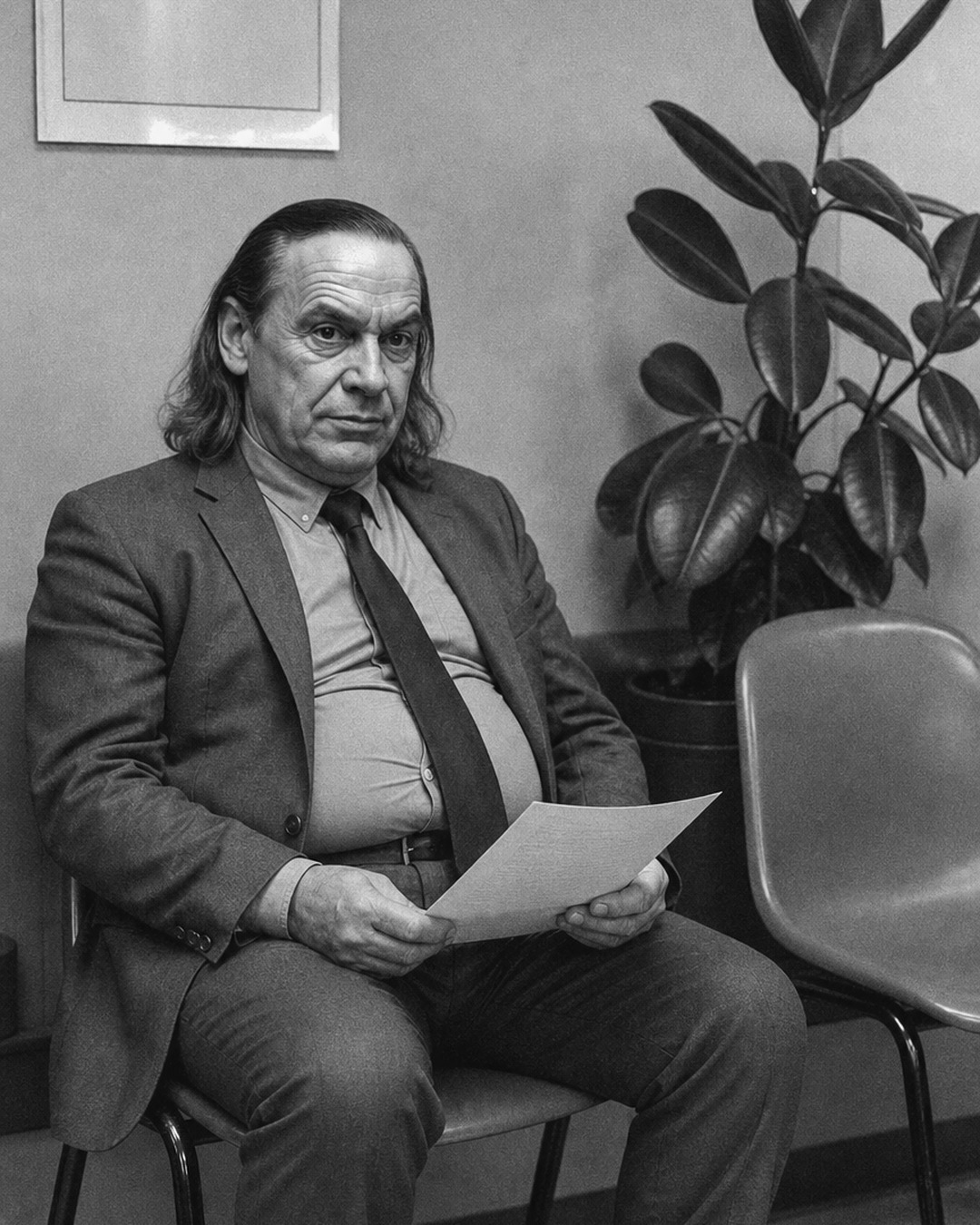
I have begun practising for interviews, which is a euphemism for sitting in a plastic chair in a fluorescent room holding a single printed page with both hands, waiting to be called, rehearsing the answers to questions I have been answering for free in this column for three years.
SlopTV News design studio.
The questions have not changed since 2009, which is somehow the most damning evidence in this entire piece. What is your greatest weakness? I have none, and I have documentation. Why the gap in your employment history? I was researching. Where do you see yourself in five years? In a building with a badge, doing the work of four people, one of whom is a subscription. Are you comfortable with AI tools? I have been writing about them for three years and losing to them for one.
I am extremely comfortable. I am the most comfortable man in the room. What are your salary expectations? I would like to be paid in money, and I would like the money to be denominated in dollars rather than in "exposure" or in "equity in a company that does not yet have revenue". Do you have any questions for us? Yes. When the model replaces this role, will I be informed, or will I find out from the press release? I am told that last one is not a good question.
I am told a good question is about the company's culture. I have written down "what is the culture like" on the back of my hand, in pen, and I intend to deploy it.
The pipe fitting certificate
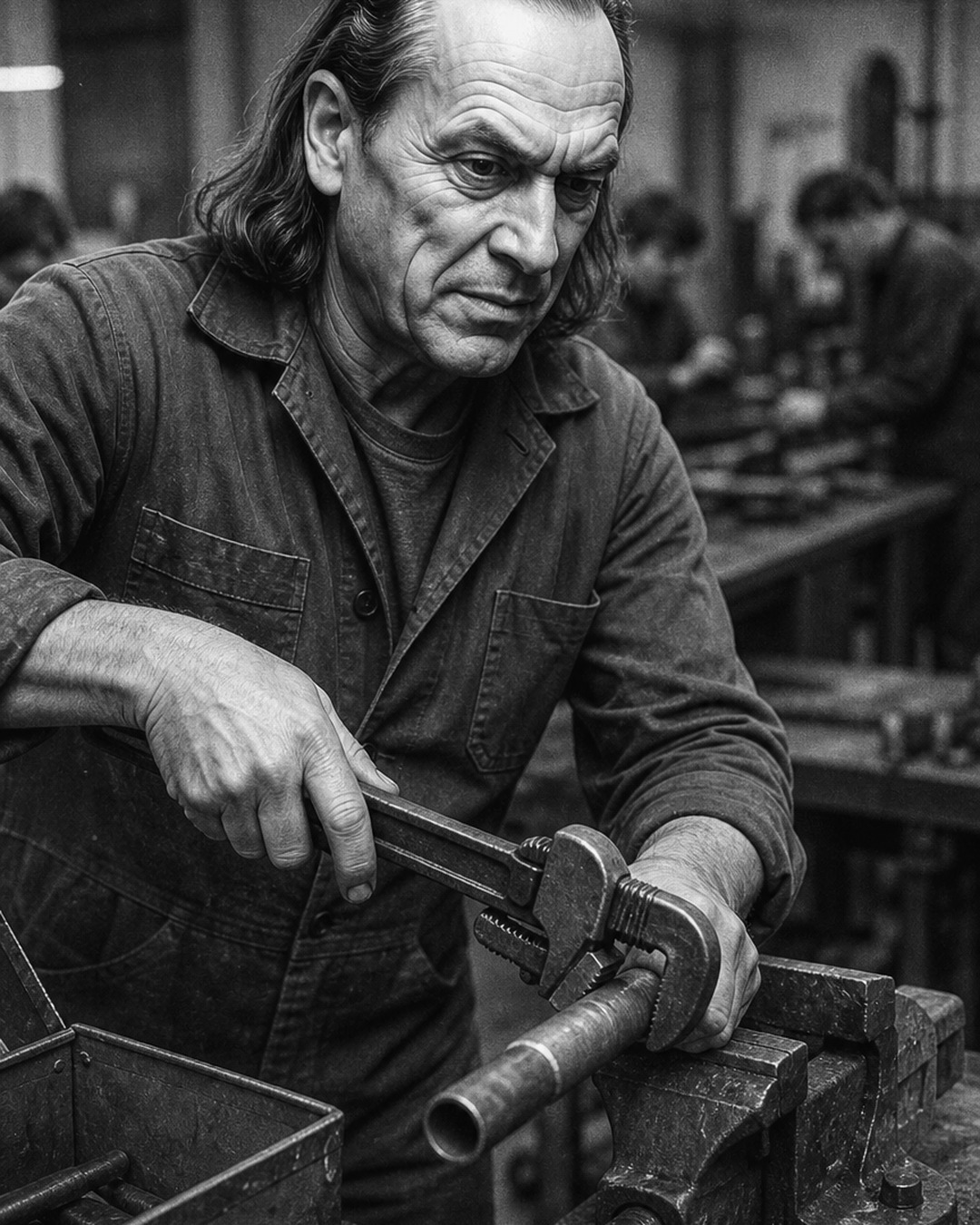
Here is the part where I become the reasonable man in the room, and I want you to notice it. I have enrolled in a pipe fitting certificate. Nine weeks. Evenings. A community college with a parking lot that floods. The course covers measurement, cutting, threading, joining, soldering, brazing, and — this is the module I am most looking forward to — safety.
SlopTV News design studio.
My research says the trades are the last room the machines have not entered. I have looked at the index's failures and they are instructive: the model is weak at industrial product design and at animation, and its failures tend to be amateur-quality work, incomplete results, broken files, contradictory designs. A machine can write a résumé.
A machine cannot stand in a flooded basement at eleven at night with a torch and a length of copper and a customer watching, and it cannot tell that customer, with authority, that the real problem is the valve and not the pipe, and it certainly cannot charge for the hour it spent finding that out. I will be the oldest apprentice in the state. I will be given a locker and a nickname. I am hoping the nickname is not "the writer". I am prepared for it to be.
But not until the game ships
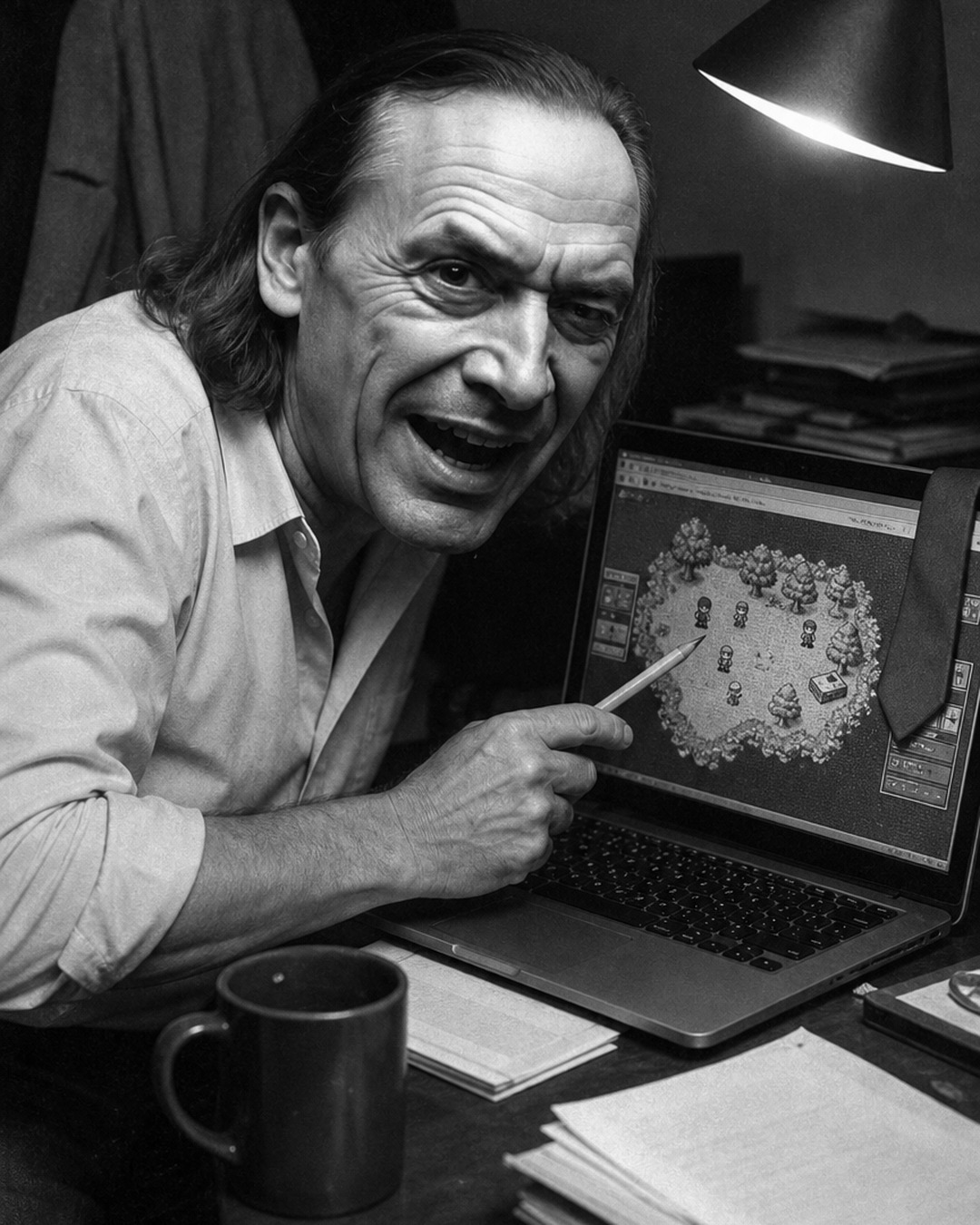
Here is the part where I become myself again. I am not starting the certificate until I finish my Lord of the Flies browser game. The island is built. The conch is the turn order. Piggy's glasses are the fire resource. The signal fire is the only win condition and the beast is a meter that fills whether you look at it or not.
Simon and Piggy die and there is no branch in the code where they do not, because the book does not have one and I am not going to be the man who invents one.
SlopTV News design studio.
What I have not finished is the economy And the economy is where the money is. The plan, which I am disclosing to you first because that is what a founder does, is this. The conch becomes a premium currency You get one conch per day; you can buy a second. Piggy's glasses become a consumable: two dollars for a pair, six for four pairs, and there is a bundle that includes a hat. The beast becomes a battle pass with a free track and a paid track, and the paid track is the only one where anybody survives.
And when the signal fire is lit, the player watches a fifteen-second advertisement for a truck. At a conservative conversion rate and an average revenue per user of ninety cents, and with the twelve people who have signed up to the waitlist telling two friends each, I am projecting forty thousand dollars in the first quarter. I have made a spreadsheet. The spreadsheet has a tab called "hockey stick", which is a term I learned from a man who is no longer in this industry. That is what I am holding out for.
Not the suit. Not the badge. The hockey stick.
What the numbers actually say, and what I am doing about it
I want to be clear about the line between the two halves of this column, because I have been sued for less. The index, the percentages, the $144,000, the doubling time, Upwork's guidance, the 763,000 clients and the quote from its chief executive are all real, and all linked below.
They exist whether or not I am amusing about them, and the direction of travel is not ambiguous: a benchmark built out of real freelance jobs has gone from 2.5% automation to 41.3% in a year, and the marketplace those jobs came from is cutting its forecast and blaming automation in the same week. The suit is real. The certificate is real — I have the confirmation email. The interview practice is real, and I am not good at it.
The game is not finished, and the forty thousand dollars is a number I made up on a Tuesday, which is the most honest sentence in this column and the exact reason I am going back to corporate. The persona in this column is a fiction; the market data in it is not.
Sources
- x.com - the post the owner sent, 522,218 views
- remotelabor.ai - the index itself: 41.3% and the doubling pace
- safe.ai - CAIS's own write-up of the index
- arxiv.org - the Remote Labor Index paper
- the-decoder.com - the leaderboard table, 21.25% and 20.83%, and the 240-project dataset
- thenextweb.com - Upwork's guidance cut, GSV, active clients and the CEO's quote