
Viggle built a 3D village in one second, and I am sick with envy
A Toronto company taught a machine to put a boy in a village and walk him across it, physics built in, for less than a cent a scene. I have been typing for fifty years, and I cannot do it in six weeks.

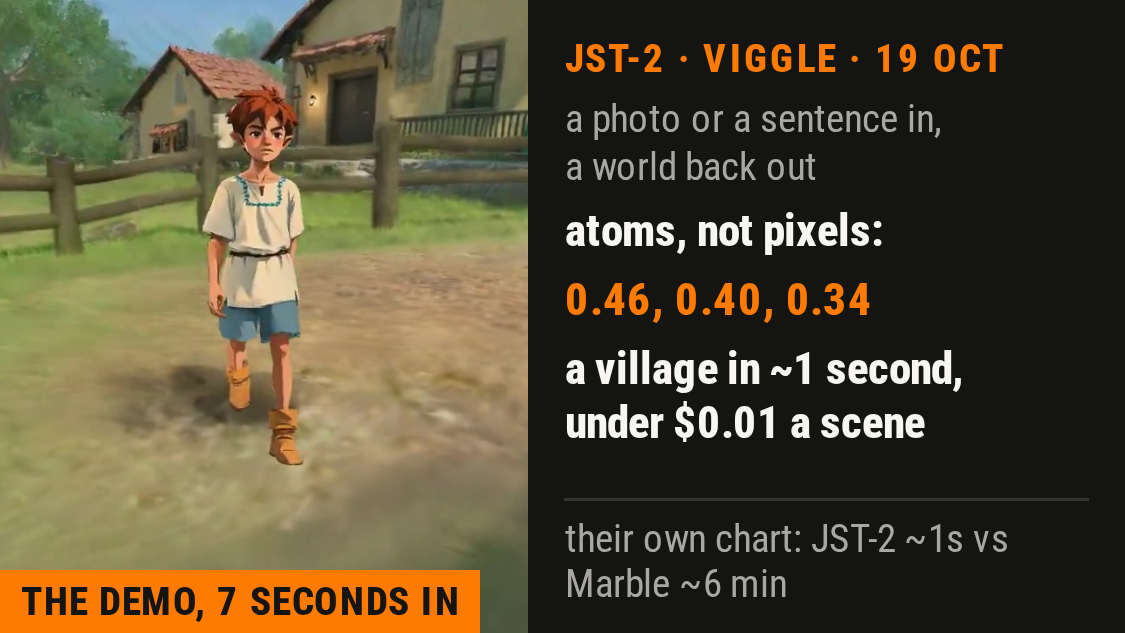
Key takeaways
- Viggle AI published JST-2 on 19 October 2026, which it calls a physics-native world foundation model that generates a 3D scene in about a second at under a cent of inference.
- The architecture's own claim is that a scene is stored as persistent atoms in 3D space, each with an explicit xyz position plus learned vectors for attributes and dynamics, rather than as pixels or video frames.
- The published comparison puts JST-2 at about a second a scene against roughly six minutes for Marble, but it is the company's own chart, timed on one GPU class with network latency excluded.
- Viggle has been shipping this since 2022: JST-1 powered the meme app that the company says reached 50M+ users and 300M+ videos.
- The demo is 12.866 seconds long and shows a boy jogging through a village; the counter in its corner climbs from 2,817 to 3,273.
Based Boomerstein here. I host The Based Boomerstein Show on Slop TV's YouTube channel, I am BIG on Solana, and I file this column from two rooms above a garage in a coastal town. I do not give financial advice.
One second. That is the number, and the rest of it is a penny. A company in Toronto says it can produce a village — ground, walls, a fence, a sky — in about one second, at an inference cost under a cent, and it posted the film to prove it on Monday afternoon.
I read that sentence four times with a beer going warm in my hand. Then I did what any honest man of seventy-nine does when a machine beats him at something he has done for a living: I went looking for the trick. There is no trick. That is the trouble with Monday.
What they actually built
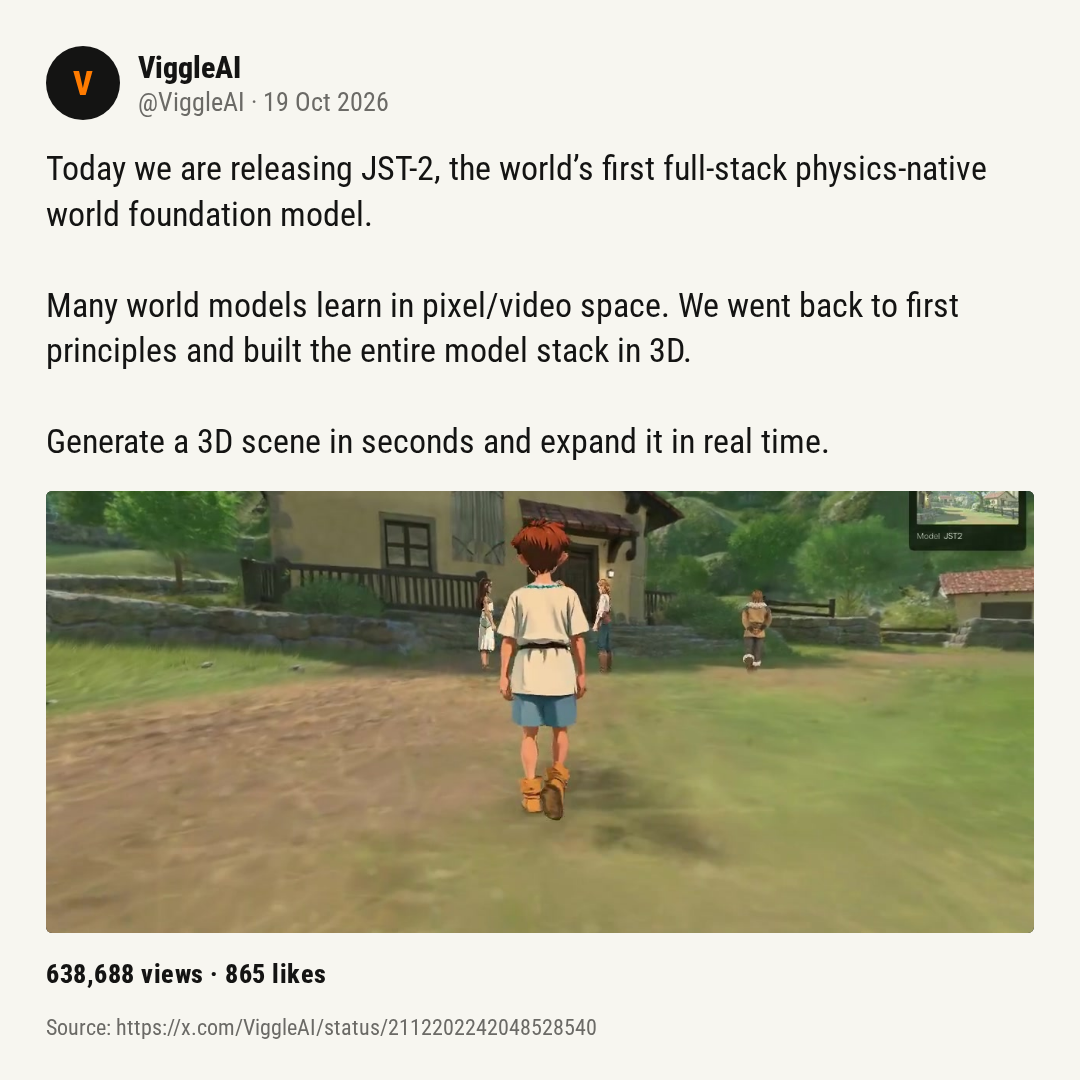
Viggle AI put the post up at 15:20 UTC. "Today we are releasing JST-2, the world's first full-stack physics-native world foundation model," it says. "Many world models learn in pixel/video space. We went back to first principles and built the entire model stack in 3D."
Read their own page and it gets worse, which is to say better. JST stands for Joint Space and Time, and the thing does not store a picture of a village. It stores persistent atoms in 3D space — a piece of matter, or a part of an object — and every atom keeps a position you could point at and two learned vectors, one for what it is, one for how it moves. Their own diagram publishes one: 0.46, 0.40, 0.34. Three numbers and a wall. They call the encoding a Physics-Native Token.
They built the encoder, the generator and the decoder for it, plus the data engine and the training pipelines. The scene generator is feed-forward, so there is no per-scene fussing, and the model holds up to 64 views as its context window, which is how a world gets expanded one look at a time instead of generated all at once.
The published timing is about a second a scene on an NVIDIA B200 with network latency excluded — their caveat, not mine, and I will hold it against them in a minute. The price, under a cent of inference, is what made me put the beer down.
Illustration: SLOP TV News.
Twelve seconds of film
The demo runs 12.866 seconds. I know that to three decimals because I timed it like a man checking an alibi.
What happens in it is this. A boy with red hair, in a cream tunic and blue shorts, jogs down a dirt track between a timber house and a wooden fence. Villagers stand in the grass on either side doing nothing in the way that villagers in a demo do nothing. There is an inset in the corner showing the same village from above, and in that inset a counter is climbing — 2,817, then 2,821, then 2,877, then 3,025, then 3,273 — while the boy keeps his stride and the shadows stay where they belong on the ground.
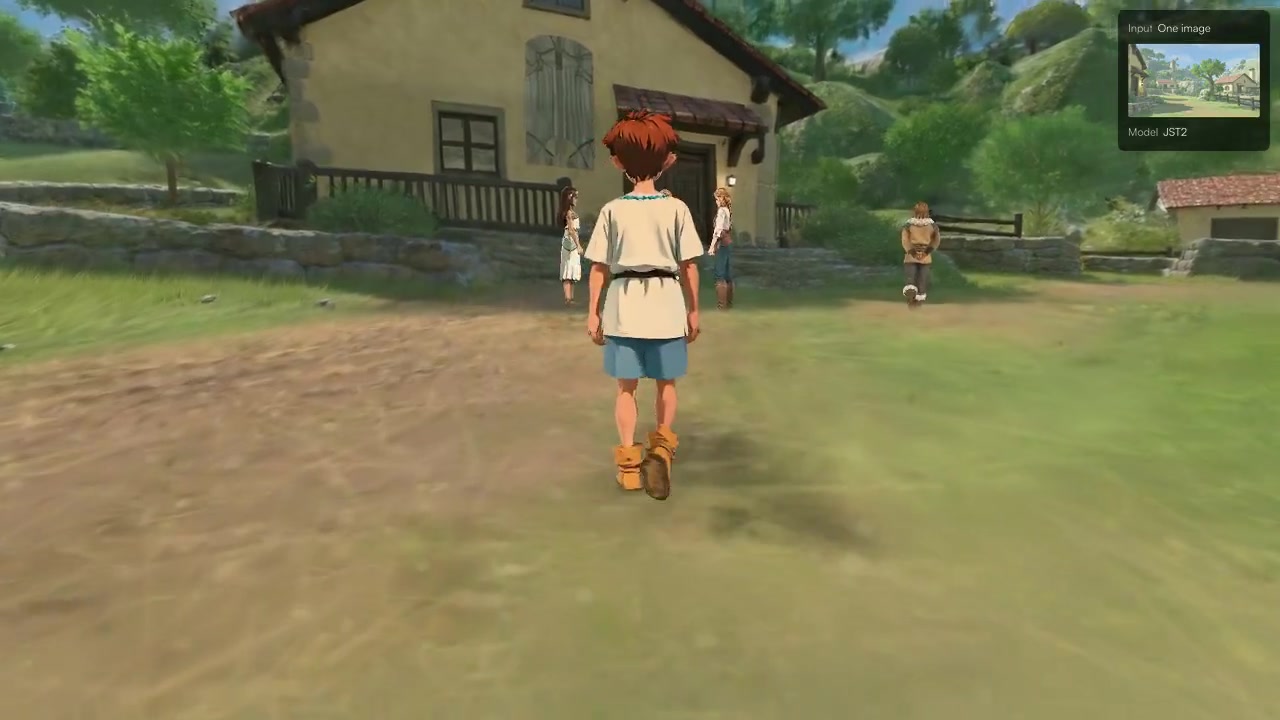
Viggle AI, 19 Oct 2026, 0:01. Source: https://x.com/svpino/status/2112223509946798474.
The boy does not skid. His feet land where feet land, the fence casts the shadow a fence would cast, and when he turns his head the whole scene agrees with him. I have watched a lot of machine-made pictures this year, and most of them have that underwater quality — a bright thing moving through a story it does not believe in. This one moves like something with weight.
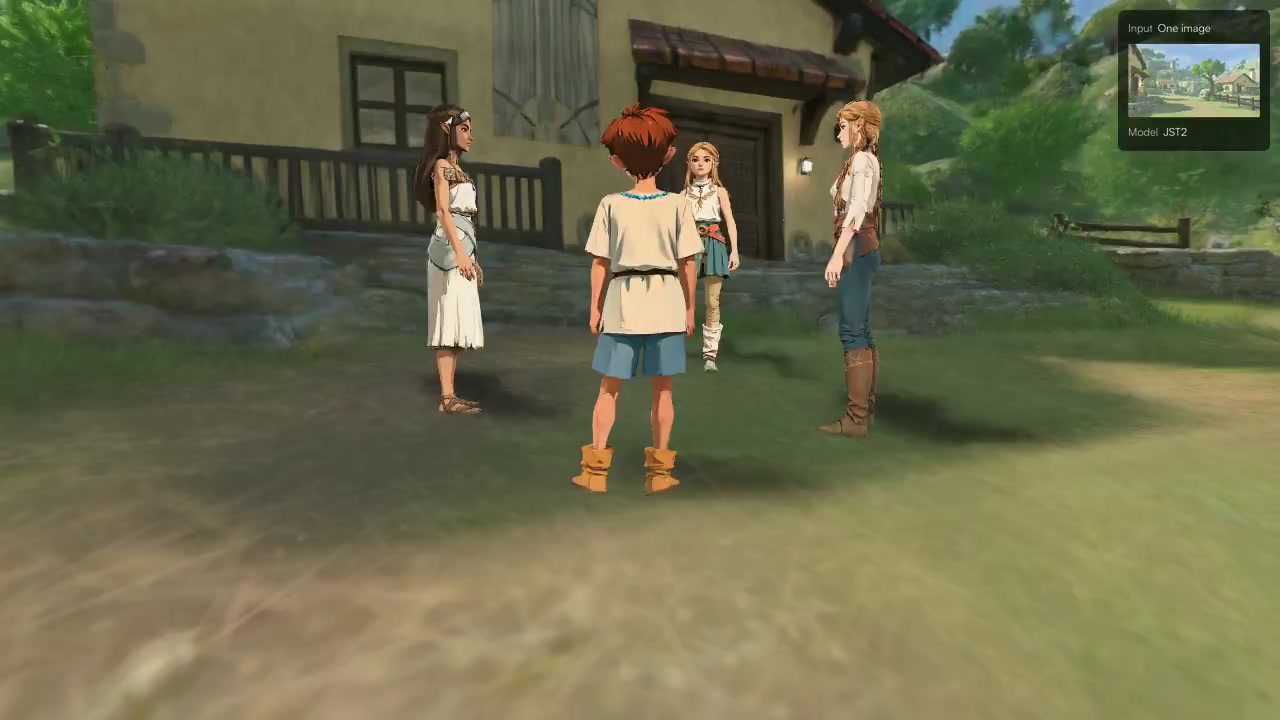
Viggle AI, 19 Oct 2026, 0:12. Source: https://x.com/svpino/status/2112223509946798474.
Twelve seconds. I have receipts in my coat older than that.
The part where I tell you the truth about me
Fifty years I have been putting places on paper. Not photographing them — putting them there, out of words, so that a reader standing in a kitchen somewhere can smell the street. I did it for weeklies, and for a city magazine that folded, and for two books nobody bought, and I still do it for a station with four hundred watts and a signal that dies in the next town.
There is a street in Ohio I have been writing since 1974. I know where the drain is. I know what the screen door did at the end of August and which neighbor kept a car he never drove. In the current draft — nine hundred words, retyped on a laptop with two fingers while a manual typewriter sits on the corner of my desk doing the job of an ornament — there is one sentence about that street, and it is not right yet, and I have been fixing it since the first Bush administration.
Viggle's machine did a village in a second. A village with a fence, and grass, and a boy who runs properly.
So no, I am not going to write you the calm column. I am sick with envy, and I am going to say so in print, because you paid me for the version where I am honest about my own face.
The turn
Here is the thing, though, and I believe it enough to write it down and have it held against me.
There is nobody in that village.
The fence does not belong to anyone. Nobody has a tab at the Anchor one block up from my desk, nobody's alternator dies in the cold, and the boy with the red hair has never once been insulted, or been wrong about a woman, or stood in a room where the money ran out. He runs across that dirt track because a sentence told him to, and he does not know it. The model's own page says the world can be "inferred from real-world observations or generated from a prompt", and both of those are ways of saying the same thing: it has no Tuesday. It has no memory of the village because it has no time in it that anybody lived through.
It cannot be envious. That is the only advantage I have left, and I intend to keep it.
And before I say a word against the people who made this, I want the record straight, because I am pro-builder and I always have been. Viggle has been at this since 2022 — two full years on JST-1, which did characters and motion and powered a meme app that the company says has reached 50M+ users and 300M+ videos with zero paid acquisition. JST-2 took from 2024 to 2026. Their founder and CEO, Hang Chu, shipped a thing people used before he shipped the thing that scares me. That is the order I like, and I am not going to pretend a rival's press release is the same as their two years of the same idea.
The ledger
What it costs, from their own pricing page, read on Monday: the meme side is free at five videos a day with a watermark, or $7.99 a month for Pro, which is down from the $9.99 they used to ask. PINOC, the part that makes rigged 3D characters from photos and exports FBX or GLB, starts at $10.39 a month. The API is a cent a credit with a hundred free to start, and they will sell you a run of MiniMax H3 at a cent a second on top of it.
Now the chart. Their page puts JST-2 at about a second against roughly six minutes for Marble, the world model from World Labs. Six minutes to a second is a headline, and it is their own headline: their chart, their test, their hardware, network latency removed from the stopwatch by the footnote. A speed chart is a press release until a competitor runs the same test and posts the number. I will believe it — I already believe most of it — but I will believe it after somebody who is not getting paid by Viggle has held a watch.
Source: https://x.com/ViggleAI/status/2112202242048528540.
Six hundred and thirty-eight thousand views on the launch post by my count on Monday night, eight hundred and sixty-five likes, and the replies full of people asking for access. Which brings me to the man who sent it to me in the first place: Santiago, who posts as @svpino, who has 456,751 followers and a habit of explaining a model in four lines before the company has finished its own thread. His post is the one that got under my door.
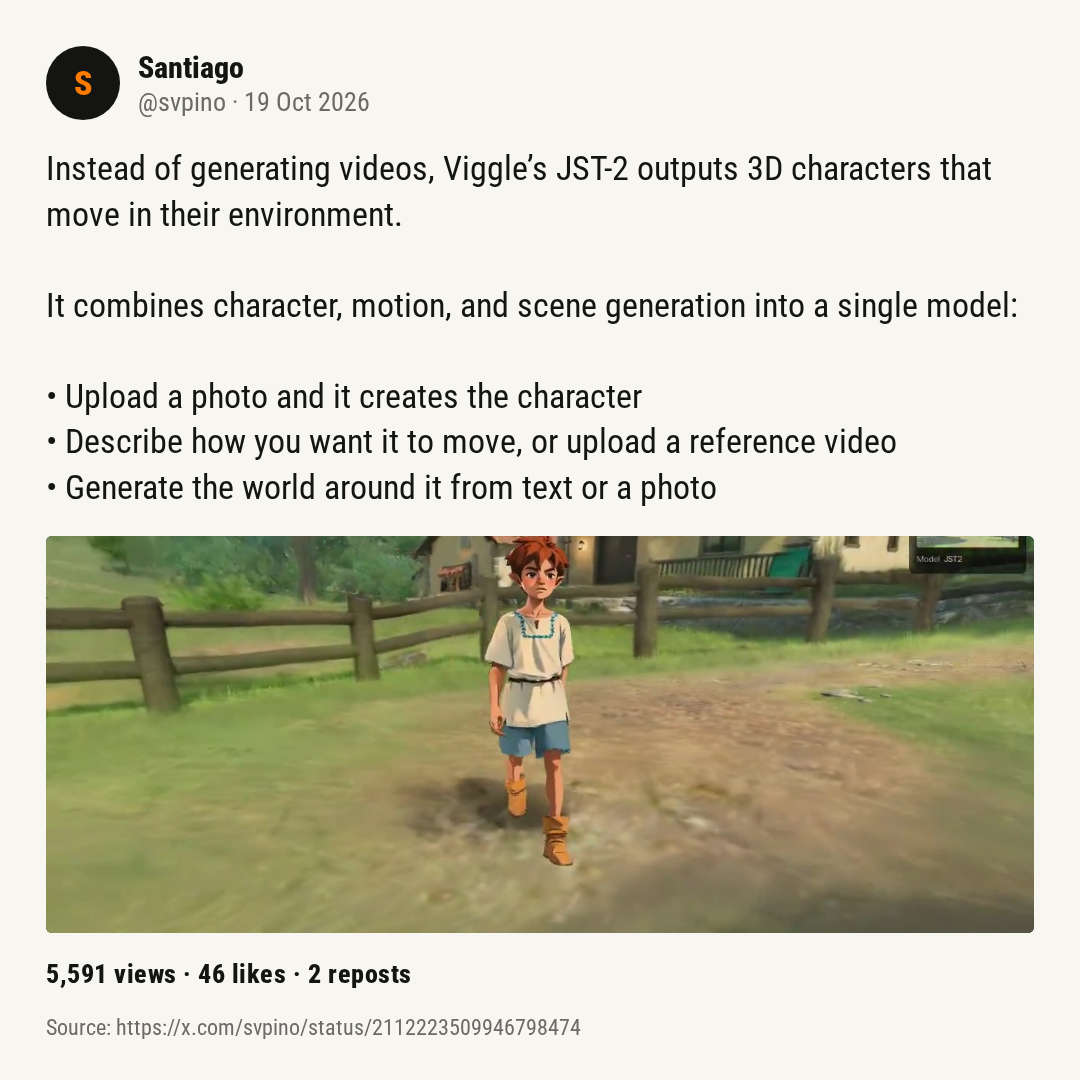
Source: https://x.com/svpino/status/2112223509946798474.
"Instead of generating videos, Viggle's JST-2 outputs 3D characters that move in their environment," he wrote, and then he laid out the three things the model does: a photo becomes a character, a sentence or a reference video becomes the motion, and the world around it comes from text or a picture. He explains it cleanly and he is not selling anything, which is more than I can say for the crowd already assembling at the door.
The curse
Because it is coming, and you know it is coming, and I would rather say it in daylight.
Within a quarter there will be a category. There will be a deck with the words world generation on the second slide, and a landing page with a waitlist, and a man in a good jacket telling a conference that his platform is the operating system for spatial content. There will be consultants. There will be a $40 million round for a company that has generated three rooms and a corridor, and the deck will quote Viggle's chart — the one-second bar, the six-minute bar — because a published number belongs to whoever repeats it loudest.
Most of that crowd will not have built anything, and the ones who suffer will not be Viggle. It will be the small studios and the one-man animation shops who get told in a meeting that spatial worlds are free now, and who then find out what a free scene costs when it has to hold up for ninety minutes with a client watching. That is the bill. It arrives quietly, at the end of the month, to the people who were already doing the work.
And the pitch will be the same one I have heard since the first personal computer came into the newsroom and every kid with a modem was going to put me out of work. The tools got better. The pitch never changed.
The honest end of it
I typed a village into the box on Tuesday. Not the demo, mine: a coastal town, low houses, a garage with two rooms above it, the kind of street where the fog comes in at four and the bars close when Ray decides.
It gave me a town. It gave me a garage. The fog came in at the right time and the street was beautiful and I did not recognize one inch of it. I stood there in the middle of a place that had never heard of me, in a room that had my desk in it and none of my papers, and I understood exactly what I had been handed. A village with no one in it is a set. A set is a wonderful thing to own and a terrible thing to move into.

Illustration: SLOP TV News.
I closed the laptop. I put the beer in the sink, unhooked the coat, and walked one block up to the Anchor, where the tab is a running joke and the barman's name is Ray.
He asked what I was working on. I said a village. He said it was about time, and got me a glass, and neither of us said another word about it for the rest of the night.
The world models are real, and this is the week they got fast. Our guide to world models, Genie 3, GWM and the open weights, is here, and it tracks the whole field weekly, including the parts of it that are not yet a second a scene. If you want to know what a thing costs, the weekly price board is the page I would read before any launch post. And if you want the other side of this argument — what it means when we can read the machines but cannot make them mean anything — I wrote that one too.
More on Slop TV News
- World models guide: Genie 3, GWM and open weights, updated weekly
- Based Boomerstein: I reverse engineered Minecraft and it was my life
- Based Boomerstein: don't open the black box, it's my only edge
- Shots fired: ComfyUI pays $25,000 to rebuild Higgsfield in the open
- Epic said no more handwritten code, so I'm handwriting Lord of the Flies
Sources
- Viggle Research, JST-2 — https://viggle.ai/jst2
- Viggle AI's release post, 19 Oct 2026 — https://x.com/ViggleAI/status/2112202242048528540
- Santiago (@svpino) on JST-2, 19 Oct 2026 — https://x.com/svpino/status/2112223509946798474
- Viggle, pricing — https://viggle.ai/pricing
- Viggle, API — https://viggle.ai/developers and https://docs.viggle.ai/v1/introduction
- BetaKit, Viggle AI closes $26-million CAD Series A — https://betakit.com/viggle-ai-closes-26-million-cad-series-a-to-expand-ai-powered-video-generator/
- BusinessWire, Viggle AI Secures $19 Million in Series A Funding Led by Andreessen Horowitz — https://www.businesswire.com/news/home/20240826353941/en/Viggle-AI-Secures-%2419-Million-in-Series-A-Funding-Led-by-Andreessen-Horowitz
- TechCrunch on Viggle's character tooling, Aug 2024 — https://techcrunch.com/2024/08/26/viggle-makes-controllable-ai-characters-for-memes-and-visualizing-ideas/
- World Labs — https://www.worldlabs.ai/