
AI slop is art's biggest opening since the printing press
Four films on SLOP TV's own channel, from a 17-minute cat comedy to a 43-minute feature, show the tools still do not supply the decision to finish.
Key takeaways
- Merriam-Webster, which named slop its 2025 Word of the Year, defines it as digital content of low quality that is produced usually in quantity by means of artificial intelligence.
- SLOP TV's four films on its own SlopTVedits channel drew between 672 and 11,313 views as of 25 September 2026, from the 12:33 Van Gogh documentary to the 17:54 comedy Bowie the Cat: No More Lives.
- The precedent chain runs Gutenberg's press around 1440, the Sony Portapak in 1967, the Akai MPC in 1988 and YouTube in 2005, and each one cut the cost of making and distributing a thing.
- The discipline the tools do not sell is the long edit: plan before prompting, review the whole take, change one thing per iteration, own a look and finish the piece.
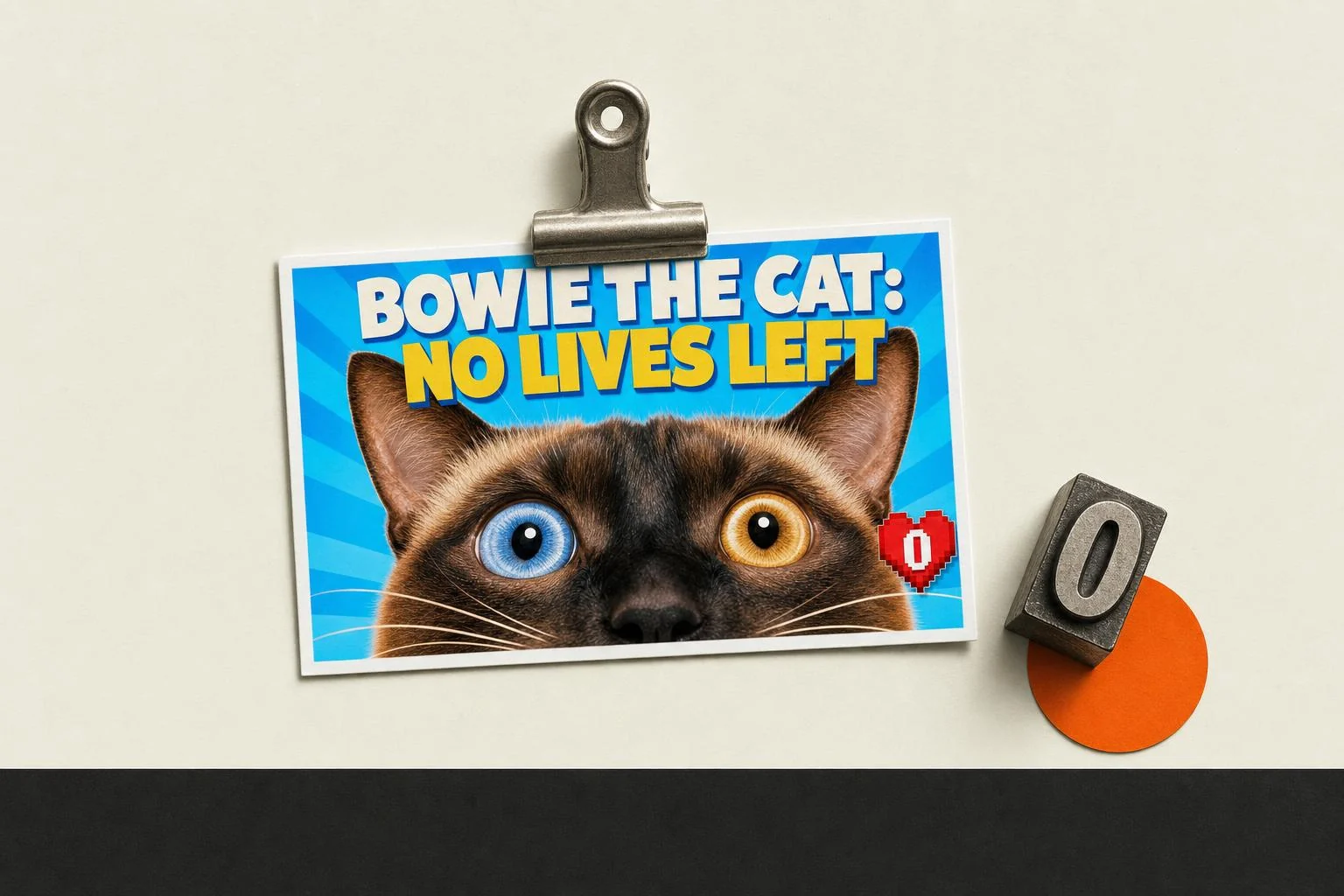
A 17-minute film ends its chapter list with a goodbye, and the goodbye gets one minute and forty-four seconds. The film is Bowie the Cat: No More Lives, a comedy on this site's own YouTube channel about a SoHo house cat who spends his ninth life on a pigeon, meets Death on the cobblestones of Greene Street and then talks Death into a game of gin rummy. Its final chapter, "Goodnight, Greene Street," begins at 16:10 in a cut that runs 17:54, and the thing it names is a place.
That timestamp is the argument in miniature, so here is the argument in full before the proof. The collapse in the cost of making a moving image is the largest opening of the means of expression since movable type, and it has not made the decision to finish any cheaper. Everything below is that sentence earning itself.
The word at the center of this fight does two jobs. Merriam-Webster, which named "slop" its 2025 Word of the Year, defines it as "digital content of low quality that is produced usually in quantity by means of artificial intelligence." That definition is a claim about method and volume. The way the word gets used is a verdict about result, and the verdict arrives free. Daniel J. Singer made the point in a comment published in npj Artificial Intelligence on 24 September 2026, separating two attitudes the word smuggles in: one that quarantines bad output away from AI's promise, the move Sam Altman made at Sora 2's launch, and one that treats bad output as the technology's true face, where the Atlantic's Charlie Warzel landed when he answered that slop was winning and that what Altman described amounted to creativity without craft.
Both of those attitudes are arguments about the world. Mine is narrower and easier to check. Most generated work is careless, and that has been true of most work in every medium since someone first cut a reed to write with. The useful question is what a careless majority does to a careful minority.
Every gate in art was a price tag
Four precedents matter here, and each one removed a specific cost.
Gutenberg's press, built around 1440, did not improve writing. It made reproduction cheap, which meant a pamphlet no longer required a scriptorium and a patron. Movable type did not produce better sentences than the monks. It produced far more sentences from far more people, and the novel and the newspaper fell out of that surplus. Nobody in 1450 could have predicted the novel from a printing press.
The Sony Portapak arrived in 1967, battery powered, self-contained and light enough for one person to carry and operate. Television cameras before it were heavy, needed a specialized vehicle and sat on a pedestal. The picture was worse than broadcast and the reach was worse than broadcast. The permission was new, and video art and guerrilla television followed.
The Akai MPC, designed by Roger Linn and released in 1988, put sampling and sequencing in one box and removed the need for a room of session players, a studio and an engineer before a beat could exist. Hip-hop had already started on turntables. The MPC turned the practice into a discipline with its own techniques and its own heroes.
Then in 2005 YouTube opened, and the instruction that followed was to broadcast yourself.
Four tools, four collapses in cost, four waves of new forms, and in each case the first output was mostly bad. The good work arrived afterwards, made by people who had spent the intervening years learning what to do with the thing they now had.
What the four films on our own channel show
I read the four video pages, and the chapter lists on the three that have them, and put the numbers side by side, all on 25 September 2026. These films are ours. They were made by Slop TV Productions and published on this site's own channel, SlopTVedits, and they are here as evidence of what one small crew does with these tools. They are not offered as a credential.
UNC, a 43:47 feature published 15 July 2026, has 8,043 views. Its page credits a director, a director of photography, a composer, two producers, an executive producer and three lead actors, one of them Ivan Racines. Credits like that describe work somebody had to manage, from the camera to the score.
PONTIUS: What is Truth?, 21:56, published 25 July 2026, has 2,101 views. Its page states that every line of dialogue is drawn verbatim from Scripture and the historical record, and it names what it drew from: John 18 and 19, Matthew 27, Mark 15, Luke 23, and the apocryphal Acts of Pilate. A reader can check that against the chapters. The same page says the likeness of Jesus was reconstructed from historical recreations of his appearance, the Shroud of Turin among them, rather than from later artistic tradition. The Turin cloth is a devotional object rather than a document, and the page states its source plainly enough to weigh.
Bowie the Cat: No More Lives, 17:54, premiered 29 August 2026, has 11,313 views. It is adapted from the one-act play "Death Knocks" by Woody Allen, and its page describes the look as 1970s New York cinema, shot in natural light with long takes, and holds the music until the gin rummy scene. The chapter list makes that decision checkable. The cards arrive at 10:49, in a film that has already spent more than four minutes walking.
The full film is below.
Bowie the Cat: No More Lives (17:54), premiered on the SlopTVedits channel on 29 August 2026.
The Van Gogh documentary, 12:33, premiered 12 September 2026, has 672 views. It is the first episode of CODEX, and fifteen chapter markers run from a childhood in Zundert to The Potato Eaters, with Dutch dialogue and English subtitles, a host, and visual reconstructions its page says are informed by historical locations, photographs, artworks and Van Gogh's letters.
Now the comparators, because a view count on its own is decoration. The 17:54 comedy drew about 1.4 times the audience of the 43:47 feature, which is 11,313 divided by 8,043. The same channel published two 90-second Shorts on the same day as the Van Gogh episode, and they drew 2,276 and 1,637 views. The twelve-minute documentary drew 672, so its own 90-second excerpt outdrew it by roughly 3.4 times, which is 2,276 divided by 672.
The strongest case against me
The best version of the case against this piece does not need a bad-faith actor. It needs the numbers above. A category that rewards 90 seconds over 12 minutes, and a documentary built from letters and locations that drew 672 views, is a category where careful work drowns in the volume around it. The second attitude Singer describes treats the flood "not as a defect to be cleaned up but as what AI amounts to." Warzel's answer, as Singer quotes it, was that slop is winning.
There is a harder version still, about apprenticeship. The years a technician spends learning to light a scene, cut a sequence and hold a performance were paid for by an industry that expected to use those skills. When a passable version of the output arrives in seconds, the price of those years falls in public, and the people who paid them are right to notice.
That case is stronger than the tool makers admit, and it is an argument about markets and wages. It leaves the medium exactly where it was.
What the films prove, and what they do not
A chapter list is a set of decisions about time. Bowie, by its page's account, holds the score for ten minutes and forty-nine seconds, against every incentive to front-load a hook. PONTIUS names its sources, which is a discipline the tools cannot enforce. UNC credits a director of photography and a composer, which means somebody had to manage them.
None of that is proof of quality, and I am not grading on a curve. Two of the four are stronger than the other two, and the one with 672 views is not the weakest of them. What the four show is where the work sits. The tools took the price of a shot down toward zero. They did not touch the price of a sequence, a structure, a decision about the ending, or the willingness to throw away the take that is fine.
Our own breakdown of a creator's car commercial tutorial is the clearest version of that split. By his account, a brief went in and two finished ad cuts came out in under six minutes of generation, and the value in that article sat in the brief and the selection rather than the render. A model that generates thirty seconds with sound in one pass is delivery. A company that sells the same engine three ways is packaging. The choice of what to make, and the refusal to settle for the ninth-best version of it, has no button, and the model churn that replaces a system every few months does not change that.
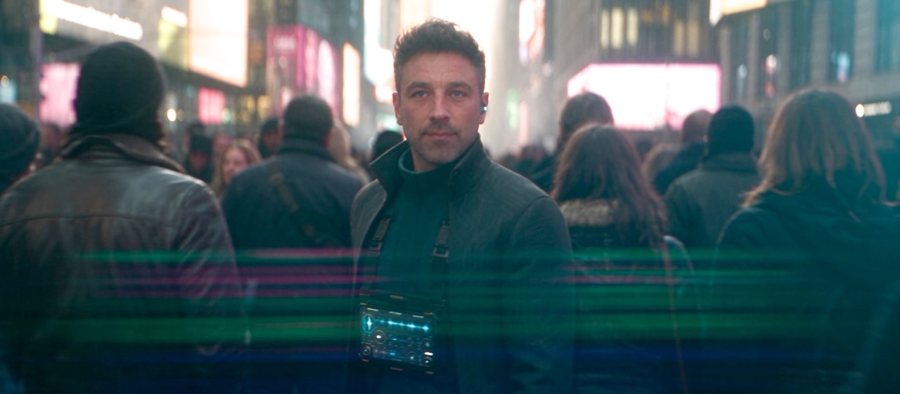 A frame from The Analog Kid, made by Slop TV Productions. The image is the easy part now; the sequence is not. Still: SLOP TV News.
The discipline the tools do not sell
Patience here means the long edit. The generation is the cheap half, and four behaviors carry the expensive half.
Plan before you prompt. Write the brief, decide the shots, decide the sound, decide the ending, and only then open the tool.
Review the whole take. Failures in generated motion tend to show up a few seconds in, and a clip watched for three seconds has not been reviewed.
Change one thing per iteration. Change the model, the prompt and the seed at once, and you have learned nothing about which one caused the improvement.
Own a look, and defend it. The reference library is the lens kit now. Choose it deliberately, prune it, and hold it across shots and projects so your work is recognizable in a thumbnail.
Then finish the piece. A finished third-rate film teaches more than ten abandoned excellent tests, because only a finished thing meets an audience and gets told what it is. Publish, take the hit, and go again.
The eighteen-month version
Three traps sit in the new abundance, and each one is a way of not finishing.
The newest-model reflex produces a person with an enormous library of tests and no body of work. A finished piece on last quarter's model outlasts a folder of clips made on six of them.
The remix reflex trains you to optimize for the shape of something that already worked. Reference is how you learn. Imitation is how you stall.
Publishing before the work is ready feels like permission because distribution is free. The audience only sees the finished thing, and a piece published too early taught you nothing, because nobody will tell you what was wrong with it in a way you can use.
Give the work eighteen months rather than eighteen days. Spend the first two remaking things that already exist, on purpose, to learn what the tools do when pushed. Spend the next four on one recurring form, published on a schedule. Then finish things, put them in front of people, and cut whatever did not work without defending it.
The printing press produced a great deal of garbage and also the modern world, and nobody writing a pamphlet in 1500 knew which one they were making. The same holds for a folder of generated clips. The difference is whether anyone decided what the piece was for, and then stopped.
Bowie the Cat spends its last minute and forty-four seconds on a street name. The cat has won a tenth life at cards by then, and the film still stops to say goodnight to Greene Street. A person decided that, twice: once to plan the walk, and once to end it.
Pick one thing this week and finish it, then put it where somebody can tell you what is wrong with it.
Sources
- en.wikipedia.org - Gutenberg's press, invented around 1440
- en.wikipedia.org - the 1967 Sony Portapak, one-person video outside the studio
- en.wikipedia.org - the 1988 MPC, sampling and sequencing in one box, designed by Roger Linn
- en.wikipedia.org - YouTube's founding and the 2005 to 2006 "Broadcast Yourself" era
- youtube.com - Bowie the Cat: No More Lives, its own page: 17:54 cut, premiered 29 Aug 2026, 11,313 views, chapter list, the Woody Allen play it adapts, the stated look and where the music enters
- youtube.com - PONTIUS: What is Truth?, its own page: 21:56, 25 July 2026, 2,101 views, the scriptural chapters it says the dialogue comes from, the Shroud of Turin likeness note
- youtube.com - UNC, its own page: 43:47, 15 July 2026, 8,043 views, credited director, cast, camera department, composer and producers
- youtube.com - Vincent van Gogh Documentary (CODEX Episode 1), its own page: 12:33, premiered 12 Sept 2026, 672 views, fifteen chapter markers, Dutch dialogue with English subtitles, the locations, photographs, artworks and letters it says informed the reconstructions
- youtube.com - the 90-second (1:30) Short on Van Gogh's first masterpiece: 2,276 views, published 12 Sept 2026, the comparator for the documentary's reach
- youtube.com - the second 90-second (1:30) Short on Van Gogh's art: 1,637 views, published 12 Sept 2026, the second comparator
- merriam-webster.com - the dictionary's own page: slop defined, and named the 2025 Word of the Year
- nature.com - Daniel J. Singer, npj Artificial Intelligence, 24 Sept 2026: the quarantine and contagion uses of slop, with Sam Altman's Sora 2 framing and Charlie Warzel's reply reported as Singer reports them
- sloptvnews.com - SLOP TV's own survey of the real-time systems creators can call today, and the model churn
- sloptvnews.com - SLOP TV's own walkthrough of a production pipeline, brief to two ad cuts in under six minutes of generation
- sloptvnews.com - SLOP TV's own comparison of the model access routes